
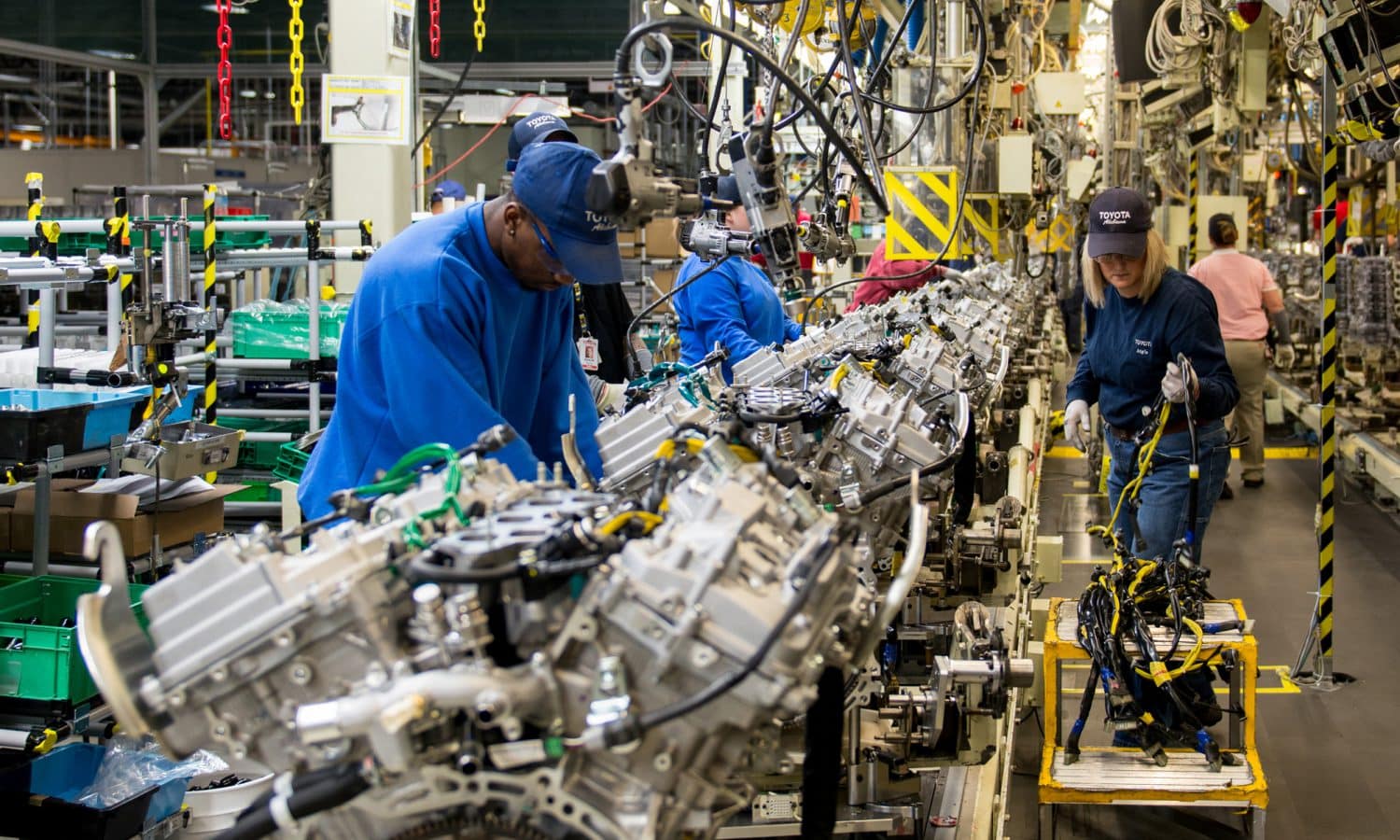
Toyota is the poster child for employee idea programs—you could say they were one of the pioneers who brought the practice mainstream, launching their system in 1951 as a core part of the “Kaizen” movement.
Their employee suggestion program, formally called the “Creative Idea Suggestion System”, has been highly effective in driving both cost savings and cultural engagement. Over the decades, it has generated billions of dollars in value and remains one of the most sustained examples of a large-scale innovation program in manufacturing.
Toyota’s program encourages employees to contribute ideas that improve processes, enhance product quality, and reduce costs—and most importantly, allows them to implement many of those ideas themselves.
A Few Crazy Stats About Toyota’s Suggestion Program
- Founded in 1951, Toyota’s suggestion program has now been running for over 70 years.
- Toyota has received around 50 million total suggestions over the life of the program—up from 40 million in 2011.
- In 2023, employees submitted 810,000 ideas, averaging 14.4 suggestions per person.
- Historically, Toyota sees around 70% of suggestions implemented, showing a rare level of execution and follow-through.
- Ideas come from all levels of the organization, including frontline operators, and most suggestions are modest “kaizen” style improvements—not moonshots.
These are statistics that I’m sure everyone reading would be head over heels to achieve, so today we’re going to dive into a few of the best practices that Toyota attributes to the programs long-term success, and explore how you can incorporate them into your practice.
Want to Learn More or Test Drive Ideawake?
Start enabling a culture of improvement today. Start testing whether Ideawake is right for you in the next 5 minutes, or contact sales to schedule a demo.
5 Best Practices You Can Learn from the Success of Toyota’s Employee Suggestion Program
There are several best practices that Toyota has implemented with their frontline suggestion program which are common traits we see at Ideawake that successful employee suggestion programs –
- Incentives for Sharing Ideas: Toyota combines monetary rewards with symbolic recognition to encourage participation. Minor suggestions might earn ¥500–¥2,000, while top ideas can be awarded up to ¥200,000. Recognition is also public: each year, gold, silver, and bronze medals are awarded to outstanding contributors. Toyota reinforces this with visible cultural messaging—like their longstanding slogan, “Good Thinking, Good Products.”
- Involving Employees in Idea Implementation: Toyota gives employees ownership of the improvements they suggest. Many ideas are implemented directly by the person who proposed them, often with minimal oversight. If an idea is simple but useful, all that’s needed is a manager’s approval. Supervisors are trained to support and coach employees through the process of bringing an idea to life.
- Removing Red Tape for Quick Win Ideas and Providing Autonomy: Toyota minimizes bureaucracy for simple suggestions. Easy improvements often require only a direct manager’s sign-off, so workers see results quickly. In fact, by 1972, about 76% of submitted ideas reflected the low barriers for worthwhile suggestions. The company even publishes suggestion statistics and success stories in internal newsletters each month, keeping everyone informed and motivated.
- A Focus on Small “I” vs Big “I” Innovation: We’ve covered this in several posts in the past (Costco, ExamOne). A common theme of companies with the most successful employee suggestion programs in terms of hard dollar ROI is that they are focused as much on “Horizon One” innovation as the are on disruptive or transformational innovation. Leadership Teams often dream of creating the next iPhone, but innovation is a muscle that needs to be built up over time and proper resourcing to build truly “transformational” innovation is something that’s going to require more than the budgeted time of 1 to 2 FTE’s. What we’ve found works best to get actual financial impact out of your employee ideas program while also helping maximize cultural impact in the short and mid-term is focusing on “Quick Wins” which are easy to implement and have a measurable financial impact.
- Creative Thinking Committees (Using Challenge Statements): Toyota uses dedicated teams to drive the program. Since 1971, a central “Creative Thinking Committee” has overseen dozens of plant-level subcommittees. These teams set monthly themes or “challenge statements” (for example, focusing on “maintenance” one month and “quality” another) to guide employees’ suggestions toward key priorities. This formal structure – with committees, metrics, and thematic campaigns – keeps the suggestion program focused, organized, and aligned with company goals.
Implementing an Employee Suggestion Program Like Toyota’s Isn’t Rocket Science
Toyota’s example shows that creating a thriving suggestion program is not rocket science – it’s about culture and process. By encouraging ideas, removing unnecessary hurdles, and recognizing contributors, even small organizations can tap into front-line creativity.
In practice, this means documenting suggestions simply, letting teams implement quick fixes immediately (with minimal approval), and maintaining a visible, transparent feedback loop. HR and operations leaders should celebrate successes publicly and regularly—sharing which ideas were implemented and their impact—to reinforce the value of participation. The payoff is substantial: a steady stream of employee-sourced improvements can add up to major savings and quality gains.
Toyota’s decades of experience—underpinned by the principle “Good Thinking, Good Products”—prove that when every worker is invited and equipped to make suggestions, the organization as a whole keeps getting better. In short, follow Toyota’s lead in fostering everyday kaizen, and you’ll build a more engaged workforce and a continually improving operation.
If you’re not collecting and encouraging employee ideas today, what opportunities to save money and improve customer experience could your organization be missing out on? Schedule a 30 Demo Today to learn how your organization can start leveraging the ideas of frontline team members in the next 2 – 4 weeks.
FAQs About Toyota’s Employee Suggestion Program
1. Why did Toyota start its employee suggestion program in 1951?
Toyota launched the program as part of its Kaizen philosophy, which emphasizes continuous improvement. The aim was to empower employees at all levels to contribute ideas that enhance efficiency, quality, and innovation.
2. How does Toyota ensure employees stay motivated to submit suggestions year after year?
Beyond financial rewards, Toyota emphasizes cultural recognition, transparent communication of implemented ideas, and ongoing support from supervisors. This consistency helps sustain high engagement rates across decades.
3. Are all of Toyota’s employee ideas small, or have there been major innovations too?
While most suggestions are small process improvements, some have led to significant cost savings and innovations in production. Toyota balances quick wins with occasional large-scale improvements.
4. How does Toyota handle suggestions that don’t get implemented?
Toyota provides feedback to employees on why an idea wasn’t adopted. This reinforces learning and maintains trust, so workers continue to feel valued and motivated to share new ideas.
5. Can smaller organizations replicate Toyota’s suggestion program?
Yes, even businesses with limited resources can adopt Toyota’s approach by focusing on quick wins, reducing red tape, and recognizing contributors. The key is building a culture where all ideas are welcomed.
6. What role do managers play in Toyota’s suggestion program?
Managers act as facilitators rather than gatekeepers. They approve quick ideas, coach employees through implementation, and celebrate successes—making them crucial to the program’s success.