
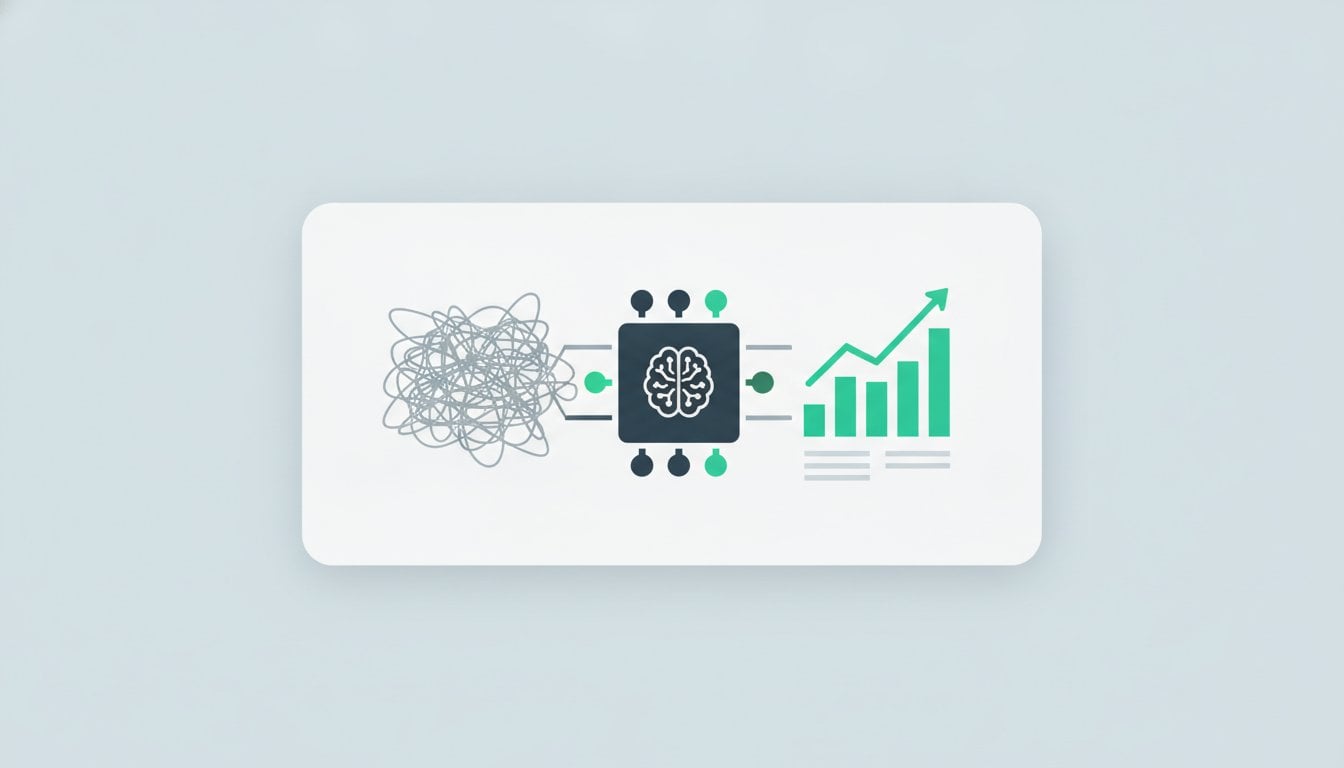
Only 39% of organizations effectively track the return on investment of their innovation initiatives, according to recent research. This leaves a staggering majority of companies stuck in “innovation theater,” where activity is high but tangible outcomes are non-existent. If you’ve struggled with improving corporate innovation culture, you’ve likely faced the same wall: low participation rates, crushing administrative bottlenecks, and a lack of executive buy-in for anything that doesn’t show immediate profit.
It’s exhausting to manage ideation programs that produce more noise than value. You know that creativity isn’t the problem; it’s the lack of a structured system to capture, triage, and evaluate it. You’ll discover how to operationalize innovation by moving beyond random brainstorming into a world of structured processes and psychological safety. This guide provides a data-driven execution framework that leverages modern AI tools to reduce administrative overhead and ensure every idea is measured against its potential for real-world impact.
Key Takeaways
- Contrast “Innovation Theater” against a results-driven execution model that treats culture as a systematic framework of habits and tools.
- Identify the critical link between psychological safety and radical innovation to eliminate leadership behaviors that act as “innovation killers.”
- Transition to a “Challenge-Led” model for improving corporate innovation culture by aligning employee creativity with specific business needs and North Star metrics.
- Utilize modern AI tools to automate administrative tasks like sentiment analysis, allowing innovation leads to focus on high-value strategic execution.
- Implement a dual-metric tracking system that measures both participation inputs and hard output data like Innovation Velocity and ROI.
The Anatomy of a High-Performance Innovation Culture
Innovation culture isn’t a byproduct of casual Fridays or colorful furniture. It’s a repeatable, systematic framework composed of specific habits, digital tools, and leadership behaviors. For leaders focused on improving corporate innovation culture, the first step is distinguishing between “Innovation Theater” and “Innovation Execution.” Theater is purely performative. It involves high-profile hackathons that result in press releases but zero actual product launches. Execution is results-driven, focusing on measurable outcomes that impact the bottom line. McKinsey research indicates that organizational health is the strongest predictor of long-term enterprise survival, yet many firms treat it as a secondary concern. This structural foundation is the Anatomy of a High-Performance Innovation Culture.
The Four Pillars of Cultural Maturity
Why Passive Suggestion Boxes Kill Culture
The traditional “suggestion box” is where good ideas go to die. This “Black Hole” effect occurs when employees submit thoughts but never hear back, leading to immediate disengagement and a decline in future participation. Passive systems also suffer from a lack of strategic alignment. Asking for “any idea” usually produces low-value noise that clogs the evaluation pipeline and frustrates managers. To drive real growth, organizations must move toward a structured idea submission process. This shift moves the company from top-down directives to a bottom-up model where the people closest to the problems are empowered to solve them. By focusing creativity on specific business challenges, you ensure that improving corporate innovation culture leads directly to operational excellence and measurable ROI.
Step 1: Establishing Psychological Safety and Inclusivity
Psychological safety is the bedrock of any high-performance team. Without it, the fear of professional embarrassment kills radical ideas before they ever reach a whiteboard. Data consistently shows that psychological safety directly correlates with the volume of high-impact, non-incremental ideas generated by a workforce. When leaders prioritize Creating a Culture of Innovation, they effectively neutralize “Innovation Killers” like micromanagement and extreme risk-aversion. These behaviors signal to the workforce that only “safe” or “perfect” ideas are welcome, which effectively shuts down the innovation pipeline and keeps the organization stuck in the status quo.
True progress in improving corporate innovation culture happens when you treat every employee as an intrapreneurial stakeholder in company growth. Inclusivity isn’t just a social metric; it’s a strategic necessity that expands the cognitive diversity of your innovation pipeline by bringing in perspectives from different departments, backgrounds, and hierarchies. By empowering everyone to contribute, you move from a “Boss-led” model to an “Employee-led” engine of growth. This shift ensures that the people closest to the problems are the ones tasked with solving them.
Building Trust Through Transparency
Transparency is the ultimate antidote to disengagement. Many organizations fail because they reject ideas without explanation, creating a “black hole” where employee enthusiasm disappears. Using objective scorecards to provide feedback on rejected concepts shows employees that their contributions were taken seriously, even if they aren’t moving to a pilot phase. “Fail-Forward” sessions further de-stigmatize unsuccessful projects by treating them as vital data-gathering exercises rather than personal failures. This level of cultural openness is one of the primary benefits of employee ideation programs, as it builds a resilient environment where experimentation is celebrated rather than feared.
Empowering the Frontline
Frontline employees often identify the most valuable opportunities for incremental innovation and lean waste reduction. They see the daily operational friction that executives often miss. A classic example of this is the Flamin’ Hot Cheetos story, where a janitor’s observation about a product gap transformed an entire food category. Managers should actively solicit ideas during standard workflows rather than waiting for a formal annual meeting. To capture these insights effectively, consider these practical steps:
- Integrate “innovation minutes” into daily stand-ups or huddles.
- Provide mobile-friendly submission tools for workers who don’t work at a desk.
- Publicly recognize small, incremental wins to build momentum for larger cultural shifts.
If you’re ready to see how a structured platform can facilitate this trust and drive participation, you can schedule a personalized demo to explore the impact on your organization’s bottom line.
Step 2: Transitioning to Structured Innovation Challenges
Broad, open-ended suggestion boxes are where momentum dies. To succeed in improving corporate innovation culture, you must shift to a “Challenge-Led” model. This approach focuses employee creativity on specific, high-priority business problems rather than vague requests for “innovation.” By narrowing the scope, you provide the constraints necessary for truly actionable ideas to emerge. Transitioning to this structured model isn’t just a trend; it aligns with the ISO 56001:2024 standard, which provides the first certifiable framework for innovation management systems. It forces the organization to stop guessing and start solving.
Each campaign should have a “North Star” metric. Are you looking for a 10% reduction in churn or a new revenue stream from an adjacent market? Defining these goals upfront is essential for Fostering Successful Innovation that actually moves the needle. Without clear targets, you’re just collecting noise. Urgency is another powerful catalyst. Programs that stay open indefinitely lose steam. Instead, use time-bound events lasting four to six weeks. This creates a focused window for participation and prevents the initiative from fading into the background of daily operations.
Gamification elements like leaderboards and peer voting boost engagement levels significantly. These aren’t just toys; they are social proof mechanisms that encourage employees to contribute and refine each other’s work. When people see their colleagues participating and receiving recognition, they’re more likely to jump in themselves. This creates a self-sustaining cycle of engagement that transforms innovation from a top-down directive into a shared cultural habit.
Designing a High-Impact Challenge
Effective challenges start by distinguishing between “Pain Points” and “Opportunities.” Pain points focus on fixing existing inefficiencies, while opportunities explore untapped market potential. Both are valid, but they require different evaluation criteria. Set these criteria before you launch. When employees know exactly how their ideas will be judged, the quality of submissions increases. Use cross-functional teams to refine raw ideas. This ensures that a great concept from marketing is vetted for technical feasibility by engineering early in the process, reducing the risk of pursuing unworkable projects.
Scaling Participation Without Chaos
High participation is a win, but it can quickly lead to an “Administrative Wall” if not managed correctly. Collaborative filtering allows the community to help triage submissions, highlighting the most promising concepts through peer review and sentiment analysis. This prevents “Idea Fatigue” by ensuring managers only spend time on high-potential leads rather than wading through hundreds of duplicate or low-value entries. To execute this at scale, organizations often look for the best innovation management software to automate the workflow. These tools handle the logistics of improving corporate innovation culture, so you can focus on the strategy of execution across the entire enterprise.
Step 3: Leveraging AI to Remove Administrative Friction
The “Administrative Wall” is the primary reason why even the most enthusiastic managers eventually stop supporting innovation programs. When an ideation campaign is successful, it often generates hundreds of submissions, creating a crushing workload for the people responsible for evaluating them. Without the right technology, improving corporate innovation culture becomes a burden rather than a benefit. AI solves this by automating the most tedious parts of the process, such as idea deduplication and initial sentiment analysis.
Instead of reviewing ten variations of the same suggestion, AI clusters related entries into “Super-Ideas” that carry higher impact and clearer implementation paths. This allows innovation leads to stop acting like data entry clerks and start acting like strategists. AI-driven insights provide a bird’s-eye view of the innovation landscape, highlighting trends and gaps that would be impossible to spot manually. It transforms a chaotic pile of suggestions into a prioritized roadmap for growth.
AI-Enhanced Evaluation
Modern AI tools for innovation managers can now score ideas against specific strategic goals with remarkable accuracy. This objective scoring ensures that the most relevant concepts rise to the top of the pile immediately. AI also automates the feedback loop, ensuring that every employee receives a response without requiring a manual email from a manager. This keeps the “black hole” effect mentioned earlier at bay. Ideawake AI further accelerates the process by identifying potential resource requirements and technical hurdles during the initial submission phase, significantly reducing the time it takes to move from a concept to a pilot.
Reducing the Cost of Innovation
The financial impact of AI integration is measurable in hours saved. By automating the triage and review phases, organizations can reduce the administrative overhead of innovation programs by as much as 80%. This reduction in cognitive load is especially vital for subject matter experts who are often called upon to vet technical ideas on top of their regular duties. AI bridges the gap between raw creativity and practical implementation by providing the structure needed to move fast. It transforms improving corporate innovation culture from an expensive experiment into a lean, efficient engine of growth.
To see how these automated workflows can revolutionize your internal processes, you can book a free demo of the Ideawake platform today.
Step 4: Measuring Cultural Maturity and Innovation ROI
Culture is often dismissed as a “soft” metric, but in high-performance organizations, it’s treated with the same analytical rigor as a quarterly earnings report. When you’re focused on improving corporate innovation culture, you must distinguish between input metrics and output metrics. Input metrics, like the number of ideas submitted or employee participation rates, measure engagement and initial buy-in. Output metrics, however, track the actual financial impact on the organization. It’s the difference between being busy and being profitable. If you aren’t measuring the dollar value of your culture, you aren’t managing it.
One of the most critical KPIs to track is Innovation Velocity. This measures the total time elapsed from the moment an idea is submitted to the launch of a pilot program. Slow velocity indicates bureaucratic friction that kills employee enthusiasm. You should also monitor your Cultural Net Promoter Score (cNPS). This metric asks employees how likely they are to recommend your organization’s innovation process to a peer. High cNPS scores correlate directly with reduced recruitment costs and improved employee retention. People don’t leave companies where they feel empowered to build the future. It transforms a standard job into a mission with visible impact.
Hard Metrics for Executive Buy-In
To secure long-term executive buy-in, you need hard data. You can’t rely on anecdotes about “creativity” or “synergy.” Instead, focus on calculating the ROI of idea management by tracking cost savings from continuous improvement initiatives and revenue generated from new product lines. When you can show that a single internal challenge resulted in $500,000 in operational savings, the conversation shifts from “culture” to “competitive advantage.” These figures provide the accountability that leadership demands, proving that culture is a driver of the bottom line rather than a cost center.
The Innovation Maturity Scale
Organizations typically move through an Innovation Maturity Scale, ranging from Level 1 (Ad-hoc and reactive) to Level 5 (Optimized and embedded). Level 1 organizations only innovate when a crisis hits, while Level 5 firms have innovation in their DNA. To move up this ladder, conduct quarterly “Culture Audits” to identify bottlenecks like slow approval times or lack of manager feedback. As your program scales, your technological needs will evolve. Developing a clear roadmap for how to choose the best innovation management software ensures that your infrastructure can support a Level 5 culture. This isn’t just about improving corporate innovation culture today; it’s about building a permanent, results-driven engine for enterprise growth.
Transforming Your Innovation Strategy Into a Competitive Engine
The transition from performative “innovation theater” to a results-driven culture requires more than just good intentions. It demands a systematic approach that combines psychological safety with structured, time-bound challenges. By focusing employee creativity on specific business problems and providing transparent feedback, you ensure that improving corporate innovation culture becomes a repeatable process rather than a random occurrence. The goal is to move up the maturity scale until innovation is embedded in your organization’s DNA.
Technology is the catalyst that makes this scale possible without drowning your managers in paperwork. Modern tools reduce administrative complexity by up to 80% through automated triage and AI-driven insights. This efficiency allows your team to focus on high-value strategic execution and end-to-end lifecycle management from the first submission to final ROI tracking. If you’re ready to operationalize your creativity and see tangible financial impact, book a free demo of Ideawake's platform today. It’s time to stop guessing and start building the future of your enterprise with data-backed confidence.
Frequently Asked Questions
What is the most effective way to start improving corporate innovation culture?
The most effective starting point is launching a narrow, high-impact pilot challenge rather than attempting a company-wide cultural overhaul. By focusing on a specific business problem that frontline employees can solve within a few weeks, you demonstrate immediate value. This builds the necessary momentum and social proof to justify larger cultural shifts and executive investment in the future.
How do you measure the success of an innovation culture shift?
Success is measured through a combination of Innovation Velocity and the Cultural Net Promoter Score (cNPS). Innovation Velocity tracks the time from idea submission to the launch of a pilot, revealing how much bureaucratic friction exists. A rising cNPS indicates that employees feel more empowered and psychologically safe, which is a leading indicator of long-term participation and radical idea generation.
Why do most corporate innovation programs fail within the first two years?
Most programs collapse because they hit the “Administrative Wall.” When managers are overwhelmed by manual triage and employees don’t see their ideas move toward implementation, engagement disappears. Without a structured system to manage the lifecycle of an idea, the program becomes perceived as “Innovation Theater,” leading executives to withdraw support when they don’t see a clear ROI.
How can AI help in building a more innovative culture?
AI removes the administrative friction that kills momentum by automating deduplication and initial sentiment analysis. It ensures that every employee receives prompt, data-backed feedback on their submissions. This responsiveness is critical for improving corporate innovation culture because it proves to the workforce that their contributions are valued and evaluated against objective strategic goals rather than subjective opinions.
Does a culture of innovation require a large budget?
A robust culture is built on psychological safety and structured processes rather than massive capital expenditure. While investing in an execution platform is necessary for scale, the cost of “Innovation Theater” and lost productivity far exceeds the price of modern tools. Most radical innovations come from better utilizing the existing cognitive diversity of your workforce rather than spending on physical prototyping labs.
How do you encourage employees to participate in ideation without offering cash prizes?
Intrinsic motivators like autonomy, peer recognition, and the opportunity to lead a project are more effective than cash. Gamification elements such as leaderboards and voting systems create a sense of community and social proof. Employees are most motivated when they see their ideas actually implemented, as it gives them a sense of ownership over the company’s future growth.
What role does psychological safety play in corporate innovation?
Psychological safety is the prerequisite for any non-incremental growth. If employees fear professional embarrassment or career repercussions for a failed experiment, they’ll only submit “safe” or obvious ideas. Safety creates an environment where “failing forward” is treated as a data-gathering exercise. This openness is a cornerstone of improving corporate innovation culture and driving radical breakthroughs that challenge the status quo.
How often should a company run innovation challenges to maintain culture?
A quarterly rhythm is ideal for maintaining momentum without causing “Idea Fatigue” among your staff. This schedule provides enough time to evaluate and pilot the winning ideas from the previous cycle while keeping innovation top-of-mind. Regular, time-bound events create a healthy sense of urgency and ensure that the innovation process is viewed as a permanent system rather than a one-off initiative.