
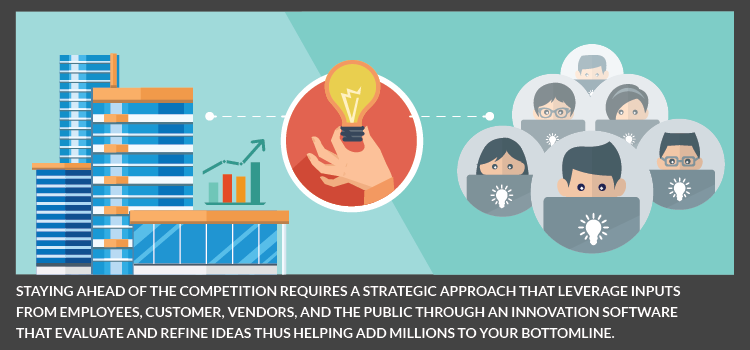
Retail moves fast. Customer expectations change quickly, margins stay tight, and competitors can copy a product or promo almost overnight. That’s why many leading retailers don’t rely only on leadership brainstorms or outside consultants for new ideas. They pull insights from the people closest to the work: employees, customers, vendors, and partners.
Crowdsourcing in retail is not just “collecting suggestions.” When it’s done well, it becomes a practical system for finding better ideas, testing them quickly, and scaling what works. Below are four well-known examples that show different ways crowdsourcing can support innovation in retail—followed by what your business can learn from them.
1) Amazon: Building Loyalty Through Internal Idea Flow
Amazon is widely known for operating at scale while continuously improving customer experience. One of the reasons the company can move quickly is that ideas can come from anywhere inside the organisation, not only from a single department. When teams across engineering, operations, and customer experience contribute to improvements, the company has a larger “idea surface area” to draw from.
Amazon Prime is often cited as an example of a loyalty program that changed customer expectations in retail. While the exact internal path of any major initiative is rarely simple, the bigger lesson is clear: a program like Prime requires cross-functional input to succeed. It touches delivery, pricing, digital experience, customer support, and retention strategy. Crowdsourcing internally helps spot gaps earlier and refine the offer based on real operational realities.
What retail teams can learn from this is that your best loyalty ideas often come from the teams who see friction daily—warehouse teams, delivery partners, store associates, customer service agents, and eCommerce support staff. If you only ideate at the top, you miss the practical insights that make a loyalty program actually work.
2) Costco: Operational Innovation Powered by Employee Voice
Costco has long been associated with strong employee practices and operational discipline. In retail, that matters because frontline employees are the first to notice waste, friction, and customer pain points. When those employees have a real channel to share ideas—and see that ideas lead to action—innovation becomes part of normal operations.
Many retailers run suggestion programs, but the difference is whether suggestions turn into implemented improvements. In strong employee-driven cultures, ideas tend to focus on efficiency, safety, and customer flow—small changes that compound into significant savings and better experiences over time. Energy efficiency, process improvements, and cost-control measures are common examples of the kind of innovation that often begins as frontline feedback.
The lesson here is not that one specific idea changed everything. It’s that retail organisations win when they treat employee input as a strategic asset. The teams on the floor and in the back room can help you spot issues early, reduce operational drag, and improve store performance without needing massive transformation projects.
3) Sephora: Structured Ideation to Stay Ahead of Changing Customers
Beauty retail evolves quickly. Trends change. Customers expect new experiences. Younger demographics want discovery, personalisation, and a strong digital-to-store connection. Sephora has been known for prioritising innovation in both customer experience and internal development, and one approach retailers often discuss is creating structured programs that keep ideation active rather than occasional.
Sephora has run internal innovation initiatives that encourage employees to think about what the future of shopping could look like, not just what needs fixing today. The key advantage of this model is focus. Instead of general “submit ideas anytime” messaging, the company creates a structured environment for ideas to be shaped, discussed, and aligned to strategic direction.
Retailers can learn a lot from this approach. Customer experience innovation is rarely a single feature. It’s a system of changes across training, merchandising, digital experience, service model, and store design. Crowdsourcing helps generate options, but structure helps select and refine the right ones.
If you want to crowdsource effectively, you need a clear challenge question, a timeline, and a visible review process. That turns participation into progress.
4) Starbucks: Customer Crowdsourcing That Fuels Real Improvements
Starbucks is one of the most widely cited examples of using customer input to shape improvements. Its customer idea program became known for inviting people to share suggestions across areas like product ideas, in-store experience, and social impact. The big takeaway isn’t just that customers submitted ideas—it’s that the company created a visible channel for listening and acted on a meaningful portion of what it gathered.
Customer crowdsourcing works especially well in retail because customers experience the brand in real time. They notice friction, they notice missed opportunities, and they have strong opinions about what would make their experience easier or more enjoyable. When you combine those insights with internal operational expertise, you can build improvements that are both desirable and feasible.
Retailers can learn two important lessons from customer idea programs. First, you need categories and structure so feedback is actionable rather than chaotic. Second, you need follow-through. Even if you don’t implement most ideas, showing customers what you heard and what changed builds trust and boosts engagement.
What These Retail Examples Have in Common
These companies differ in size and strategy, but the pattern is similar. They don’t treat crowdsourcing as a suggestion box. They treat it as an input engine connected to decision-making and execution.
In retail, crowdsourcing tends to work best when it supports goals like:
-
Improving customer experience in ways that reduce friction
-
Finding operational efficiencies that compound over time
-
Identifying product and service opportunities earlier
-
Increasing engagement by involving employees or customers in improvement
The “secret” is not the platform alone. It’s the system around it: clear challenges, transparent review, ownership, and measurement.
How to Run Crowdsourcing in Retail Without Creating Chaos
If you want crowdsourcing to produce real outcomes, a few practical steps make a huge difference.
Start by defining one clear challenge. Avoid vague prompts like “How do we innovate?” Instead, choose a focused question tied to a measurable outcome, such as reducing checkout wait times, improving onboarding for new associates, increasing repeat purchases, or reducing out-of-stock incidents.
Next, decide who should contribute. Some challenges are best sourced from store associates and managers. Others benefit from customer input or vendor partners. The audience should match the problem.
Then, make evaluation simple and consistent. Ideas should be reviewed using the same criteria, such as impact, feasibility, time to implement, and customer value. When people understand how ideas are assessed, they submit higher-quality input and trust the process more.
Finally, create a clear path from idea to action. The fastest way to kill engagement is letting ideas disappear into a black hole. Even small updates—what’s under review, what’s being piloted, what’s implemented—keep participation strong.
Common Mistakes Retailers Make With Crowdsourcing
Crowdsourcing fails when it is treated as a one-time campaign or a PR exercise. It also fails when there is no structure, no response loop, or no implementation plan. Retail teams get overwhelmed by volume, reviewers delay decisions, and contributors stop participating because nothing seems to happen.
Another common issue is unclear ownership. If no one is accountable for moving ideas into pilots or rollouts, even good ideas stall. Crowdsourcing creates the supply of ideas, but the process creates the outcomes.
Turning Crowdsourced Ideas Into Measurable Results
Crowdsourcing is one of the most practical ways to stay ahead in retail because it draws from the people closest to the customer and the work. But the real value comes when that input is captured, evaluated, and implemented through a repeatable system.
If you want to build a retail crowdsourcing program that consistently leads to improvements, the right innovation platform helps you run challenges, collect ideas at scale, evaluate them transparently, and track outcomes from pilot to implementation.
Want to see what that looks like in practice? Schedule a demo and we’ll show you how a structured crowdsourcing process can help you capture better ideas, move faster, and turn insights into measurable impact.