Stop Wasting Potential: Mastering the Modern Idea Management System in 2026
Your current suggestion box isn’t an innovation strategy; it’s a digital graveyard for your organization’s untapped potential. While 70% of…
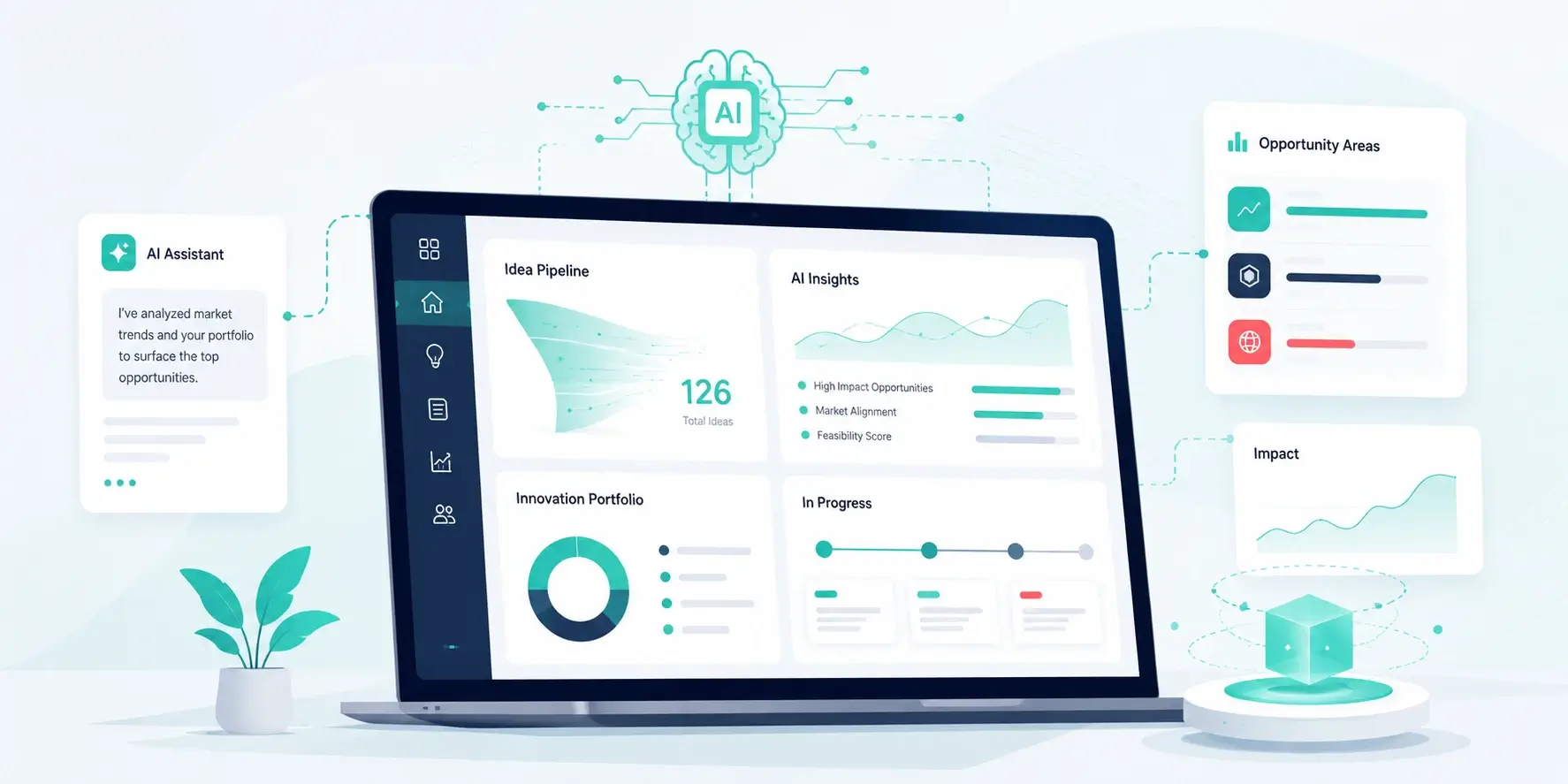
An AI-powered innovation management platform helps organizations collect, evaluate, prioritize, and implement ideas with less manual work. It brings idea management, workflow automation, evaluation, portfolio tracking, and reporting into one system, then uses artificial intelligence to improve speed and decision quality. The goal is not to replace innovation teams. The goal is to help them manage more ideas, reduce duplicated effort, find stronger opportunities, and move selected projects toward measurable
Innovation always carries risk. A new idea may miss customer needs, cost more than expected, fail during implementation, or create adoption problems after launch. That does not mean companies should avoid innovation. It means they need a clear system for testing ideas before major resources are committed. The goal of innovation risk management is not to remove uncertainty. That would remove innovation itself. The goal is to identify the biggest
Continue ReadingBusinesses need two kinds of innovation to stay competitive. Incremental innovation improves what already works. Radical innovation creates new products, markets, technologies, or business models that can change the company’s future direction. The challenge is balance. Too much focus on small improvements can make a company efficient but vulnerable to disruption. Too much focus on breakthrough ideas can drain resources and distract teams from practical gains. A strong innovation program
Continue ReadingStop treating your company’s future like a digital suggestion box. Most organizations are currently buried under a mountain of uncoordinated…
Continue ReadingPeter Drucker argued that innovation is not a random flash of creativity. It is a disciplined search for opportunity. For business leaders, that distinction matters because it moves innovation from abstract thinking into a process that can be managed, measured, and improved. Drucker’s seven sources of innovation give organizations a practical way to identify where new value may come from. Some sources appear inside the company or industry, such as
Dynamically continuous innovation is the middle ground between small product updates and major disruption. It improves an existing product, service, process, or business model in a meaningful way without forcing customers to completely change their behavior. A software company adding AI-assisted workflows to an existing platform, a bank introducing mobile deposit, or an electric vehicle company improving range through battery and software upgrades are all examples. The customer still understands
Continue ReadingComputing innovation is a new or improved technology, system, product, process, or service that depends on computer code, algorithms, software, or digital systems to function. It can be as visible as a smartphone, mobile app, or self-driving car, or as hidden as a fraud detection model, cloud infrastructure, or supply chain automation system. At its core, computing innovation uses data and computing power to solve problems, improve decisions, automate work,
Continue ReadingEvery strong innovation starts as an unfinished thought. It may come from a customer complaint, an employee suggestion, a market shift, or a process that takes too long. Idea development is the process that turns that early thought into something clear, tested, prioritized, and ready to implement. Without structure, ideas often stay scattered across meetings, spreadsheets, inboxes, or Slack threads. Some get ignored. Others move forward because the loudest person
Growing companies do not usually suffer from a lack of ideas. They suffer from scattered ideas, unclear ownership, slow decisions, and no reliable way to turn promising concepts into measurable business value. An innovation management system solves that problem. It gives organizations a structured way to collect, evaluate, test, implement, and measure ideas that support strategic goals. Instead of relying on random brainstorming sessions or disconnected spreadsheets, an IMS creates
Continue Reading