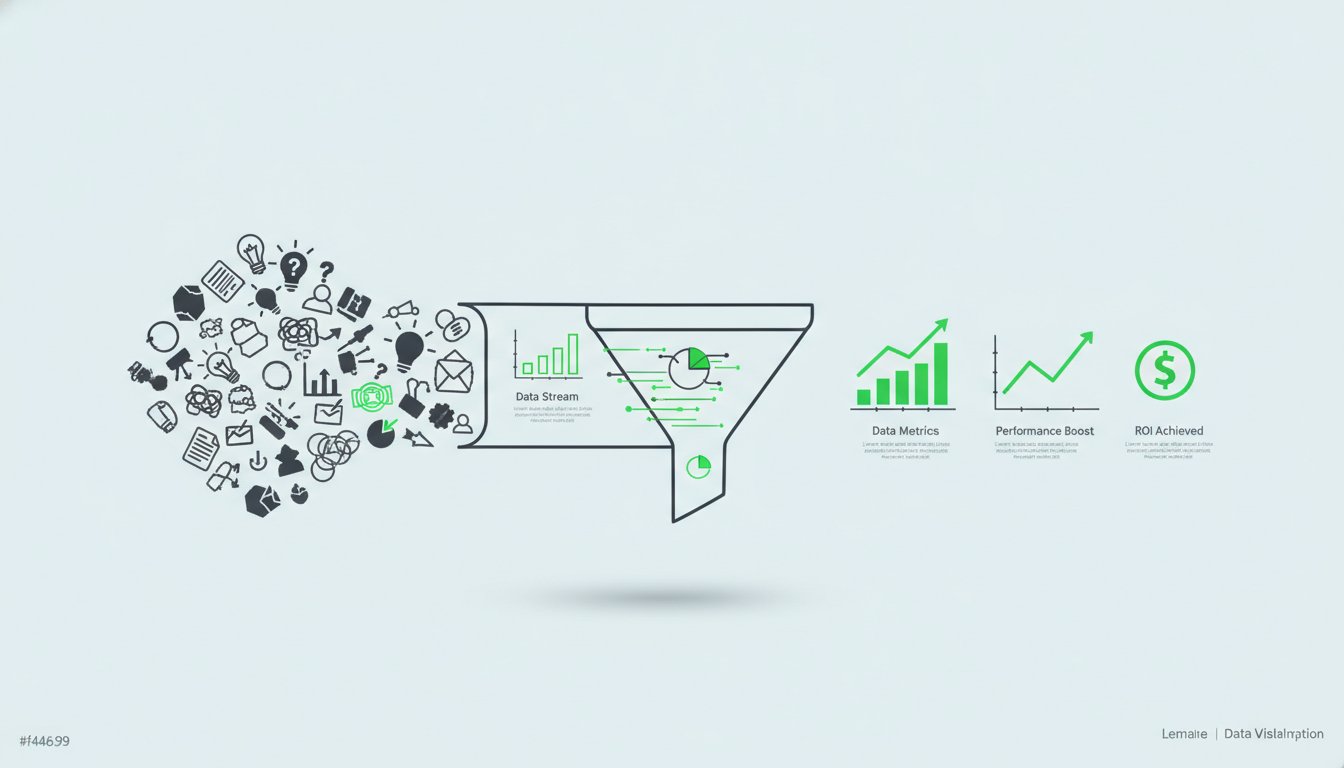
Tag Archives: employee engagement

The Modern Platform for Continuous Improvement Ideas: From Suggestions to ROI

The Modern Platform for Continuous Improvement Ideas: From Suggestions to ROI
Coby Skonord|
June 16, 2026

Why do 82% of employees cite learning and growth as their primary engagement driver while most organizations still treat their best ideas like junk mail in a digital suggestion box? Global engagement levels have stalled at a mere 23% as of 2025, yet the market for continuous improvement tools is surging toward a $38.15 billion valuation. The disconnect isn’t a lack of brilliance from your staff. It’s the administrative burden of managing those insights. If you’re tired of chasing spreadsheets and losing track of high-value feedback, you need a dedicated platform for continuous improvement ideas that treats every submission as a strategic asset.

You already know that your frontline teams are your greatest untapped resource for efficiency. We’ll show you how to transform those scattered suggestions into a centralized “value vault” that drives measurable financial impact, with some users generating an average of $6,000 in annual impact per person according to industry benchmarks. This article previews the automated workflows that move ideas to implementation and the dashboards that finally quantify the ROI of every improvement. It’s time to move past the passive suggestion box and start scaling excellence with data-driven precision.

Key Takeaways

  • Replace the “black hole” effect of traditional suggestion boxes with a transparent digital ecosystem that captures and acknowledges every employee contribution.
  • Leverage a platform for continuous improvement ideas to cut administrative friction using AI-powered clustering and automated workflows.
  • Apply structured evaluation frameworks to distinguish between incremental gains and radical shifts, ensuring your innovation pipeline remains both balanced and result-driven.
  • Drive cultural transformation by launching targeted Innovation Challenges that align your workforce’s collective intelligence with your most critical financial goals.
  • Stop guessing. Use real-time dashboards to translate raw suggestions into tangible cost savings and documented efficiency gains.

Beyond the Suggestion Box: Why Your Organization Needs a Dedicated Platform

The traditional suggestion box is a graveyard for potential. In most organizations, employee insights vanish into a “black hole” of physical bins or unmonitored email aliases, leaving contributors disengaged and leadership blind to frontline realities. A modern platform for continuous improvement ideas replaces this stagnation with a centralized, transparent hub designed to crowdsource, evaluate, and track every operational change in real time. By 2026, a single source of truth for operational excellence (OpEx) is no longer a luxury; it’s a requirement for organizations aiming to stay competitive in a market projected to reach $38.15 billion. Manual tracking in fragmented spreadsheets inevitably leads to “idea leakage,” where high-value insights are buried under administrative burnout and version control errors.

The Inefficiency of Legacy Systems

Generic project management tools are where great ideas go to die. They lack the structured submission workflows necessary to engage a busy frontline, leading to the high failure rates seen in unstructured innovation programs. This functional gap is at the heart of the Ideawake vs. spreadsheets debate. While some organizations attempt to build custom internal tools, they often find themselves trapped in technical debt and low adoption cycles. Choosing to buy a specialized platform provides the AI-driven deduplication and gamification features that home-grown systems simply cannot match. It ensures the continuous improvement process becomes a core competency rather than an administrative nightmare.

Connecting Frontline Insights to Executive Strategy

The structural gap between the shop floor and the C-suite is a primary cause of operational friction. A dedicated platform for continuous improvement ideas bridges this divide, turning frontline observations into executive-level strategy. This alignment is a powerful catalyst for growth. The benefits of employee ideation programs extend far beyond the balance sheet, fostering a culture of ownership that directly combats the global 23% engagement crisis. When employees see their ideas implemented, retention improves and productivity climbs. Industry data confirms that one in four improvements results in significant time savings, averaging nearly one hour saved per day per improvement. It’s time to stop guessing and start executing with precision.

The Architecture of a High-Impact Continuous Improvement Platform

Building a high-impact infrastructure for innovation requires more than a digital repository. It demands an active engine designed to eliminate administrative friction while supporting the full lifecycle of an idea. A modern platform for continuous improvement ideas must function as a high-performance filter that prioritizes value over volume. Without this architecture, organizations quickly become overwhelmed by the “noise” of low-quality submissions, leading to the administrative burnout mentioned previously. By 2025, it’s projected that 40% of employee engagement software will incorporate AI to solve this exact problem, moving beyond simple storage to intelligent processing.

Leveraging AI for Idea Evaluation

The primary barrier to scaling innovation is the manual labor required to screen and categorize suggestions. Ideawake AI addresses this by automating the first pass of idea screening, identifying duplicates, and clustering similar themes before a human manager ever sees them. This shift allows leaders to function as strategists rather than data entry clerks. Using AI tools for innovation managers transforms raw, often fragmented frontline feedback into actionable plans. These tools act as digital facilitators that refine suggestions in real time, ensuring that only the most viable concepts move forward for evaluation. It’s about maximizing clarity while minimizing the time spent on repetitive tasks.

Gamification and the Psychology of Participation

Software alone doesn’t create a culture of continuous improvement; people do. Sustained participation relies on the psychology of recognition rather than just monetary incentives. High-impact platforms utilize gamification features like transparent voting, leaderboards, and peer recognition to create a “democracy of ideas.” These elements foster a sense of ownership, making employees feel like active stakeholders in the company’s success. Structured Innovation Challenges further focus this energy by directing the workforce toward solving specific business bottlenecks rather than submitting random thoughts. This targeted approach ensures that the collective intelligence of your team is always aligned with high-priority executive goals. To see how these features work in a live environment, you can schedule a brief walkthrough of the platform.

3 Examples of Continuous Improvement Ideas in Action

To understand the power of a platform for continuous improvement ideas, you must look beyond abstract methodologies and examine the tangible results of frontline insights. High-performing organizations don’t just wait for lightning to strike; they build an infrastructure that captures every spark. Every suggestion should ideally aim to eliminate one of the 8 forms of Lean waste, such as overproduction, waiting times, or defective processing. By categorizing these insights, leaders can maintain a healthy balance between incremental vs. radical innovation, ensuring the business evolves at every level simultaneously.

Example 1: The Incremental Efficiency Tweak

In a complex logistics environment, a frontline operator identified a redundant data entry step that added zero value to the end customer. By submitting this observation through a dedicated platform, they triggered a workflow that eliminated a specific instance of overproduction waste. The result was a 15% reduction in processing time for that specific product line. This wasn’t just a “suggestion”; the platform tracked the implementation from the warehouse floor directly to the executive dashboard. It provided leadership with immediate visibility into the cumulative cost savings that would have otherwise been lost to administrative friction.

Example 2: The “Mistake” That Became a Product

Not every breakthrough begins as a deliberate project. The history of Post-it notes is a classic example of an employee idea that was originally a mistake. Dr. Spencer Silver created an adhesive that didn’t stick strongly enough for its intended use, yet he recognized its potential for something else. In a modern setting, a centralized database prevents these moments of unintended brilliance from being lost in private email threads. It allows other departments to view, vote on, and iterate on “failed” experiments, turning internal accidents into global market leaders.

Example 3: The Radical Cultural Shift

Radical shifts often emerge from the most unexpected corners of the workforce. The Flamin Hot Cheetos story remains the ultimate testament to frontline empowerment, where a janitor’s insight revolutionized an entire product category. Today’s enterprises replicate this success by using their platform to host virtual hackathons designed to tackle deep technical debt or cultural bottlenecks. These initiatives empower employees to move beyond small tweaks and propose fundamental changes to the business model, creating a high-performance culture where every voice has the potential to drive massive financial impact.

Evaluating and Prioritizing Ideas for Maximum ROI

Collecting thousands of suggestions is the easy part. The real challenge lies in distinguishing high-value insights from the inevitable “noise” that high-volume crowdsourcing produces. Without a structured idea evaluation process, organizations fall into the trap of “innovation theater.” This is a state where teams are busy with activity but fail to move the needle on key performance indicators. A modern platform for continuous improvement ideas eliminates this ambiguity by providing a systematic scoring framework. By involving cross-functional experts during the evaluation phase, you ensure that ideas are viewed through multiple lenses, from technical feasibility to market demand.

The core of this prioritization is the Impact vs. Effort matrix. This tool allows managers to quickly identify “Quick Wins,” which are improvements that require minimal resources but deliver immediate gains. Strategic projects, while requiring more significant investment, are also clearly defined and tracked. Automated workflows then take the highest-scoring ideas and move them directly into a project initiation phase, ensuring momentum isn’t lost to administrative delays. It’s about building a pipeline that prioritizes results over mere participation.

Data-Driven Decision Making

When you’re presenting a new initiative to the C-suite, anecdotes aren’t enough. Numbers are the only language that matters for budget approval. Using an idea management ROI calculator allows you to predict potential financial outcomes before you commit a single dollar to implementation. This predictive capability is enhanced by Stage-Gate workflows, which require ideas to meet specific criteria before advancing to the next level of investment. This disciplined approach protects your resources and ensures that your innovation program is viewed as a profit center rather than a cost center. For a comprehensive look at the frameworks and metrics required to quantify these results, explore our guide on how to measure continuous improvement across your enterprise. If you’re ready to see how a data-driven approach can transform your operations, you can book a demo to see these evaluation tools in action.

Avoiding Common Evaluation Pitfalls

One of the most persistent threats to a successful continuous improvement program is the “HiPPO” effect, or the Highest Paid Person’s Opinion. When the most senior person in the room dictates which ideas move forward, it kills employee engagement and often leads to suboptimal choices. To counter this, many high-performing teams use reverse brainstorming to stress-test ideas. Instead of asking why an idea will work, you ask why it might fail. This identifies hidden risks early in the lifecycle. Standardizing what you look for is also vital. Following a specific checklist for what makes an idea great ensures that every suggestion is evaluated on its own merit, regardless of who submitted it. This objectivity is what separates world-class innovation programs from those that eventually fizzle out.

Implementation: Turning Your Platform into a Competitive Advantage

Implementation is often mistaken for a mere technical task. In reality, it’s a cultural shift that requires deep executive buy-in to succeed. A successful implementation signals to the entire organization that innovation isn’t a one-time event but a permanent strategic priority. To build momentum without overwhelming your teams, start with a focused pilot program or a targeted Innovation Challenge. This approach allows you to prove the value proposition in a controlled environment before scaling. By 2026, the organizations that lead their industries will be those that have successfully moved past the “suggestion box” mentality and toward a disciplined execution model.

Your platform for continuous improvement ideas shouldn’t exist as an isolated silo. To ensure high adoption rates, the system must live where your employees already spend their time. Seamless integrations with Microsoft 365, Slack, and Jira are vital for reducing friction. When an employee can submit a breakthrough insight directly from their primary communication tool, participation becomes second nature. Ideawake acts as a partner in this transition, providing the expertise to reduce implementation timelines from months to just a few weeks.

The Build vs. Buy Dilemma

Many enterprises consider developing an internal tool to manage suggestions, but the hidden costs of maintenance and technical debt are often prohibitive. When you compare building vs. buying idea management software, the advantage of a purpose-built system is clear. Specialized platforms offer modern architecture and no-code configurability that allow you to scale across thousands of users without constant IT intervention. A purpose-built platform provides immediate access to advanced features like AI-driven evaluation and automated ROI tracking that would take years to develop in-house. Choosing a dedicated solution ensures your long-term cost savings are maximized through immediate operational gains and zero maintenance overhead.

Your 90-Day Roadmap to Operational Excellence

Moving from a static environment to a high-output innovation engine requires a methodical plan. The phases of continuous improvement begin with technical configuration and move quickly into active crowdsourcing and evaluation. A critical, yet often overlooked, step is “closing the loop” with your employees. Publicly celebrating successful implementations and acknowledging contributors ensures the pipeline remains full of high-quality insights. This transparency turns a software rollout into a sustainable competitive advantage that competitors simply can’t replicate. It’s time to stop settling for average results and start building a culture of excellence. Schedule a demo today to see how Ideawake can transform your operational efficiency.

Scaling Operational Excellence with Data-Driven Precision

The transition from a passive suggestion box to a strategic platform for continuous improvement ideas is the difference between operational stagnation and market leadership. By centralizing crowdsourced insights and applying AI-driven evaluation, organizations can reduce administrative overhead by up to 80% while ensuring no high-value concept is lost. You’ve seen how structured workflows and transparent ROI tracking turn frontline observations into documented financial gains. It’s time to stop letting potential vanish into fragmented spreadsheets and start building a permanent competitive moat.

Ideawake provides the end-to-end innovation lifecycle management you need to move from initial submission to final impact measurement. With a proven track record of enterprise-scale implementations globally, we help you bridge the gap between employee brilliance and executive strategy. Don’t let your organization settle for average engagement when you can unlock a high-performance culture of excellence. Transform your frontline ideas into measurable ROI; sign up for an Ideawake demo today.

Your team already has the answers to your most pressing efficiency challenges. Give them the tools to make those answers heard and watch your organization thrive.

Frequently Asked Questions

What is a platform for continuous improvement ideas?

A platform for continuous improvement ideas is a centralized digital ecosystem that allows organizations to crowdsource, evaluate, and implement employee-led changes. Unlike static tools, it provides a structured workflow to move from raw insight to measurable financial impact. It functions as a strategic engine for operational excellence; it ensures that frontline intelligence is captured and aligned with executive goals rather than being lost in fragmented communication channels.

How does continuous improvement software differ from a suggestion box?

Continuous improvement software provides transparency and accountability that physical or digital suggestion boxes lack. While suggestion boxes often become “black holes” where ideas disappear, modern platforms offer real-time tracking and automated feedback loops. This ensures every contributor knows exactly where their idea stands in the evaluation pipeline. It transforms passive submission into an active, collaborative project management cycle that prioritizes results over mere activity.

Can this platform integrate with our existing tools like Microsoft Teams or Jira?

Modern platforms are designed to live where your employees already work by integrating with tools like Microsoft Teams, Slack, and Jira. These integrations reduce the friction of switching between applications, which is vital for maintaining high participation rates across a diverse workforce. By embedding the submission process into daily communication channels, you ensure that capturing a breakthrough idea is as simple as sending a chat message.

How do we measure the ROI of a continuous improvement program?

ROI is measured by tracking the tangible cost savings, efficiency gains, and time reclaimed through implemented ideas. High-impact platforms include built-in dashboards that quantify these metrics against the initial investment in real time. Beyond direct financial impact, you should also monitor qualitative gains like increased employee retention and safety improvements. Data-driven reporting ensures your innovation program remains a visible profit center that justifies its own budget. To go deeper on the specific frameworks and KPIs used by data-driven enterprises, see our detailed breakdown of how to measure continuous improvement for 2026.

What are some examples of successful continuous improvement ideas?

Successful ideas range from incremental process tweaks to radical shifts in business models. Common examples include identifying redundant steps in a production line to reduce waste or implementing new safety protocols that lower insurance premiums. Other wins might involve optimizing energy consumption in facilities or digitizing manual paperwork to save hundreds of administrative hours. The key is that every idea addresses a specific operational bottleneck with a clear path to implementation.

How do we encourage employees to submit their ideas regularly?

Sustained engagement is driven by recognition and the visible implementation of ideas rather than monetary rewards alone. Use gamification features like leaderboards and peer voting to foster a healthy “democracy of ideas” within the office. Launching targeted Innovation Challenges also focuses employee energy on solving specific, high-priority business problems. When staff see their contributions actually changing the workplace, participation naturally becomes a core part of the organizational culture.

Is AI used in evaluating the ideas submitted to the platform?

AI is a mandatory component for modern platforms to manage high submission volumes without increasing administrative burden. It automates the first pass of screening by identifying duplicate ideas and clustering similar themes into actionable groups. This allows innovation managers to focus their time on high-potential concepts rather than manual data entry. By 2025, it’s projected that 40% of employee engagement software will incorporate AI to solve these exact evaluative bottlenecks.

How long does it take to implement a continuous improvement platform?

Full implementation of a platform for continuous improvement ideas typically takes between two to six weeks. This timeline depends on the scale of your organization and the complexity of required software integrations. A phased approach starting with a pilot program allows you to demonstrate quick wins and refine your strategy before a full-scale rollout. Expert partners accelerate this process by handling technical setup and cultural training concurrently to ensure immediate adoption.


Legacy Innovation Software Alternatives: The 2026 Guide to Modern Idea Management

Idea Management Platform: The 2026 Buyer’s Guide to Rapid Innovation ROI
Coby Skonord|
June 15, 2026

Your current innovation software isn’t just a tool; it’s an “Innovation Tax” that consumes hundreds of hours in manual vetting while burying your team’s best ideas in a digital black hole. Finding legacy innovation software alternatives has become a priority for leaders who are tired of low participation rates and an inability to track the financial impact of implemented ideas. You likely feel the frustration of watching potential ROI evaporate because your current system is too clunky for employees to actually use. The status quo is costing you.

It’s time to stop fighting clunky systems and start driving results. This 2026 guide identifies the high-performance platforms designed to replace administrative friction with automated workflows and clear ROI dashboards. We’ll explore how modern, AI-powered systems can reduce your administrative burden by 50% while building a self-sustaining culture of engagement that finally connects employee creativity to the bottom line.

Key Takeaways

  • Transition from passive idea repositories to active execution engines that automate evaluation and prove measurable business value.
  • Quantify the hidden “Innovation Tax” and learn why top organizations are migrating to legacy innovation software alternatives to reclaim hundreds of administrative hours.
  • Identify the technical pitfalls of first-generation tools that cause employee engagement to plummet and learn how modern architecture prevents the “Black Hole” effect.
  • Apply five non-negotiable criteria to your software evaluation, ensuring your next platform links every submitted idea directly to a dollar value for the C-suite.
  • Explore how AI-driven automation reduces manual vetting by 50%, allowing your team to focus on high-impact implementation rather than administrative sorting.

Beyond the Digital Suggestion Box: Defining Legacy Innovation Software Alternatives

In the 2026 enterprise environment, legacy innovation software is defined less by its age and more by its inability to facilitate action. If a tool requires manual intervention at every stage of the lifecycle, it’s a liability rather than an asset. These systems act as passive repositories, functioning like digital filing cabinets that store information without processing it for value. Identifying legacy innovation software alternatives is now a requirement for organizations looking to move beyond simple data collection toward tangible business results.

The primary symptom of an outdated system is the “Black Hole” effect. When employees submit ideas but receive no feedback or visibility into the review process, engagement levels decline. This lack of transparency erodes the trust necessary for a healthy corporate culture. The shift since 2025 has seen a move away from basic crowdsourcing toward integrated execution engines. A modern alternative acts as a catalyst, transforming organizational intelligence into documented financial growth through automated workflows.

The Anatomy of a Legacy Innovation Tool

Outdated systems typically rely on static submission forms that lack intelligent routing or deduplication capabilities. Without these features, innovation managers are forced to manually sort through noise, leading to significant delays in the pipeline. This manual approach often results in “Reviewer Burnout,” where subject matter experts become overwhelmed by a volume of unvetted suggestions. Furthermore, these tools frequently operate in data silos, making it nearly impossible to measure the success of Innovation management initiatives against broader corporate objectives.

The Strategic Shift to Modern Idea Management

Modern idea management platforms function as active partners in the innovation process. They utilize “Intelligent Capture” to gather insights from a broad spectrum of stakeholders, including employees, partners, and customers. This approach ensures that the highest-quality ideas are prioritized based on objective data rather than subjective preference. In 2026, leading enterprises are moving away from using general project tools like Jira for these specialized needs. While such tools are effective for task management, they lack the specific engagement and evaluation features found in dedicated legacy innovation software alternatives.

The Hidden “Innovation Tax”: Quantifying the Cost of Legacy Friction

Every hour your team spends manually triaging spreadsheets or chasing status updates in an outdated portal is a direct withdrawal from your company’s growth potential. This is the “Innovation Tax.” It’s the silent, compounding cost of operational friction that turns a promising idea program into an administrative burden. While organizations often focus on the subscription price of their tools, the true expense lies in the human capital wasted on low-value tasks. Transitioning to legacy innovation software alternatives isn’t just about getting a cleaner interface; it’s about stopping the substantial drain on your most expensive resources.

The scale of this inefficiency is documented in high-stakes environments. For instance, the U.S. Government Accountability Office (GAO) has highlighted how maintaining critical federal IT legacy systems costs billions while hindering the delivery of modern services. In the corporate innovation space, this manifests as “Reviewer Burnout.” When subject matter experts are forced to navigate clunky, manual workflows, decision-making paralysis sets in. Pipelines stall. High-potential insights wither because the system lacks the intelligence to prioritize them. If you’re curious how your current setup stacks up against modern standards, you can explore how automation eliminates these bottlenecks.

Friction doesn’t just slow you down; it kills participation. Industry observations suggest that administrative friction often leads to a significant drop in employee participation within the first year of a program’s launch. If the submission process takes longer than a few minutes, your frontline staff will likely stop contributing. You’re left with a stagnant repository where ideas are submitted but never executed, destroying the culture of trust you worked to build.

Measuring the ROI of Administrative Reduction

Modern legacy innovation software alternatives are engineered to slash management overhead through AI-assisted triage and automated engagement loops. Instead of a full-time administrator manually routing every suggestion, the platform handles the heavy lifting. Some organizations report they can reduce the time spent on manual innovation management by half after migrating to automated systems. To see the specific financial impact of these efficiencies on your bottom line, utilizing an how to measure continuous improvement framework is the most effective way to justify a shift toward modernization.

The Cultural Cost of Mediocre Tools

Beyond the spreadsheets, there’s a psychological toll. When employees feel their contributions are ignored by a stagnant system, they disengage. Legacy tools stifle “Bottom-Up” innovation by creating high barriers to entry that discourage the very people who have the most relevant insights. A modern platform acts as a centralized “Value Vault,” capturing and protecting institutional knowledge that would otherwise be lost when employees leave. This ensures that every insight is preserved, evaluated, and ready for execution, regardless of when it was submitted.

Legacy Architecture vs. Modern Execution Engines: A Technical Comparison

Legacy systems are often built on rigid frameworks that prioritize data storage over operational speed. This technical debt forces organizations to employ full-time administrators just to maintain the status quo. In contrast, legacy innovation software alternatives are built as execution engines, utilizing automation to move ideas through the pipeline without constant human intervention. While older systems function as static records, modern engines focus on the velocity of an idea from submission to implementation.

Many teams try to bridge the gap using general collaboration tools like Microsoft Teams or Trello. However, these lack the specialized logic required for the innovation lifecycle. They cannot handle multi-stage evaluation criteria or track the financial impact of a project over several fiscal years. This technical gap is why specialized legacy innovation software alternatives are essential for moving beyond task management into true value creation. Without a dedicated engine, programs often stall at the evaluation phase due to a lack of structured decision-making tools.

A modern tech stack in 2026 must be cloud-native and API-heavy to ensure it integrates with existing enterprise software. Because frontline staff provide critical insights, a mobile-first design is no longer optional. Ideawake was engineered from the ground up to address the specific performance bottlenecks found in first-generation tools, such as slow evaluation cycles and disconnected reporting. This architecture allows for a more agile approach to idea management that scales across global departments without increasing administrative headcounts.

AI-Driven Insights vs. Manual Tagging

Manual tagging is a slow process that often leads to inconsistent data and “Innovation Chaos.” Ideawake AI addresses this by automatically identifying patterns and eliminating duplicate entries before they reach the review stage. By utilizing sentiment analysis and trend clustering, the platform provides data-driven decision-making capabilities that manual systems cannot replicate. This reduces the administrative burden by automatically routing submissions to the most appropriate subject matter experts based on their historical expertise.

Gamification: Driving Consistent Adoption Rates

To achieve high participation, a platform must feel like an engaging social experience rather than a corporate obligation. Modern engines leverage leaderboards, badges, and prizes to foster a sustained culture of contribution. This approach is particularly effective for remote teams where digital connectivity is the primary driver of organizational engagement. When the innovation process is transparent and rewarding, participation becomes a natural part of the workday, ensuring the pipeline remains populated with high-quality insights from all levels of the business.

5 Non-Negotiable Criteria for Evaluating Legacy Innovation Software Alternatives

Selecting legacy innovation software alternatives requires a fundamental shift from checking feature boxes to evaluating business outcomes. Most procurement teams get bogged down in technical specifications, but the real differentiator is how a tool performs under the pressure of real-world enterprise constraints. In 2026, a platform that doesn’t provide an immediate, measurable connection to your balance sheet is just another cost center. High-performance legacy innovation software alternatives must balance power with simplicity to ensure long-term viability.

  • Measurable ROI Tracking: The system must link every submission directly to a financial value. Whether it’s cost savings from a process improvement or revenue from a new product, the data should be visible to the C-suite in real time.
  • Configurability vs. Customization: Avoid the “Hard-Coded” trap. Legacy vendors often require expensive professional services for simple workflow changes. Modern platforms allow you to configure complex logic without writing a single line of code.
  • User Experience (UX) for the Frontline: If your frontline staff can’t submit an idea in under 60 seconds on their mobile device, adoption will fail. Intuitive, mobile-first design is a prerequisite for engagement.
  • Scalability: A tool that works for a 50-person pilot might crawl when deployed to 100,000 users. Ensure the architecture supports massive concurrent activity without performance lag or administrative bloat.
  • Speed to Launch: Enterprise software shouldn’t take six months to deploy. You should be able to go from zero to a fully operational innovation hub in days, not months.

Evaluating the “True Cost” of Ownership

Subscription fees are just the tip of the iceberg. The real cost of legacy systems is the internal management time required to keep them running. When considering the build vs. buy idea management software debate, remember that internal builds often lack the sophisticated engagement features that drive adoption. A “cheap” suggestion tool is actually the most expensive option if it results in zero participation; you’re paying for a ghost town. Focus on the total cost of administrative labor rather than just the license price.

The Strategic Innovation Management Edge

A strategic innovation management platform provides a competitive edge by allowing you to out-execute the market through rapid insight cycles. Your vendor should be a high-performance partner that provides the framework for success, not just a login. For a deeper dive into market-leading tools, refer to the best innovation management software guide for OpEx leaders looking to modernize their stack. You can book a free demo to see how these criteria translate into a high-participation culture.

Ideawake: The AI-Powered Alternative Engineered for Rapid ROI

Ideawake is unapologetically results-driven. While first-generation systems focus on the act of collection, we focus on the outcome of execution. For organizations evaluating legacy innovation software alternatives, the choice often comes down to administrative burden versus automated growth. We’ve engineered our platform to be the high-performance partner that enterprise leaders need to bridge the gap between a raw idea and a line item on a financial report. It’s a no-nonsense path to success that prioritizes velocity over bureaucracy.

Our platform automates the heavy lifting that traditionally kills innovation programs. By handling the end-to-end process, from the initial submission through AI-assisted triage to final ROI measurement, we eliminate the manual bottlenecks that cause reviewer burnout. The Ideawake promise is simple: we provide a dramatically reduced implementation time so you can start seeing measurable results in weeks, not years. You don’t have time for a two-year rollout; you need a system that works at the speed of your business.

Built for the Modern Enterprise

The 2026 business landscape requires a cloud-based, scalable architecture that can support global teams without performance lag. Our product features are specifically designed to solve the failures found in legacy tools, such as disconnected data silos and low participation rates. Unlike mediocre systems that feel like an obligation, Ideawake is a high-impact alternative that employees actually want to use. We provide the technical foundation for a self-sustaining innovation culture that scales with your organization’s ambitions.

Take Control of Your Innovation Pipeline

Stop settling for average results and unvetted ideas that lead nowhere. The era of the digital suggestion box is over. It’s time to join the ranks of innovators who demand a measurable impact from every dollar invested in their programs. You have the potential within your workforce; you just need the engine to harness it. The path forward is clear: move beyond the friction of the past and embrace a platform built for future growth. Book a demo today to see how Ideawake turns raw insights into realized profit.

Accelerate Your Path to Measurable Innovation ROI

Modernizing your innovation stack is more than a simple software upgrade; it’s a strategic move to reclaim hundreds of hours currently lost to administrative friction. By prioritizing legacy innovation software alternatives that offer automated workflows and transparent ROI dashboards, you transform a passive suggestion box into a high-performance engine for financial growth. You’ve seen how the “Innovation Tax” of clunky systems drains resources. Now, it’s time to leverage a platform that works as hard as your team does.

Ideawake delivers the modern architecture required for the 2026 business landscape. With AI-driven insights that reduce administrative tasks by 50% and gamification features that boost adoption rates by 90%, the platform is engineered to turn raw insights into tangible business value. Don’t let your organization’s best ideas disappear into a digital black hole when a path to measurable impact is within reach.

Ready to turn raw ideas into pure ROI? Book your Ideawake demo now.

Your team’s untapped potential is your greatest asset. It’s time to give them the tools to realize it.

Frequently Asked Questions

What is the difference between an idea management platform and a suggestion box?

An idea management platform is an active execution engine, while a suggestion box is a passive repository. Modern platforms automate the entire evaluation lifecycle, ensuring every insight is tracked, scored, and linked to business outcomes. Unlike a box where ideas often go to die, these systems create a transparent, two-way dialogue that moves insights toward implementation through structured workflows and automated feedback loops.

How does an idea management platform drive ROI?

Platforms drive ROI by identifying cost-saving efficiencies and new revenue streams that would otherwise remain hidden within your workforce. By automating the vetting process, organizations reduce the administrative burden and accelerate the time-to-market for high-impact projects. This structured approach ensures that resources are only allocated to the most viable, data-backed opportunities, turning raw creativity into a measurable financial asset.

Can an idea management platform integrate with our existing tools like Teams or Slack?

Yes, modern execution engines are designed to integrate seamlessly with communication tools like Microsoft Teams and Slack. This ensures that employees can submit and vote on ideas within their existing workflows, removing the friction of switching between applications. High-performance legacy innovation software alternatives prioritize these integrations to maintain high participation rates across decentralized and remote teams.

How much administrative time is required to manage an innovation platform?

Administrative time is typically reduced by up to 50% when using AI-driven automation for triage and routing. While legacy systems require constant oversight to manage manual spreadsheets and follow-ups, modern platforms handle the heavy lifting of deduplication and status updates. This allows innovation managers to focus on high-level strategy and implementation rather than getting bogged down in manual data entry.

Is an idea management platform suitable for small teams or only large enterprises?

These platforms are highly effective for both small teams and large enterprises due to their scalable, cloud-native architecture. Small teams benefit from a structured evaluation process that prevents internal chaos, while enterprises utilize the system to capture insights from thousands of frontline workers. The core value of turning raw ideas into profit applies regardless of your current organizational headcount.

What are the most important features to look for in innovation software in 2026?

The non-negotiable features for 2026 include AI-powered deduplication, mobile-first accessibility, and real-time ROI dashboards. Organizations are increasingly seeking legacy innovation software alternatives that offer deep configurability over hard-coded customization. These features ensure the platform remains agile enough to adapt to shifting market conditions without requiring expensive technical support or long development cycles.

How does gamification actually increase employee engagement?

Gamification increases engagement by tapping into intrinsic motivators like recognition, competition, and social proof. Features like leaderboards, badges, and points turn the innovation process into a rewarding experience rather than a corporate chore. This psychological shift drives adoption rates toward 90% by creating a culture where every contribution is visible, acknowledged, and valued by both peers and leadership.

What happens to ideas that are not selected for implementation?

Ideas that aren’t selected are archived in a centralized “Value Vault” for future reference rather than being discarded. This prevents institutional knowledge loss and allows teams to revisit insights when market conditions or internal priorities change. Automated feedback loops ensure the submitter understands why an idea was deferred, which maintains organizational trust and encourages them to continue participating in the future.

Crowdsourcing Ideas from Employees: The High-Performance Guide to Driving ROI in 2026

Crowdsourcing Ideas from Employees: The High-Performance Guide to Driving ROI in 2026
Coby Skonord|
June 14, 2026

Stop pretending that a digital “suggestion box” is a strategy for growth. It’s a performance killer that signals to your best talent that their insights don’t matter. With only 21% of employees globally feeling engaged at work, the cost of ignoring the front line is no longer just a culture problem; it’s a direct hit to your bottom line. Effectively crowdsourcing ideas from employees is the difference between stagnant mediocrity and a high-velocity innovation engine that delivers massive, measurable financial impact.

You know your workforce holds the keys to your next breakthrough, yet those ideas are likely rotting in email threads or dying in unstructured meetings. We’re going to fix that. This guide provides the high-performance blueprint to transform your organization into a relentless innovation machine that prioritizes ROI over “nice-to-have” feedback. We’ll break down the exact framework for deploying structured challenges, leveraging AI for rapid evaluation, and building a culture where every internal insight is treated as a high-value asset ready for execution.

Key Takeaways

  • Ditch the passive suggestion box for a high-velocity innovation pipeline that treats every employee insight as a strategic asset for financial growth.
  • Learn why targeted, time-bound innovation challenges deliver a 10x higher ROI than always-on portals when crowdsourcing ideas from employees to solve specific bottlenecks.
  • Master the mechanics of submission, gamified collaboration, and rigorous evaluation to ensure high-value sparks move from ideation to implementation without friction.
  • Align your innovation “North Star” with C-suite priorities to transform raw workforce potential into a relentless engine of continuous improvement and measurable impact.
  • Eliminate administrative overhead by deploying high-performance platforms that automate the workflow from initial spark to final ROI measurement.

Beyond the Suggestion Box: Why Crowdsourcing Ideas from Employees is a Strategic Mandate

The traditional suggestion box is a graveyard. It is a hollow gesture that signals to your workforce that their brilliance is destined for a dusty binder or a deleted email folder. In 2026, passive listening is a liability you can’t afford. Modern Crowdsourcing has evolved from a cultural “perk” into a high-stakes strategic mandate. It is the active, structured pursuit of disruptive value that transforms every member of your team into a high-performance engine of non-linear growth.

Market dynamics have shifted. Disruption happens in weeks, not years. You don’t have the luxury of waiting for the C-suite to identify every operational friction point. Survival now demands bottom-up intelligence. By crowdsourcing ideas from employees, you tap into the only asset in your organization capable of delivering exponential returns on a massive scale. This isn’t just about morale; it’s about survival in a hyper-competitive economy.

The Death of the Physical Suggestion Box

Passive idea collection is the fastest way to breed employee cynicism. When ideas sit in a “graveyard” without feedback or evaluation, “idea rot” sets in, destroying morale and ensuring your best talent stays silent. For large enterprises, manual idea management is an administrative nightmare that drains resources without delivering results. You must move beyond “nice-to-have” feedback. You need a high-velocity innovation pipeline that converts raw sparks into operational intelligence. This isn’t about being “nice”; it’s about building a robust system that identifies, vets, and scales the solutions your competitors are too slow to see.

Unlocking the Front-Line Advantage

The people closest to your customers are the ones who hold the keys to process optimization. They see the bottlenecks, the waste, and the missed opportunities that never show up on a spreadsheet. Research shows that only 21% of employees globally feel engaged at work, representing a massive reservoir of untapped potential. When you implement a structured system for crowdsourcing ideas from employees, you trigger a massive psychological shift. Workers stop being “just an employee” and become “stakeholders in success.” They start looking for ways to win because they know their insights have a direct path to implementation. Crowdsourcing is the strategic extraction of institutional knowledge for competitive gain. It turns the quiet observations of the front line into a relentless stream of measurable ROI.

The Mechanics of a High-Performance Crowdsourcing Engine

Innovation isn’t a happy accident. It’s the result of a disciplined, high-velocity machine. If your process for crowdsourcing ideas from employees relies on manual review and sporadic follow-ups, you’ve already lost. A high-performance engine requires four non-negotiable phases: submission, collaboration, evaluation, and implementation. This is the “Innovation Lifecycle.” It’s a structured pipeline designed to filter noise and amplify signal. Successful organizations adopt specific strategic approaches to crowdsourcing to ensure their efforts align with mission-critical goals rather than just gathering random feedback.

Transparency is the fuel that keeps this engine running. When employees see where their ideas are in the pipeline, trust grows. If an idea is rejected, tell them why. If it’s moving forward, show the progress. Trust is built through visible action, not vague promises. You can’t manage what you can’t measure; using an Innovation Management Platform ensures every spark is tracked from inception to implementation, providing the accountability your leadership demands.

AI-Driven Insights: Eliminating the Administrative Bottleneck

The biggest threat to ROI is the “evaluation lag.” When a thousand employees submit ideas, a human committee becomes a bottleneck. Ideawake AI destroys this friction. It automatically identifies duplicate entries and clusters similar themes, ensuring your team isn’t wasting time on redundant reviews. Even better, it scores ideas against your pre-defined strategic priorities before a human ever touches them. This reduces “time-to-decision” from months to days. Speed is your greatest competitive advantage. Don’t let bureaucracy kill a billion-dollar idea.

Gamification: Turning Innovation into a High-Stakes Sport

Why do people play games? Competition, recognition, and reward. Your innovation platform should feel like a high-stakes sport. By using voting, leaderboards, and transparent prizes, you turn crowdsourcing ideas from employees into an engaging, social experience. Science shows that leaderboards drive higher quality submissions because people want to see their names at the top.

Design your incentive structures to reward both “the big win” that disrupts markets and “the small fix” that optimizes daily operations. Leveraging social proof through comments and likes encourages cross-departmental collaboration, breaking down silos and building a culture of collective ownership. It’s about creating a momentum that makes participation inevitable.

Strategic Challenges vs. Always-On: Choosing Your Innovation Battle

Success in crowdsourcing ideas from employees isn’t about opening the floodgates and hoping for the best. It’s about strategic deployment. You have two primary weapons in your arsenal: the “Always-On” portal and the “Time-Bound” innovation challenge. One provides a steady pulse of incremental gains, while the other acts as a high-velocity strike against specific business bottlenecks. Understanding when to use which is the difference between a high-performance engine and a chaotic noise machine.

Targeted challenges are where the massive financial impact happens. While an open suggestion system is essential for daily friction removal, time-bound challenges often yield a 10x higher ROI because they focus your workforce’s collective intelligence on a single, high-stakes problem. This centralized activity happens within your Innovation Portal for Employees: The High-Impact Engine for Corporate Growth, serving as the command center for every disruptive initiative you launch.

The Power of the Targeted Innovation Challenge

Vague questions produce vague results. If you ask your team for “new ideas,” you’ll get a mountain of low-value clutter. This is the “garbage in, garbage out” trap. High-performance organizations define clear, aggressive problem statements. Instead of asking for general feedback, challenge your team to reduce operational waste by 15% or to identify three new revenue streams in a specific sector. Constraints don’t stifle creativity; they fuel it. By setting specific boundaries and deadlines, you create a sense of urgency that forces people to think beyond the obvious. High-impact challenges typically target critical areas like cost reduction, workplace safety improvements, or the rapid development of new product lines.

Continuous Improvement: The Relentless Pursuit of Better

While challenges drive the big wins, an “Always-On” culture ensures you never stop optimizing. This is the bedrock of operational excellence. It allows for a steady stream of small-scale suggestions that, when aggregated, lead to massive efficiency gains. The secret is managing this volume without losing focus. You must integrate crowdsourcing ideas from employees directly into your existing Lean or Six Sigma programs. This ensures that every minor process tweak is evaluated through a rigorous lens of utility and impact. By providing a permanent home for these insights, you eliminate the “idea rot” that occurs when employees feel they have to wait for a specific event to share a solution. It’s about maintaining a relentless, daily pursuit of “better” across every department.

5 Steps to Launch a Disruptive Employee Crowdsourcing Initiative

Launching a successful initiative for crowdsourcing ideas from employees isn’t about hope. It’s about a cold, calculated execution of a proven roadmap. If you treat this like a side project, expect side-project results. To drive massive ROI, you must follow a high-performance framework that aligns raw talent with corporate strategy. Here is the five-step blueprint for organizational transformation:

  • Step 1: Define Your North Star. Align every challenge with C-suite priorities to ensure executive buy-in and resource allocation.
  • Step 2: Select Your Arsenal. Deploy high-performance employee led innovation tools that eliminate administrative friction and automate the lifecycle.
  • Step 3: Rally the Troops. Ignite participation with a high-energy communication plan that positions employees as the architects of the company’s future.
  • Step 4: Execute with Precision. Use structured, objective evaluation to filter the noise and identify the highest-impact winners.
  • Step 5: Prove the ROI. Track implementation religiously and report hard financial numbers to the board to justify further scaling.

Phase 1: Alignment and Tool Selection

Executive sponsorship is the lifeblood of innovation. Starting without it is a guaranteed recipe for failure. If the leadership team doesn’t see how crowdsourcing ideas from employees solves their most urgent problems, they won’t fund the implementation. When selecting your platform, look for tools that reduce administrative complexity rather than adding to it. Your software must support the full journey. It’s not enough to just “collect” ideas. You need a system that manages the transition from a raw spark to a fully vetted project with a clear ROI measurement. Don’t settle for a tool that leaves you doing manual data entry in a spreadsheet.

Phase 2: Launch, Evaluation, and Implementation

Adoption doesn’t happen by accident. You need to identify and empower “Innovation Champions” within every department. These are the high-energy influencers who drive bottom-up adoption and keep the momentum alive when the initial excitement fades. Once the ideas start flowing, use the “Scorecard” method for evaluation. This ensures every submission is judged objectively based on feasibility, cost, and potential impact rather than internal politics.

Closing the feedback loop is the final, critical piece of the puzzle. Telling an employee “no” is just as important as saying “yes.” When you provide a transparent, logical reason why an idea isn’t moving forward, you build long-term trust. It shows that you actually listened. If you want to see how this looks in practice, you can book a demo of our Idea Management Platform to see a high-performance engine in action.

Scaling Innovation: Why Ideawake is the Ultimate Partner for Employee Crowdsourcing

Legacy systems are where innovation goes to die. They are often characterized by clunky interfaces and administrative friction that kill momentum before a single idea is even vetted. Ideawake is the modern disruptor designed to eliminate these bottlenecks. We provide a high-velocity, end-to-end engine that captures the initial spark and tracks it through every stage of the lifecycle until it delivers measurable ROI. For a comprehensive look at how the technology has shifted, see The Definitive Guide to Innovation Management Platforms in 2026.

Speed is the only currency that matters in a hyper-competitive market. While traditional competitors take months to configure and deploy, our platform gets you from zero to launch in record time. We don’t just collect data; we drive outcomes. By crowdsourcing ideas from employees through a platform built for speed, you ensure that high-value opportunities are captured and executed before they evaporate. Our platform doesn’t stop at the “good idea” stage. It provides a rigorous tracking module that connects every implemented project to its specific financial outcome, allowing you to report hard numbers to the board with total confidence.

Results-Driven Architecture for the Modern Enterprise

Legacy tools are built on static spreadsheets and manual processes; Ideawake is built on agility. Our cloud-based architecture outperforms older innovation software by offering seamless integrations and real-time data visualization. Ideawake AI is our secret weapon for reducing manual labor. It automatically clusters similar themes and spots high-value trends that human eyes might miss. Ideawake AI acts as a 24/7 innovation consultant, identifying synergies between disparate departments to ensure a solution found in logistics can be instantly applied to manufacturing. Whether you are a mid-market leader with 500 employees or a global titan with 500,000, our infrastructure scales without breaking a sweat. It provides a consistent, high-performance experience across every timezone.

Your Partner in Transformation

We aren’t just a software vendor. We are your high-performance innovation partner. Ideawake provides the strategic framework necessary to turn a collection of suggestions into a relentless culture of excellence. Our gamification features are engineered to ensure long-term engagement. We move beyond the “honeymoon phase” by creating a competitive, social environment where participation is rewarded and recognized. This keeps the innovation pulse alive year-round. Stop settling for average results. Effective crowdsourcing ideas from employees requires a partner that guarantees accountability and measurable gain. It is time to demand more from your workforce and your technology. Book your high-impact demo today and start driving the ROI your organization deserves.

Dominate Your Market with a High-Velocity Innovation Engine

The era of passive, “nice-to-have” feedback is dead. Survival in a hyper-competitive landscape requires a ruthless commitment to bottom-up intelligence and structured execution. By crowdsourcing ideas from employees, you aren’t just improving morale; you’re building a scalable machine that identifies friction and creates value in real time. We’ve laid out the framework for strategic challenges, AI-driven evaluation, and the rigorous tracking of financial outcomes. Now, it’s time to execute.

Ideawake is the partner that makes this transformation possible. Our modern architecture is designed for the scale of 2026, featuring AI-driven idea clustering to kill administrative overhead and end-to-end ROI tracking to prove your impact. Don’t settle for average results or let game-changing insights rot in a suggestion box graveyard. It’s time to turn your workforce into a relentless engine for growth and measurable success.

Ready to turn employee ideas into pure ROI? Book your Ideawake demo now.

Your team already has the answers to your toughest problems. Give them the platform to deliver them and watch your organization accelerate past the status quo. The future belongs to those who innovate at speed.

Frequently Asked Questions

How do we motivate employees to participate in crowdsourcing?

Recognition and tangible rewards are the primary drivers of sustained participation. With only 21% of employees globally feeling engaged at work, you must provide a compelling reason for them to care. Use leaderboards, social proof, and transparent prizes to make innovation feel like a high-stakes sport. When workers see that their insights lead to real change, they’re far more likely to contribute than when they’re shouting into a void.

What should we do with ‘bad’ or duplicate employee ideas?

Use AI-powered clustering to merge duplicates and automated scoring to filter low-value submissions before they reach a human reviewer. Don’t waste your team’s time on redundant triage. Ideawake AI identifies similar themes instantly, allowing you to consolidate efforts. For ideas that don’t align with your current strategy, provide transparent feedback. Telling a contributor “no” with a clear reason builds more trust than leaving their idea in a silent graveyard.

How do we measure the ROI of an employee crowdsourcing program?

Track the hard financial impact by measuring cost savings, new revenue generation, and hours of productivity regained from implemented ideas. High-performance programs don’t settle for “engagement” metrics or “idea counts.” You must calculate the net value of implementation against the cost of the platform. Since highly engaged teams are 23% more profitable, your ROI reporting should reflect these massive shifts in organizational performance and bottom-line growth.

Is crowdsourcing ideas only for large enterprises?

Crowdsourcing is a strategic necessity for any organization hungry for growth, regardless of headcount. While global enterprises use it to break down silos, mid-market companies use it to outmaneuver larger, slower competitors. Scalable platforms ensure that crowdsourcing ideas from employees works just as effectively for a team of 500 as it does for a workforce of 50,000. Impact isn’t about your size; it’s about your speed of execution.

How much time does it take to manage a crowdsourcing challenge?

Modern automation and AI reduce the daily administrative burden to just a few hours per week. Legacy methods failed because they required manual triage and constant follow-up. Today, automated workflows handle the submission, notification, and initial vetting phases. This allows innovation managers to stop being “idea janitors” and start acting as strategic catalysts who focus only on the highest-impact opportunities that move the needle for the business.

What is the difference between a suggestion box and a crowdsourcing platform?

A suggestion box is a passive graveyard, while a platform is an active, high-velocity innovation pipeline. Boxes lack transparency, feedback loops, and collaborative features. A platform uses structured crowdsourcing ideas from employees to turn raw sparks into vetted, actionable projects. It provides the data, gamification, and workflow management needed to ensure that ideas actually reach implementation instead of collecting digital dust in a forgotten inbox.

Can crowdsourcing work for remote or deskless workers?

Mobile-first platforms and digital collaboration tools ensure that every worker has a seat at the innovation table, regardless of their location. Deskless employees often have the most valuable insights because they’re closest to the customer and daily operational friction. While in-person teams can generate 15% to 20% more ideas, digital platforms bridge the gap by allowing remote talent to collaborate asynchronously across different time zones and job sites.

How do we ensure executive buy-in for a crowdsourcing initiative?

Present a business case that aligns innovation directly with the C-suite’s most urgent financial priorities. Executives don’t care about “good ideas”; they care about ROI, market share, and risk mitigation. Show them how a structured program kills administrative waste and accelerates time-to-market. When you frame crowdsourcing as a high-performance engine for non-linear growth rather than a cultural perk, buy-in becomes a strategic formality instead of a struggle.

Virtual Hackathon Platform for Companies: The 2026 High-Performance Guide

Virtual Hackathon Platform for Companies: The 2026 High-Performance Guide
Coby Skonord|
June 13, 2026

What if your organization’s next market-defining breakthrough is currently suffocating inside a stagnant spreadsheet that hasn’t been updated in months? Most leaders settle for “innovation theater” where energy fizzles out the moment the Zoom call ends; this leaves administrators buried under manual tracking and remote teams feeling disconnected. If you’re tired of seeing brilliant ideas die in departmental silos, it’s time to deploy a high-performance virtual hackathon platform for companies that actually converts raw creativity into a measurable competitive advantage.

You already know that your people possess the insights to disrupt your industry, but the friction of legacy processes is holding them back. We’re going to fix that. This 2026 guide reveals how to transform your corporate culture into a high-velocity engine by using the right digital architecture to automate workflows and eliminate administrative burnout. You’ll discover the exact framework needed to capture employee brilliance at scale, bridge the gap between departments, and generate clear data that proves the ROI of every event you host. It’s time to stop hosting meetings and start building a legacy of rapid, scalable innovation.

Key Takeaways

  • Stop settling for generic video tools and deploy a specialized virtual hackathon platform for companies to create a structured, high-velocity environment for global innovation.
  • Learn to draft high-stakes challenge statements that move beyond vague brainstorming to force your teams toward actionable, market-ready prototypes.
  • Eliminate administrative burnout by integrating AI-powered idea refinement and automated judging workflows that slash evaluation time while maximizing scoring accuracy.
  • Discover the strategic blueprint for escaping the “Chaos Trap” during the evaluation phase to ensure your highest-impact ideas don’t die in a stagnant spreadsheet.
  • Shift your organizational perspective from hosting one-off events to managing a continuous innovation lifecycle that captures employee brilliance and drives measurable ROI.

What is a Virtual Hackathon Platform for Companies?

A virtual hackathon platform for companies is a catalyst for decentralized enterprise problem-solving. It is a specialized, cloud-based environment engineered to host, manage, and scale innovation challenges across global teams. While many leaders mistakenly believe they can “hack” their way through a challenge using generic video conferencing or shared docs, these tools are built for communication, not creation. A true innovation engine provides structured workflows for idea submission, cross-functional collaboration, and objective judging; it transforms the chaotic energy of a brainstorm into a repeatable, high-output process. Modern platforms now leverage AI to automate the mundane aspects of event management. This allows your leadership team to focus on strategy while the software handles the administrative heavy lifting.

To understand the power of these digital environments, one must first understand the baseline. What is a Hackathon? Historically, it was a sprint-like event where programmers collaborated intensively on software projects. However, the 2026 enterprise has evolved. Today, a virtual hackathon platform for companies serves as the central nervous system for organizational change. It moves beyond the code to solve complex operational hurdles, marketing bottlenecks, and product gaps. It is the difference between a one-off “suggestion box” and a high-velocity innovation engine that produces measurable ROI.

The Evolution from Physical to Virtual Innovation

The traditional “pizza and sleeping bags” model of innovation is dead. It fails in a remote-first world because it rewards those who can physically show up, rather than those with the best ideas. The shift toward asynchronous participation is a massive performance multiplier. By moving to a virtual architecture, you maximize global talent pools across every time zone. Virtual environments eliminate geographic and logistical barriers for 2026 enterprises. You no longer need to fly a team to a central hub to find your next big breakthrough. You just need a high-performance digital stage.

Democratizing Ideas Across the Organization

Innovation is too important to be left solely to the R&D department. High-impact organizations use these platforms to break down silos, allowing marketing, sales, and operations to contribute alongside tech experts. This cross-pollination is where the most disruptive ideas are born. There is also a significant psychological benefit for your introverted high-performers. A digital platform provides a level playing field where the quality of the idea matters more than the volume of the speaker’s voice. By utilizing a strategic innovation management platform, you ensure every voice is heard. This creates a culture of extreme ownership and radical transparency that traditional corporate hierarchies simply cannot match.

The Strategic Blueprint for High-Impact Corporate Hackathons

Stop asking for “innovation.” It’s a hollow request that yields hollow results. To build a strategic blueprint for high-impact corporate hackathons, you must begin with high-stakes challenge statements that demand immediate action. If there’s no “burning platform” issue, your employees won’t feel the heat required to forge something new. A high-performance virtual hackathon platform for companies shouldn’t just be a digital suggestion box; it must be a battlefield for solving your most critical operational failures. You need to establish clear success metrics (KPIs) before the first idea is ever submitted. Without these benchmarks, you’re just throwing a party and calling it progress.

Designing a timeline is a delicate exercise in pressure. You need enough urgency to spark adrenaline but sufficient depth to allow for quality prototyping. Research confirms that virtual events often run for 48 to 72 hours to accommodate global teams across different time zones. This window is the sweet spot for turning a concept into a tangible proof-of-value. If you want to see how to structure these high-velocity sprints, exploring an innovation management platform can help you visualize the ideal workflow. Successful events don’t happen by accident. They’re engineered. You must align your incentives with the magnitude of the problem you’re solving. If you’re asking for a million-dollar solution, don’t offer a fifty-dollar gift card. The prize must match the effort. By leveraging a virtual hackathon platform for companies, you can track contributions in real-time and ensure that the most impactful contributors are identified and rewarded appropriately.

Defining Challenge Statements That Drive Results

Broad goals like “improving efficiency” are where creativity goes to die. They’re too safe. Instead, pivot to specific targets like “reducing cloud storage costs by 15% without sacrificing latency.” These prompts inspire aggressive, transformative thinking because they provide a concrete target. When participants know exactly what success looks like, they stop guessing and start building. You want prompts that force people to look at your existing stack and find the cracks that no one else is willing to mention.

Incentive Structures and Gamification Dynamics

Cash is the entry-level incentive. It’s fine, but it’s rarely the primary driver for high-performers. In the 2026 corporate landscape, recognition and the promise of implementation often carry more weight. People want to see their ideas live in the real world. Use leaderboards and voting to create self-sustaining momentum. This creates a layer of social proof that drives massive participation rates. When employees see their peers being celebrated by leadership on a global stage, the desire to contribute becomes infectious. You aren’t just giving away prizes; you’re building a culture of elite performance.

Core Features of a Modern Hackathon Architecture

Mediocre software creates more work than it saves. If your virtual hackathon platform for companies is just a glorified file storage system, you’ve already lost the race to innovate. A high-performance architecture must act as an active participant in the innovation process; it shouldn’t just host the event, it should accelerate it. This requires a foundation built on AI-powered refinement tools that help participants polish their raw concepts into professional-grade submissions. By providing real-time feedback and structured guidance, you ensure that judges aren’t wasting time on half-baked ideas. Instead, they’re evaluating high-impact solutions that are ready for immediate implementation.

The death of innovation often happens in a spreadsheet. Traditional methods rely on manual data entry and biased evaluation processes that drain leadership energy and kill momentum. Modern platforms eliminate this chaos through automated judging workflows. These systems use weighted scoring and expert panels to provide objective, data-driven results instantly. When you integrate customizable submission forms, you capture the exact data points required to measure ROI from day one. You aren’t just collecting ideas; you’re building a business case for every project submitted. This level of granularity is what separates a corporate hobby from a high-velocity innovation engine.

AI-Driven Intelligence and Automation

Elite organizations don’t have time for redundancy. Ideawake AI serves as a force multiplier by automatically identifying duplicate ideas and suggesting potential collaborators across different departments. This prevents wasted effort and forces cross-functional synergy that wouldn’t happen otherwise. By automating the entire innovation lifecycle, from the initial spark of an idea to the final scorecard, you remove the friction that typically halts progress. Industry data shows that leveraging these AI-driven architectures reduces administrative overhead by up to 80%. This massive shift in efficiency allows your team to focus on high-level strategy while the platform handles the logistical grind. It’s about working at the speed of thought, not the speed of paperwork.

Advanced Gamification and Engagement Tools

Energy is the currency of a successful hackathon. To keep it high, you need interactive leaderboards that turn participation into a high-stakes competition. Use voting mechanisms that mirror real-world market dynamics to allow the crowd to surface the most promising concepts. Real-time notifications ensure that the pulse of the event never drops, keeping global teams focused and driven throughout the 48 to 72-hour sprint. When people see their name climbing a leaderboard, their commitment to the outcome skyrockets. You’re not just asking for help; you’re challenging your elite talent to prove their worth on a global stage.

Overcoming the Administrative Nightmare of Scaling Innovation

Scaling innovation is an administrative nightmare if you’re stuck using 20th-century tools. Most internal hackathons fail during the evaluation phase because they fall into the “Chaos Trap.” This occurs when the sheer volume of submissions exceeds the capacity of your leadership team to judge them fairly; it leaves brilliant ideas to rot in a stagnant spreadsheet. A high-performance virtual hackathon platform for companies solves this by replacing manual tracking with automated, weighted scoring systems. You can manage stakeholder expectations through transparent, data-driven reporting that shows exactly why certain ideas were prioritized over others. It’s about moving from a “black box” selection process to a radical, results-oriented meritocracy.

Speed is your greatest competitive advantage in 2026. If it takes six months to move from a pitch to a pilot, your innovation engine is broken. By implementing a structured follow-up process within your digital architecture, you can reduce implementation time from months to weeks. This ensures that the high-octane energy generated during the event translates directly into bottom-line results before the momentum fizzles. You don’t need more consultants to manage this complexity; you need a better engine. Ready to kill the complexity of manual tracking? Deploy an Idea Management Platform to automate your evaluation and maximize your innovation ROI.

Automating the Evaluation and Scoring Workflow

Scorecards must align with strategic business objectives, not just subjective “coolness” factors. High-stakes challenges require multi-stage judging rounds to filter out noise without losing momentum. When you use a platform to automate these rounds, you maintain the “social contract” with your employees by ensuring every submission is reviewed fairly and transparently. This builds long-term trust and ensures your highest performers stay engaged for the next challenge.

Real-Time Analytics and ROI Forecasting

Stop guessing which departments are actually contributing. Use real-time data to identify innovation “hotspots” and use these participation metrics to refine future challenges. Forecasting the potential financial impact of winning ideas before they are funded allows you to present a bulletproof business case to the C-suite. You’re no longer asking for a budget for a “fun event”; you’re demonstrating a clear, data-backed path to financial gain and organizational transformation.

From Pitch to Profit: The Ideawake Advantage

Ideawake isn’t just a tool for hosting a weekend sprint; it is a high-performance engine designed for the entire innovation lifecycle. Most organizations treat hackathons as isolated experiments that generate excitement but fail to deliver lasting value. This is a waste of your elite talent’s time. Choosing a virtual hackathon platform for companies shouldn’t be about checking boxes on a feature list. It must be about selecting a partner that understands how to convert raw employee creativity into pure, measurable ROI. Our architecture is designed specifically to kill administrative complexity, allowing you to move from the final pitch to the first pilot without the usual corporate friction. We provide a no-nonsense alternative to legacy systems that prioritize abstract features over tangible financial gain.

The Ideawake advantage lies in our commitment to accountability and speed. We recognize that your organization is tired of “innovation theater.” You need a system that captures brilliance and forces it into an implementation pipeline. While competitors leave you with a list of ideas and no way to execute them, we provide the infrastructure to manage those ideas until they become profitable realities. It’s time to stop settling for average results and start deploying a platform that acts as a catalyst for massive organizational transformation.

Integrating Hackathons into a Continuous Pipeline

The “Idea Graveyard” is where most corporate initiatives go to die. Ideas are pitched, winners are announced, and then nothing happens. Ideawake destroys this cycle by setting up automated implementation tasks the moment a winner is selected. Our platform serves as a centralized database for your organization’s intellectual capital, ensuring that even the runners-up are archived and searchable for future challenges. By linking your event outcomes to long-term innovation management platform goals, you ensure that every hour spent in the virtual hackathon platform for companies contributes to your broader strategic vision. You aren’t just running a contest; you’re building a permanent pipeline of high-value projects.

Why Modern Architecture Beats Legacy Systems

Legacy innovation software is a lead weight. It takes months to deploy and requires a manual to understand. Ideawake is the hammer. Our speed of deployment allows you to get your first challenge live in days, not months. We favor “hammer blow” simplicity because it drives higher engagement than complex, bloated enterprise tools. If a platform is hard to use, your best people will ignore it. We’ve stripped away the fluff to create a high-energy environment that rewards action. The Ideawake promise is simple: we provide the most effective path to turn your team’s untapped potential into a measurable competitive advantage. Don’t just innovate; dominate your market with a system built for speed and results.

Dominate Your Market Through High-Velocity Innovation

The era of “innovation theater” is officially over; the 2026 enterprise demands tangible results and rapid execution. You’ve seen how a high-performance virtual hackathon platform for companies replaces administrative chaos with a streamlined, data-driven engine. By moving from vague brainstorming to high-stakes challenge statements and automated evaluation workflows, you ensure that no brilliant idea is ever lost in a stagnant spreadsheet again. It’s about shifting from accidental discovery to an engineered meritocracy that rewards your highest performers.

It’s time to stop treating innovation as a one-off event and start managing it as a continuous, profitable lifecycle. Our modern AI-driven architecture reduces administrative overhead by up to 80%, giving your leadership the freedom to focus on strategic growth rather than logistical nightmares. With end-to-end lifecycle support and enterprise-grade security, you finally have the architecture needed to scale your impact across the entire global organization. Efficiency isn’t just a goal; it’s your new baseline for performance.

Stop settling for average results and start scaling your innovation today with Ideawake.

The future belongs to the organizations that move from pitch to profit at the speed of thought. Your people already have the answers. You just need the right engine to unlock them and lead your industry into the next decade.

Frequently Asked Questions

What is a virtual hackathon platform for companies?

A virtual hackathon platform for companies is a specialized digital ecosystem engineered to host, manage, and scale innovation challenges across a global workforce. Unlike generic video tools, these platforms provide structured workflows for idea submission, team formation, and expert judging. It acts as a central hub that automates administrative tasks and ensures every project is tracked from the initial spark to final implementation.

How do you run a successful internal hackathon for remote teams?

Success for remote teams depends on asynchronous participation and crystal-clear challenge statements that solve “burning platform” business problems. You must provide a digital stage where developers, marketers, and operations specialists can collaborate across time zones without the friction of constant meetings. Utilizing a dedicated platform ensures that engagement remains high through real-time notifications and interactive leaderboards that keep teams focused on a shared, high-value goal.

How much does a virtual hackathon platform cost?

Pricing for these platforms is typically structured around the scale of the event and the depth of the feature set required. Many providers offer tiered plans based on the number of users or the frequency of challenges hosted throughout the year. You’ll generally find options ranging from single-event licenses for smaller teams to comprehensive enterprise subscriptions that include advanced AI automations and end-to-end innovation management capabilities.

Can non-technical employees participate in a corporate hackathon?

Yes, modern corporate hackathons are designed to break down departmental silos by inviting marketers, sales professionals, and operations experts to contribute alongside technical teams. In fact, industry data from 2025 shows that winners of major AI hackathons often include professionals from non-technical backgrounds like law and medicine. The best ideas often come from those who deal with customer pain points every day, not just those who write the code.

What are the best features to look for in hackathon management software?

Prioritize a virtual hackathon platform for companies that offers AI-driven idea refinement and automated judging workflows to eliminate administrative burnout. You need features that facilitate real-time team building, customizable submission forms for ROI tracking, and integrated communication hubs. A high-performance architecture should act as an active participant in your innovation process rather than a passive storage folder for documents.

How do you measure the ROI of a virtual hackathon?

Measure ROI by tracking the percentage of winning projects that successfully transition into your implementation pipeline and reach the pilot stage. Use data-driven reporting to forecast the potential financial impact or cost-reduction value of these ideas before they are even funded. By capturing participation metrics and execution rates, you can present a bulletproof business case to the C-suite that justifies the innovation budget.

How long should a virtual corporate hackathon last?

The optimal duration for a high-intensity virtual sprint is 48 to 72 hours. This timeframe provides enough pressure to spark adrenaline-fueled creativity while allowing global teams sufficient depth for quality prototyping across different time zones. While some complex challenges may require several weeks, the short-burst model is superior for rapid problem-solving and driving immediate cultural transformation.

Is a virtual hackathon better than an in-person event for global companies?

Virtual formats are superior for global companies because they eliminate geographic and logistical barriers that typically exclude remote talent. They allow for asynchronous participation, ensuring that a developer in Singapore can collaborate seamlessly with a strategist in London. While in-person events offer localized energy, virtual platforms provide a scalable, permanent database of intellectual capital that physical events simply cannot replicate.

Employee Led Innovation Tools: The 2026 Guide to High-Impact Platforms

Employee Led Innovation Tools: The 2026 Guide to High-Impact Platforms
Coby Skonord|
June 12, 2026

Your current innovation program isn’t failing because your people lack ideas; it’s failing because your suggestion box is where high-value potential goes to die. When you manage growth initiatives through fragmented emails and cluttered spreadsheets, you aren’t just creating administrative chaos, you’re actively signaling to your team that their contributions don’t matter. The global market for engagement software reached $928.3 million in 2023 as reported by research.com. Forward-thinking organizations are finally realizing that employee led innovation tools are no longer optional “nice-to-haves” but essential execution engines for high-velocity growth.

It’s frustrating to watch promising concepts vanish into a black hole while you struggle to prove the financial impact of your initiatives to leadership. You deserve a centralized, automated pipeline that replaces guesswork with hard data. This guide breaks down the modern platforms designed to drive massive participation through gamification and deliver clear ROI tracking for every implemented idea. We’ll explore how to transition from stagnant programs to a culture of continuous improvement that scales your bottom line and transforms raw ideas into organizational growth.

Key Takeaways

  • Replace passive suggestion boxes with execution-focused platforms to prevent the “black hole” effect that causes many manual programs to fail within a year.
  • Discover how employee led innovation tools use AI-driven deduplication and gamification to solve idea fatigue and drive high-velocity engagement levels.
  • Use a strategic framework to assess your innovation maturity level and align your platform choice with the specific needs of your frontline or R&D stakeholders.
  • Learn to evaluate top 2026 platforms based on their ability to provide clear ROI tracking and transform raw employee concepts into high-impact growth.

The Death of the Suggestion Box: Why Legacy Tools Fail Employee-Led Innovation

The traditional suggestion box is an artifact of a bygone era. It represents a passive, wait-and-see approach that is fundamentally incompatible with the speed of 2026 business environments. It’s slow. It’s opaque. It’s where potential goes to die. True employee led innovation tools are not mere repositories for random thoughts; they are sophisticated execution platforms designed to move ideas through a structured pipeline toward measurable ROI. Organizations that rely on manual methods or basic forms often fall victim to the “Black Hole” effect. Industry benchmarks indicate that approximately 80% of manual innovation programs fail within the first 12 months because they lack the infrastructure to handle the volume and complexity of bottom-up feedback.

Effective Innovation management requires more than just an open door. It demands a rigorous process for vetting, testing, and scaling concepts. Legacy “digital suggestion boxes” fail because they focus on collection rather than conversion. They create massive administrative debt, forcing managers to sift through hundreds of unstructured emails or spreadsheet rows. This administrative complexity is the single greatest killer of innovation programs. It turns a strategic growth initiative into a tedious clerical task. Organizations that successfully scale their impact recognize that employee led innovation tools must automate the heavy lifting of evaluation and routing to keep the momentum alive.

The High Cost of Inefficient Idea Management

Managing innovation shouldn’t feel like a tax on your leadership’s time. Managers often waste hours reviewing duplicate submissions or low-quality ideas that don’t align with corporate strategy. This inefficiency creates the “Engagement Tax.” When an employee submits a brilliant concept and hears nothing for weeks, their morale plummets. Slow feedback loops signal that their insights aren’t a priority. This effectively shuts down future participation. Beyond morale, the opportunity cost is massive. Every uncaptured frontline insight is a potential process improvement or revenue stream that your competitors will eventually exploit. You can see the stark difference in performance when comparing ideawake vs spreadsheets for managing these high-stakes workflows.

From Passive Collection to Active Execution

High-impact organizations treat their innovation program as an execution engine. This requires a fundamental shift from “all ideas welcome” to launching targeted innovation challenges. By focusing employee energy on specific business problems, you ensure that every submission has a direct path to implementation. A dedicated innovation portal for employees serves as the central hub for this shift. It provides the transparency needed to track progress and the automation required to keep the pipeline moving at high velocity. It’s about moving away from “innovation theater” and toward a relentless focus on results that transform the organization from the bottom up.

The Core Mechanics of High-Impact Employee Innovation Tools

Success in modern ideation isn’t about the volume of submissions; it’s about the velocity of execution. High-impact employee led innovation tools move beyond passive collection by utilizing specific mechanical foundations that turn raw concepts into business results. These platforms act as a filter, separating the signal from the noise so that leadership can focus on high-stakes opportunities without getting bogged down in administrative clutter. By replacing manual entry with automated workflows, organizations can move from “innovation theater” to a relentless focus on measurable growth.

AI and Automation: The New Baseline

Manual review processes are the primary cause of innovation bottlenecks. Modern AI-driven innovation features solve this through automated deduplication. When an employee begins typing an idea, the system scans existing submissions in real-time, suggesting similar concepts to prevent “same idea” fatigue. This doesn’t just save time; it encourages collaboration over repetition. Automation can reduce administrative overhead by up to 80% by automatically scoring ideas against strategic criteria and routing them to the correct department heads. Automated notifications ensure that every contributor receives a status update, closing the feedback loop that legacy systems notoriously leave open.

Gamification and Social Proof

Engagement isn’t a lucky accident. It’s a calculated outcome of social psychology. Employee-led innovation thrives when peers can vote, comment, and build upon each other’s work. This “crowdstated” approach provides immediate social proof, identifying which concepts have the most grassroots support before a manager even sees them. High-performance employee led innovation tools implement leaderboards and virtual recognition to drive up to 3x higher engagement rates than traditional programs. By recognizing contributors for their activity and collaboration, rather than just the final “winning” idea, you sustain a culture of participation that lasts long after the initial launch.

To reach the entire workforce, these mechanics must be available via mobile-first interfaces. Frontline workers in manufacturing, retail, or healthcare don’t sit at desks. If they can’t submit an idea in thirty seconds during their shift, that insight is lost. Automated stage-gate workflows then carry these submissions through a structured set of innovation stages, ensuring that every viable concept has a clear path toward implementation and ROI tracking. If you’re ready to see how these mechanics function in a real-world environment, you can see the platform in action here.

The 2026 Roundup: Top Employee-Led Innovation Tools Evaluated

The global market for employee engagement software is projected to grow at a 16.4% compound annual growth rate through 2030. This expansion isn’t just about “feeling good” at work; it’s a strategic response to the documented success of Employee-Driven Digital Innovation. Choosing the right employee led innovation tools requires a clear understanding of your organizational goals. Whether you are seeking incremental process improvements or radical new revenue streams, the platform you select acts as the nervous system of your innovation strategy.

Ideawake stands out as the premier choice for organizations prioritizing high-velocity, bottom-up engagement. Unlike legacy systems that feel like digital filing cabinets, Ideawake is an execution-focused innovation management platform designed to move ideas from the frontline to the balance sheet. It bridges the gap between raw creativity and financial reality with built-in ROI tracking. This ensures that every successful pilot is quantified, making it easy to prove the program’s value to skeptical stakeholders.

For organizations with different focus areas, the market offers several specialized categories:

  • Enterprise-Grade Community Platforms: These are designed for massive, global organizations that need to manage community ideation across tens of thousands of users simultaneously.
  • Continuous Improvement Tools: Specialized for lean manufacturing and operational excellence, these platforms focus on small, iterative “Kaizen” style improvements.
  • Event-Driven Software: Best for short-term bursts of energy, these tools facilitate innovation challenges and hackathons that focus the entire workforce on a single problem for a limited time.

Ideawake: The Modern Standard for Engagement

Engagement fails when software is difficult to use. Ideawake utilizes a modern architecture that prioritizes user adoption, ensuring that frontline workers can contribute without a steep learning curve. The platform manages the entire lifecycle of an idea, from the initial submission through evaluation and into financial reporting. This end-to-end visibility eliminates the “black hole” effect discussed earlier. Because the setup is streamlined, organizations can launch their first challenge in days rather than months, providing a faster path to measurable impact. If you’re weighing the pros and cons of different approaches, reviewing a build vs buy idea management software analysis can clarify why a purpose-built platform is often the superior financial move.

Specialized Tools for Niche Innovation

Some industries require more than just a standard suggestion pipeline. Highly regulated sectors like healthcare or aerospace often need platforms with heavy governance and complex auditing features to ensure compliance. Other organizations may look toward “open innovation” tools that extend the employee led innovation tools ecosystem to include external partners, vendors, or even customers. These specialized platforms often include trend scouting and foresight capabilities, helping leadership identify disruptive market shifts before they arrive. While these niche tools offer deep functionality for specific use cases, they often trade off the high-velocity engagement and ease of use found in more agile, employee-centric platforms.

A Strategic Framework for Choosing Your Innovation Engine

Selecting employee led innovation tools isn’t a casual software purchase. It’s a high-stakes strategic decision that determines whether your organization scales its potential or stagnates in administrative debt. Many leaders fall into the trap of buying features they don’t need while ignoring the workflows that actually drive participation. To avoid this, you need a rigorous evaluation framework that moves beyond surface-level aesthetics and focuses on technical utility.

The first step is defining your Innovation Maturity level. Are you running ad-hoc challenges, or are you building a permanent, strategic execution engine? Once you’ve established your baseline, follow these critical steps:

  • Identify Primary Stakeholders: Frontline workers require mobile-first speed; R&D teams demand complex, technical evaluation criteria.
  • Evaluate Integration Capabilities: If the tool doesn’t live within Slack, Microsoft Teams, or your existing HRIS, it won’t be used. Friction is the enemy of engagement.
  • Demand ROI Transparency: The platform must track actual dollars and cents, not just the number of ideas submitted.
  • Test for Shelfware Risk: If a non-technical employee can’t navigate the interface in sixty seconds, the tool will eventually be abandoned.

Matching Tool to Organizational Culture

A “heavy,” overly governed tool will fail a fast-moving, agile startup culture. These environments require high-velocity feedback and minimal friction. Conversely, global enterprise environments necessitate robust role-based permissions and complex auditing features to maintain order across thousands of users. You can find more specific selection criteria in the definitive guide to innovation management platforms. Ensure the tool’s rhythm matches your team’s pulse to avoid a cultural mismatch that kills adoption before it starts.

The ROI Requirement

Never invest in a platform that lacks a built-in financial dashboard. You need to see the hard numbers to justify the program’s existence to executive leadership. While “soft” ROI like improved employee morale is valuable, it doesn’t pay the bills. Innovation ROI is the ratio of implementation cost to realized value. By tracking this metric relentlessly, you transform your innovation program from a cost center into a documented profit driver. If you’re ready to stop guessing and start measuring, you can book a free demo to see our ROI tracking in action.

Scaling Results with Ideawake: The High-Performance Choice

Innovation theater is the silent killer of corporate growth. It’s easy to launch a program; it’s much harder to sustain one that delivers a measurable bottom-line impact. Ideawake is the catalyst for organizations ready to move beyond the “suggestion box” mentality and toward a culture of relentless execution. By focusing on high-velocity workflows and ROI transparency, we provide the infrastructure necessary to turn raw employee potential into a documented competitive advantage. This isn’t just about software. It’s about providing the employee led innovation tools required to transform your organization from the bottom up.

Built for the Modern Workforce

Implementation shouldn’t take a fiscal quarter. While legacy enterprise platforms require months of configuration and expensive consulting hours, Ideawake is designed to reduce implementation time from months to days. This speed allows you to capitalize on organizational momentum immediately. We directly address the most common objection to innovation programs: the fear that ideas will be ignored. Our platform makes it impossible for submissions to vanish into a black hole. Every idea is tracked through a transparent pipeline, ensuring accountability at every stage of the evaluation process.

To sustain long-term participation, we utilize sophisticated gamification dynamics that reward not just the “winners,” but the collaborators and reviewers who keep the engine running. This approach fosters a genuine culture of innovation rather than a one-off event. Ideawake AI acts as a force multiplier for your management team. It surfaces “hidden gem” ideas that might otherwise be buried under a high volume of submissions; this reduces administrative debt and ensures that high-impact opportunities are prioritized with surgical precision.

Your Blueprint for Success

Technology is only half of the equation. High-performance organizations recognize that employee led innovation tools are most effective when paired with expert guidance. We provide the support and strategic blueprint necessary to ensure your platform implementation scales alongside your business goals. You’ve seen the data. You understand the high stakes of inaction. Stop settling for average engagement and start scaling your impact by focusing on the results that matter most.

Your organization has untapped potential waiting to be surfaced. It’s time to replace administrative chaos with a centralized, automated pipeline that proves its own value every single day. Book your Ideawake demo and turn ideas into ROI today.

Transform Your Workforce into an Execution Engine

Legacy systems fail because they lack the technical foundation to handle modern business complexity. You’ve seen why administrative debt kills momentum and why a strategic framework is the only way to align your innovation maturity with your corporate goals. High-impact employee led innovation tools must do more than store ideas. They must automate the path to implementation while providing the transparency your leadership demands. This is the difference between running a program and driving a transformation.

By utilizing an AI-driven deduplication engine and gamified engagement leaderboards, you can eliminate the “black hole” effect and sustain a relentless culture of participation. Don’t settle for “innovation theater” when you can have end-to-end ROI measurement that proves the financial impact of every frontline insight. The potential for massive organizational growth is already within your walls; you just need the right platform to unlock it. It’s time to move beyond spreadsheets and start delivering results that matter.

Stop the chaos and start scaling innovation with Ideawake

Your team is ready to contribute. It’s time to give them the engine they deserve.

Frequently Asked Questions

What are employee led innovation tools?

Employee led innovation tools are specialized software platforms designed to capture, evaluate, and execute ideas generated by your workforce. Unlike generic collaboration apps, these tools provide a structured pipeline that moves a concept from its initial spark to final implementation. They include features for strategic scoring, testing, and tracking financial results to ensure that internal creativity translates directly into organizational growth and operational efficiency.

How do these tools differ from a standard suggestion box?

Innovation tools function as active execution engines rather than passive repositories. While a suggestion box often acts as a “black hole” where ideas are ignored, modern platforms automate the feedback loop and provide total transparency. They use structured workflows and stage-gate processes to ensure every viable idea is evaluated by the right stakeholders, preventing the administrative bottlenecks common in manual programs.

Can employee innovation tools integrate with Slack or Microsoft Teams?

High-performance innovation platforms integrate directly with Slack and Microsoft Teams to meet employees where they already work. By embedding the ideation process into daily communication channels, organizations can reduce friction and increase participation rates. This integration allows users to submit ideas, vote on concepts, and receive status updates without ever leaving their primary collaboration environment, maintaining high velocity across the organization.

How do you measure the ROI of an employee innovation program?

You measure ROI by calculating the ratio of implementation costs to the realized value of implemented ideas. This involves tracking hard metrics such as cost savings from process improvements and new revenue generated from product innovations. Advanced platforms provide built-in financial dashboards that automate this tracking, making it easy to report the program’s bottom-line impact to executive leadership with documented evidence.

What is the best way to encourage employees to use innovation software?

The best way to drive adoption is through a combination of gamification and radical transparency. By using leaderboards and social proof, you tap into the psychology of recognition to sustain long-term engagement. Providing immediate feedback on submissions is equally critical; employees are far more likely to participate when they see that their contributions are being actively reviewed and valued by the organization.

Are these tools suitable for remote or frontline workers?

Modern employee led innovation tools are specifically designed for remote and frontline workers through mobile-first interfaces and cloud-based accessibility. Frontline staff in manufacturing or retail can submit insights in seconds via their mobile devices during a shift. This ensures that the valuable perspectives of those closest to the customer or production line are never lost due to a lack of desk access.

How does AI improve the innovation management process?

AI improves the process by automating time-consuming tasks like idea deduplication and strategic scoring. By scanning existing submissions in real-time, the system prevents repetitive entries and helps managers focus on the highest-potential concepts. AI can also categorize ideas based on strategic alignment, significantly reducing the administrative burden on innovation managers and accelerating the decision-making cycle for high-stakes projects.

What is the typical implementation time for an innovation platform?

Typical implementation for a modern employee led innovation tools suite ranges from a few days to two weeks. Unlike legacy enterprise software that requires months of technical configuration, agile tools are built for rapid deployment. This speed allows organizations to launch their first innovation challenge quickly, capturing immediate momentum and delivering measurable results within the first month of operation.

Innovation Portal for Employees: The High-Impact Engine for Corporate Growth

Innovation Portal for Employees: The High-Impact Engine for Corporate Growth
Coby Skonord|
June 11, 2026

With 70% of business leaders identifying speed and agility as their primary competitive strategy through 2028, the traditional suggestion box isn’t just outdated; it’s a liability. According to Deloitte Insights, the pressure to remain nimble is at an all-time high, yet most organizations still struggle with employee apathy and administrative nightmares. If your internal innovation program consists of unmanaged spreadsheets and zero visibility into ROI, you’re leaving massive value on the table. Implementing a dedicated innovation portal for employees shifts the dynamic from passive collecting to high-velocity execution.

You’ve likely seen great ideas wither because there wasn’t a clear path to implementation or a way to track their financial success. It’s frustrating to watch potential growth stall due to a lack of centralized structure. This article promises to show you how to transform that friction into a high-octane engine for corporate growth. We’ll break down the transition from manual tracking to an automated hub that drives total engagement and delivers measurable results. You’ll learn the specific steps to build a high-performance culture where every suggestion is a data point for continuous improvement.

Key Takeaways

  • Stop losing high-value insights to a stagnant “Innovation Black Hole” by replacing passive suggestion boxes with a dynamic innovation portal for employees.
  • Eliminate administrative bottlenecks through AI-powered automation that handles the heavy lifting of categorizing, merging, and evaluating raw ideas.
  • Drive consistent participation across your workforce by integrating gamification features like leaderboards that reward your most impactful contributors.
  • Solve specific business problems with structured Innovation Challenges that align employee creativity with your organization’s strategic priorities.
  • Gain total visibility into your program’s financial impact with end-to-end tracking that connects initial submissions directly to measurable ROI.

What is an Innovation Portal for Employees? Redefining the Digital Hub

An innovation portal for employees is a cloud-based ecosystem designed to centralize and refine organizational intelligence. It represents the digital evolution of modern suggestion systems, moving away from fragmented, manual processes toward a structured pipeline. While physical boxes collect static notes, a portal manages the entire lifecycle of an idea, turning abstract creativity into a managed corporate asset. This transition shifts the focus from passive collection to active execution. It’s a high-velocity engine that converts raw insights into tangible financial outcomes.

The concept of a “Value Vault” is central to this architecture. It acts as a permanent, searchable repository for every insight shared within the company, preventing the loss of intellectual property that often occurs when ideas are shared via email or casual conversation. By centralizing this intelligence, organizations can identify patterns, avoid duplicating efforts, and track the historical success of different initiatives. This searchable history provides vital context for long-term growth. Instead of starting from scratch every quarter, leaders can build upon the collective memory of the entire workforce, creating a repository that grows more valuable as more data is added.

Digital vs. Physical: Why Software Wins in 2026

Physical innovation hubs are increasingly obsolete in a world where 70% of business leaders emphasize agility as a primary strategy. For remote and hybrid teams, a digital innovation portal for employees is the only way to ensure equitable participation across the entire organization. Software allows for real-time collaboration that physical locations simply cannot replicate, providing the scalability needed to handle thousands of submissions without overwhelming managers. When you move away from managing innovation via spreadsheets, you gain the transparency required for a high-performance culture. Software doesn’t just store data; it organizes it for action, ensuring every voice is heard regardless of geography.

The Full Innovation Lifecycle: From Napkin Sketch to ROI

A robust portal must govern the complete journey of an idea, not just the initial submission. This lifecycle includes four distinct stages: Submission, Evaluation, Incubation, and Implementation. Each stage requires specific criteria and stakeholder involvement to ensure only the most viable projects receive resources. Support for the implementation phase is what separates professional tools from simple ideation apps. You need a system that tracks progress after an idea is approved to ensure accountability and allow for the calculation of final ROI. The innovation lifecycle is a continuous profit loop that systematically converts internal intelligence into measurable corporate growth.

Why Legacy Suggestion Systems Are Killing Your Competitive Edge

Legacy systems often create an organizational void where employee insights are submitted but never reviewed. This “Innovation Black Hole” is a significant strategic failure that directly undermines corporate growth. Without a deliberate innovation strategy, raw intelligence from the frontline never reaches the decision-makers who can convert it into measurable value. When suggestions go unacknowledged, the psychological impact on your workforce is immediate. High-performing employees stop contributing when they feel their expertise is ignored, leading to a culture of apathy. You can’t expect a competitive advantage if your internal systems signal that employee intelligence is disposable.

The Death of the Physical Suggestion Box

Physical suggestion boxes are frequently perceived by staff as “innovation theatre.” They provide a superficial appearance of listening without the infrastructure to take action. These systems lack the transparency required to maintain trust; a contributor has no way of tracking whether their idea was evaluated or simply lost. In a digital-first environment, paper-based methods make it impossible to track ROI or scale across distributed teams. Transitioning to a digital innovation portal for employees removes these barriers, replacing mystery with a visible, trackable pipeline. It’s a necessary shift from passive collecting to active, data-driven execution.

Administrative Overload: The Hidden Cost of Mediocrity

Managing internal innovation through manual processes is an expensive and inefficient use of resources. If your team is still relying on innovation management via spreadsheets, you’re likely losing hundreds of hours to administrative friction every year. Manual sorting, constant follow-up emails, and version control issues create massive bottlenecks that prevent high-impact ideas from reaching stakeholders in a timely manner. These delays don’t just cost time; they represent lost market opportunities that your more agile competitors are ready to seize.

Modern systems must automate the heavy lifting of categorization and initial screening to ensure speed and accuracy. By removing manual hurdles, you allow your innovation managers to focus on high-value execution rather than data entry. If you’re ready to stop the administrative bleeding and start seeing measurable results, you can book a free demo to see the alternative in action. A robust innovation portal for employees isn’t just a convenience; it’s a critical tool for maintaining a competitive edge in a market that demands relentless agility and accountability.

Must-Have Features for a High-Performance Employee Portal

A high-performance innovation portal for employees requires more than basic submission forms; it needs a technical architecture that prioritizes social feedback loops and mobile accessibility. Since 21% of U.S. workers now use AI at work, according to a January 2026 report, your platform must leverage these tools to manage the volume of internal intelligence. By integrating transparent voting and peer-to-peer discussion, the best ideas rise to the top through collective intelligence rather than top-down mandates. These advanced product features ensure your program remains objective and data-driven, allowing leaders to focus resources on initiatives with the highest probability of success.

Ideawake AI: Automating the Intelligence Gap

Ideawake AI bridges the gap by handling the cognitive load that often causes innovation managers to burn out. It identifies duplicate ideas and clusters related concepts to spot emerging trends before they become obvious to human observers. This system uses advanced algorithms for scoring submissions based on their strategic alignment with your specific KPIs. This ensures your team only spends resources on high-impact initiatives that actually move the needle. Our AI-powered innovation tools act as the ultimate force multiplier for innovation managers by automating the evaluation process.

Gamification: Turning Innovation into a High-Stakes Sport

Human psychology dictates that public recognition is often a more powerful motivator than one-off cash prizes. By integrating points, badges, and real-time leaderboards, you turn the innovation process into a high-stakes sport that employees actually want to play. This approach is a hallmark of successful employee innovation programs at global leaders like Toyota and Whirlpool. Gamification ensures your innovation portal for employees remains a daily habit rather than a quarterly chore. It builds a culture where consistent participation is rewarded and publicly celebrated. When employees see their names at the top of a leaderboard, they’re far more likely to stay engaged with the organizational mission.

Mobile-first design is equally critical for capturing the intelligence of frontline workers who don’t sit at a desk. If a technician on the factory floor spots an inefficiency, they should be able to submit that insight in seconds via their smartphone. Providing this level of accessibility removes the friction that kills most internal programs. When you combine mobile access with social feedback and AI-driven scoring, you create a system that is both inclusive and highly efficient. This relentless focus on engagement converts a passive workforce into a massive engine for growth.

Strategic Deployment: Launching a Portal That Employees Actually Use

Deploying an innovation portal for employees is a high-stakes transition that requires a no-nonsense approach to leadership buy-in. Without an executive sponsor who actively champions the program, participation will inevitably stall. Leadership must do more than sign a check; they must define the specific business problems they want solved. This alignment ensures that employee creativity is channeled toward high-value targets that impact the bottom line. To minimize friction, the portal should live where your employees already work. Leveraging enterprise tool integrations with platforms like Slack or Microsoft Teams allows for seamless idea submission without disrupting the daily flow of operations.

A structured idea evaluation process and criteria is the next pillar of a successful launch. If employees don’t understand how their ideas are scored, they’ll perceive the system as a “black box” and stop contributing. Clear, transparent scoring based on strategic alignment, feasibility, and potential ROI builds trust. This data-driven approach removes the bias that often plagues manual systems and ensures that only the most impactful projects receive resources. It converts the portal from a passive repository into a high-velocity execution engine.

Designing High-Impact Innovation Challenges

Broad prompts like “give us your ideas” are a recipe for mediocrity. They lack the focus needed to drive measurable change. Instead, design Innovation Challenges around specific KPIs or urgent operational pain points. Frame the problem clearly and set a hard deadline to create a sense of urgency. A successful challenge includes:

  • A specific, well-defined problem statement that identifies a gap in performance.
  • A transparent reward structure for top contributors to drive consistent engagement.
  • A firm deadline for submissions to maintain momentum.
  • Clearly defined evaluation criteria so contributors know what success looks like.

This precision ensures that your innovation portal for employees remains focused on solving real-world business hurdles rather than collecting irrelevant suggestions.

Culture First: Overcoming the Participation Barrier

Software is the engine, but culture is the fuel. To drive adoption, identify “Innovation Champions” within different departments to act as internal advocates. These individuals help normalize the use of the portal and provide peer-to-peer encouragement. It’s equally important to celebrate “intelligent failures.” When an idea is tested but doesn’t yield the expected results, use the portal to share those lessons. This reduces the fear of rejection and fosters a culture of relentless improvement. For deeper insights into building this foundation, read our Definitive Guide to Innovation Management Platforms.

Building a culture of innovation isn’t a one-time event; it’s a continuous process of refinement and execution. If you’re ready to see how a structured approach can transform your organization, book a free demo today to see our platform in action.

Why Ideawake is the Gold Standard for Employee Innovation Portals

Ideawake is the modern architecture designed to dismantle the administrative complexity that kills most internal programs. While legacy tools act as static repositories, our innovation portal for employees provides a dynamic, end-to-end framework that tracks an idea from the initial submission through to its final financial impact. It’s built for speed, moving organizations away from the slow, manual processes that lead to the “Innovation Black Hole” we identified earlier. Whether you’re managing a single department or a global enterprise, the platform scales without adding overhead, ensuring that your employee suggestion program remains a high-velocity asset rather than a burden.

Numbers Never Lie: Measuring Real-World ROI

One of the biggest hurdles for innovation managers is proving the value of their efforts to the C-suite. Ideawake solves this with built-in analytics that provide real-time visibility into the financial impact of every implemented suggestion. You don’t have to guess the value of your human capital; you can show it. By quantifying cost savings and revenue generation, you turn innovation from a perceived cost center into a documented profit driver. This level of transparency allows you to report progress with absolute confidence, backed by hard data. If you’re struggling to justify your budget, our idea management ROI calculator can help you project the potential gains of a systematized approach.

Zero Friction: The Ideawake User Experience

A portal is only effective if people actually use it. We’ve designed an intuitive interface that requires zero formal training, allowing employees to start contributing immediately. This focus on user experience is why the platform reduces implementation time by up to 70% compared to traditional enterprise software. You don’t have to wait months for a complex rollout; you can launch and start seeing results in weeks. By integrating directly into existing workflows, we remove the friction that usually prevents frontline workers from sharing their insights. It’s time to Stop the Chaos and start executing on the intelligence your team already possesses.

Ideawake isn’t just a service provider; it’s a high-performance partner committed to your organization’s growth. We provide the implementation support and technical infrastructure needed to ensure your portal becomes a permanent part of your corporate DNA. In a market where geopolitical instability and AI disruption are the new norms, you can’t afford to settle for mediocre results. Choosing the gold standard means choosing a path of relentless improvement and measurable success.

Accelerate Your Growth with Systematized Intelligence

The shift from passive suggestion boxes to a high-velocity innovation portal for employees is a strategic necessity for organizations aiming to lead through 2028. By leveraging AI-driven innovation lifecycle management, you eliminate the administrative bottlenecks that cause high-impact ideas to stall. Gamified engagement ensures participation remains consistent, while public recognition replaces the silence of legacy systems. Most importantly, end-to-end ROI measurement provides the hard data needed to justify your program to the C-suite with absolute confidence. You don’t have to settle for unquantifiable results or the administrative nightmare of manual spreadsheets. It’s time to activate the untapped potential within your workforce and convert raw intelligence into a measurable profit driver.

Ready to see your employees’ ideas in action? Book a Demo of Ideawake today. Your team already has the answers to your toughest business challenges. You just need the right engine to execute them and drive the continuous improvement your organization deserves.

Frequently Asked Questions

What is an innovation portal for employees?

An innovation portal for employees is a centralized digital ecosystem where staff can submit, refine, and track the progress of new ideas. It’s the modern replacement for the physical suggestion box, facilitating the entire innovation lifecycle from ideation to final execution. By providing a transparent environment, it ensures that high-potential insights are systematically captured rather than lost in administrative clutter. It’s a high-velocity tool designed to turn human capital into measurable corporate growth.

How does an innovation portal differ from a suggestion box?

A suggestion box is a passive, one-way tool that often leads to “innovation theatre” where ideas are ignored. An innovation portal is an active, social ecosystem that prioritizes transparency and feedback. It allows for peer collaboration, transparent voting, and automated workflows. This shift transforms a static collection of notes into a dynamic execution engine that delivers a massive impact on the bottom line.

Can an innovation portal improve employee engagement?

Yes, a portal improves engagement by giving employees a direct voice in the company’s future and providing transparent feedback on their contributions. When workers see their ideas being evaluated fairly and implemented, it fosters a deep sense of ownership. Features like leaderboards and public recognition turn participation into a high-stakes sport. This transforms the organizational culture from passive compliance to relentless improvement.

How do you measure the ROI of an innovation portal?

ROI is measured by tracking the financial impact of implemented ideas, such as cost savings or new revenue, against the platform’s cost. High-performance portals like Ideawake include built-in analytics to calculate these metrics automatically. This data allows you to report innovation progress to the C-suite with absolute confidence. It proves that your innovation portal for employees is a profit driver rather than a cost center.

What features should I look for in innovation portal software?

You should prioritize features like AI-driven idea clustering, gamification, and mobile accessibility for frontline workers. The software must support the entire implementation phase, not just the initial submission. Look for tools that offer robust evaluation criteria and enterprise-grade governance. These features act as a force multiplier for innovation managers by automating the heavy lifting of categorization and initial screening.

Is an innovation portal suitable for remote or hybrid teams?

A digital portal is essential for remote and hybrid teams because it acts as a virtual water cooler for innovation. It allows employees to collaborate across time zones and geographies without the limitations of a physical office. This ensures that creative contributions aren’t restricted to a single location. It democratizes the innovation process, ensuring every voice in your global workforce is heard and valued.

How do you encourage employees to submit ideas?

The most effective way to drive participation is by launching Innovation Challenges focused on specific, solvable business problems. Broad prompts often fail because they lack focus. When employees see their ideas being implemented quickly, the resulting success stories create a self-sustaining cycle of engagement. This approach proves that the organization values their intelligence, which is a more powerful motivator than any one-off cash prize.

Best Idea Management Software 2026: Stop Collecting Ideas and Start Driving ROI

Best Idea Management Software 2026: Stop Collecting Ideas and Start Driving ROI
Coby Skonord|
June 9, 2026

Most innovation programs are digital cemeteries where high-potential insights go to die under the weight of manual spreadsheets and “we’ll get to it” emails. You’re likely exhausted from watching legacy software stifle engagement while you struggle to prove any tangible value to leadership. Finding the best idea management software isn’t about buying a digital suggestion box. It’s about deploying a high-velocity execution engine that transforms raw employee brainpower into a measurable line item on your balance sheet.

We agree that the old way of simply “collecting” ideas is broken and a massive drain on your resources. This guide promises to cut through the enterprise fluff to identify the elite platforms that slash administrative overhead and deliver the clear ROI dashboards you need to win. We’ll preview the top-tier solutions for 2026, focusing on automated evaluation workflows, high-participation gamification, and the rapid implementation strategies that separate industry disruptors from those settling for mediocrity.

Key Takeaways

  • Stop settling for passive suggestion boxes and learn how to deploy an active, challenge-based innovation engine that prioritizes financial impact.
  • Identify the best idea management software by looking for AI-driven evaluation tools that automate the “busy work” of prioritizing hundreds of insights.
  • Boost employee engagement through psychology-first gamification features like social proof and leaderboards that turn innovation into a high-participation culture.
  • Slash administrative overhead using automated triage systems that filter out the noise and highlight only the most viable opportunities for your team.
  • Follow a high-velocity implementation strategy to launch your first innovation challenge and start generating measurable ROI within weeks.

The Death of the Digital Suggestion Box: Why Legacy Software Fails

Legacy software is a cemetery for ambition. For years, organizations have been sold the lie that a digital suggestion box is enough to foster a culture of progress. It isn’t. Traditional platforms act as static repositories, passive containers that wait for employees to stumble upon a spark of inspiration. This approach is lethal to growth. Modern innovation management has evolved into a results-driven engine that demands action over observation. The best idea management software in 2026 doesn’t just store data; it forces momentum by shifting from passive collection to active, challenge-based innovation.

The hidden costs of these legacy systems are staggering. High friction in outdated user interfaces leads to immediate drops in adoption. When employees find a system clunky or slow, they simply stop using it. This creates dangerous data silos where the most transformative insights remain locked in the minds of your frontline workers. In 2026, the market has no patience for volume-based metrics like “number of ideas submitted.” We’ve moved toward impact-based metrics that track how those ideas actually move the needle on your bottom line.

The Administrative Trap of Traditional Systems

Manual evaluation is the ultimate innovation bottleneck. When you rely on traditional systems, you’re essentially sentencing your managers to a life of unread spreadsheets and endless follow-up emails. Good ideas die in these administrative black holes because the “busy work” of sorting through noise becomes overwhelming. This kills momentum. It tells your team that their input doesn’t matter, effectively discouraging any future participation. Modern disruptors are moving toward self-governing innovation communities. These environments utilize peer-to-peer vetting and automated triage to ensure that only the most viable, high-impact concepts reach the decision-makers. You don’t need more ideas; you need a faster way to find the right ones.

Modern Architecture vs. Legacy Bloat

Cloud-native, AI-first platforms are currently crushing 10-year-old enterprise suites that were never built for the speed of modern business. Legacy bloat creates a slow, rigid experience that can’t adapt to the specific needs of a high-performance organization. Modern architecture focuses on delivering implementation-ready data rather than raw, unrefined suggestions. These platforms use AI to categorize, deduplicate, and even enhance submissions before a human ever sees them. This ensures that every minute spent in the platform is a minute spent on execution. Innovation ROI is the only metric that matters in 2026.

Selection Criteria: What Defines the ‘Best’ in 2026?

Stop looking at generic feature checklists. In 2026, the gap between mediocre tools and the best idea management software is defined by one thing: the ability to convert raw human potential into hard financial outcomes without drowning your team in paperwork. You don’t need another place to store suggestions; you need a high-velocity decision engine. The elite platforms today prioritize end-to-end lifecycle tracking, ensuring every spark of genius is followed from the initial submission to a verified dollar-value ROI dashboard. If a platform can’t show you exactly how much capital it’s saved or generated, it’s just a digital toy.

AI and Automation: The New Baseline

AI is no longer a “nice-to-have” add-on; it’s the core filter that prevents your innovation program from collapsing under its own weight. Modern systems use advanced algorithms to automatically identify duplicate ideas and cluster related concepts in real time. This doesn’t just save time. It prevents the frustration of “idea fatigue” where employees see the same problems reported repeatedly. Beyond simple organization, the top-tier platforms leverage sentiment analysis and success-prediction models to help you prioritize high-impact wins early. Automated workflows are now non-negotiable for lean innovation teams who refuse to spend their days manually triaging 500 employee submissions. If you’re serious about scaling your impact, you need an idea management platform that does the heavy lifting for you.

Engagement Science and Gamification

Sustainable participation requires more than a “like” button. To drive high-performance cultures, you must utilize psychology-first gamification that taps into social proof and healthy competition. We’re moving beyond superficial badges toward “innovation currency” and tangible rewards that reflect the value employees bring to the table. Transparent feedback loops are the fuel for this fire. When a contributor sees exactly where their idea sits in the evaluation pipeline, they stay invested. Leaderboards shouldn’t just track who posts the most; they should highlight who drives the most implementation success. This level of transparency builds trust and ensures your innovation engine never runs out of steam.

Finally, friction is the silent killer of engagement. The best platforms integrate seamlessly with the tools your team already uses, like Microsoft Teams, Slack, and Jira. By bringing the innovation process into the existing workflow, you eliminate the “one more login” hurdle that kills adoption. You want a system that meets your people where they are, allowing them to submit, vote, and track progress without ever leaving their primary communication stack. This is how you transform innovation from a periodic event into a continuous, high-output organizational habit.

The Top Idea Management Platforms for 2026

Selecting the best idea management software in 2026 requires a cold, hard look at your organizational goals. Do you want a complex, multi-year implementation that requires a dedicated army of consultants, or do you want a high-velocity engine that starts generating ROI in weeks? The market has split into two distinct camps: the legacy giants that offer massive feature sets for global conglomerates and the agile disruptors that prioritize speed, adoption, and automated efficiency. If you’re tired of administrative bloat, the choice becomes clear very quickly.

Platform Core Strength Implementation Speed Admin Burden
Ideawake AI-Driven ROI & Adoption High (Weeks) Low (Automated)
Traditional Enterprise Suite Enterprise Feature Depth Low (Months) High (Manual)
Large-Scale Community Platform Massive Scale Campaigns Medium High
Planview Spigit Global Resource Planning Low Very High

Ideawake: The Disruptive Leader in ROI and Adoption

Ideawake is currently crushing legacy rivals by focusing on the one thing that actually matters: getting results without the headache. By leveraging Ideawake AI, organizations are seeing an 80% reduction in administrative overhead. This isn’t just a minor improvement; it’s a total transformation of how innovation is managed. Their modern architecture allows for an implementation process that’s 3x faster than traditional enterprise suites. You don’t have time to wait six months for a rollout. Ideawake provides built-in ROI measurement tools that turn abstract employee insights into hard data, ensuring your innovation program is viewed as a profit center rather than a cost. It’s built for organizations that demand high performance and zero fluff.

Exploring Established Enterprise Platforms

There’s no denying that many established enterprise platforms have deep feature sets. Some of these providers boast impressive figures, having facilitated billions in business impact across millions of users, making them a staple for massive, multi-national conglomerates that require extreme customization. However, these “Big Box” solutions come with significant trade-offs. You’ll face longer implementation times and a level of complexity that often requires a “consultancy-heavy” model to maintain. Similarly, other large-scale community platforms can engage millions of participants, but the manual effort required to manage those extensive campaigns can be staggering. These platforms are powerful, but they often lack the “platform-led” speed and automated triage systems that modern, leaner teams need to stay competitive in a fast-moving economy. If you choose a giant, be prepared to invest the man-hours required to keep the gears turning.

Slashing Admin Overhead: The ROI of Efficiency

The #1 objection we hear from overwhelmed innovation leaders is simple: “I don’t have time to manage 500 employee ideas.” They’re right to be concerned. Without the right systems, a high volume of suggestions isn’t an asset; it’s a massive administrative liability that drains your team’s energy and kills momentum. The best idea management software solves this problem by replacing manual review cycles with high-velocity automated triage and bottom-up evaluation models. You aren’t just collecting data anymore. You’re deploying a system that filters the noise so you can focus exclusively on execution.

By shifting to a decentralized evaluation model, you let the crowd do the heavy lifting. Instead of a single manager playing gatekeeper, peer voting and social vetting identify the highest-potential insights in real time. This approach compresses what used to be weeks of grueling manual spreadsheet tracking into just a few hours of high-level oversight. You gain the clarity to make million-dollar decisions without the administrative burnout that typically plagues enterprise innovation programs.

Automating the Innovation Pipeline

Efficiency starts with trigger-based workflows that automatically move ideas through specific stages based on predefined engagement or scoring thresholds. You can configure the system to notify technical experts only when an idea reaches a certain level of peer support, ensuring their time is never wasted on low-value submissions. Role-based permissions allow you to decentralize management, giving department heads the power to own their specific innovation challenges without constant corporate hand-holding. Ideawake AI predicts idea viability and potential financial yield before a human reviewer even opens the submission. This level of automation turns a chaotic suggestion box into a streamlined factory of progress. If you’re ready to stop the manual grind, you should automate your innovation pipeline today.

From Idea to Impact: Tracking the Money

Innovation isn’t a corporate hobby; it’s a business function that must justify its existence with cold, hard cash. To win in 2026, you must integrate financial data directly into your workflow to see the real-world yield of every implemented project. Executive dashboards should speak the language of the CFO, highlighting clear ROI, cost avoidance, and resource optimization metrics. When you can show leadership a direct line from an employee insight to a specific dollar-value impact, you secure the budget and buy-in for future growth. Use your historical data to refine future innovation challenges, ensuring your team only tackles the specific problems with the highest probability of success. This is how you transform a cost center into a profit-generating engine. The best idea management software doesn’t just track thoughts; it tracks the money.

Implementation Strategy: Launching Your Innovation Engine

Implementation is where most corporate initiatives go to die in a fire of over-analysis. You don’t need a six-month roadmap or a fleet of high-priced consultants to get started. The best idea management software should be operational and generating insights in weeks, not quarters. Start by defining a high-impact Innovation Challenge that targets a specific, painful problem in your business. Whether it’s reducing supply chain waste or improving customer retention, focus on a single objective to drive clarity and urgency. When you give people a specific problem to solve, you get specific, actionable solutions.

Once your challenge is set, configure your automated evaluation criteria. Don’t overcomplicate this. A Minimum Viable Process using three to five key metrics is far more effective than a complex matrix that confuses your evaluators. Launch with a “Big Bang” approach. Use gamification, leaderboards, and immediate feedback to create a surge of buzz. Then, execute on the top-voted ideas and iterate. Use the data from your first challenge to refine the next. Finally, report your ROI. Socialize those wins across the organization to prove the platform’s value and secure an even larger budget for the next round. The best idea management software turns these steps into a frictionless, automated loop.

Setting Up for Velocity

Speed is your greatest asset. If you’re spending months planning, you’re already losing. Aim to launch your first challenge within 30 days to maintain organizational momentum. This lean approach prevents over-engineering and allows you to learn from real-world user behavior. It’s better to launch, learn, and pivot than to wait for a “perfect” system that never arrives. For a deeper dive into optimizing these workflows, see our guide on Stop Wasting Potential: Mastering Idea Management Systems. By focusing on velocity, you ensure that your innovation program stays relevant and high-impact from day one.

The Ideawake Advantage: Speed and Support

Ideawake is built for organizations that prioritize action over abstract theory. We’ve stripped away the legacy bloat to focus on the specific levers that drive employee engagement and measurable financial impact. Our platform-led model uses structured Innovation Challenges to create a repeatable, high-output success model that scales with your ambition. You don’t need more meetings or endless configuration cycles. You need a system that works as hard as you do to surface million-dollar opportunities. It’s time to stop collecting suggestions and start driving results. Crush your innovation goals with Ideawake and transform your organization into a high-velocity profit engine today.

Transform Your Organization into a High-Velocity Innovation Engine

The era of the passive suggestion box is over. To dominate in 2026, you must pivot from merely collecting ideas to executing high-impact innovation challenges that deliver documented financial gains. We’ve established that the best idea management software isn’t just a database; it’s a results-driven platform that utilizes AI to slash administrative overhead by 80% while providing end-to-end ROI tracking. You don’t have time for legacy bloat or complex, months-long rollouts that kill employee momentum before the first challenge even begins.

By prioritizing Red Dot-level UX and automated evaluation workflows, you ensure maximum adoption and a self-governing community of innovators. Ideawake is built to turn your untapped human potential into a measurable competitive advantage. It’s time to stop managing spreadsheets and start leading a movement of continuous improvement within your organization. The path to massive scale and organizational transformation starts with a single, decisive action. Stop settling for average results—book your Ideawake demo today. Your future ROI is waiting, and we’re ready to help you capture it.

Frequently Asked Questions

What is the best idea management software for large enterprises?

The best idea management software for a global enterprise depends on whether you prioritize complex customization or high-velocity results. Legacy giants like Brightidea and HYPE Innovation provide deep feature sets for massive conglomerates that require heavy consultancy support. However, modern disruptors like Ideawake are crushing these older suites by offering faster implementation and AI-driven automation that scales without the typical administrative bloat. If you want high adoption rates and measurable ROI within weeks, you need a platform built for speed and engagement.

How much does idea management software typically cost in 2026?

The market currently offers a wide spectrum of pricing models based on your organization’s scale and requirements. Entry-level tools for small teams often start with monthly subscriptions, while mid-market solutions move into the thousands per year. High-end enterprise platforms frequently use custom quotes that can reach significant annual investments depending on the number of administrators and depth of features. You should always look for a partner that ties its value to your organizational growth rather than just charging for user seats.

Can idea management software integrate with Microsoft Teams or Slack?

Yes, and this integration is non-negotiable for high-performance teams. The best idea management software in 2026 meets your employees where they already work by integrating directly with Microsoft Teams, Slack, and Jira. This eliminates the “one more login” hurdle that kills participation. By bringing the innovation process into your daily communication stack, you transform a periodic event into a continuous, high-output organizational habit that requires zero extra effort from your frontline workers.

How do you measure the ROI of an idea management platform?

You must move beyond vanity metrics like “number of ideas” and focus on hard financial yield. ROI is measured by tracking the dollar-value impact of implemented projects, including direct revenue generation, cost avoidance, and resource optimization. Leading platforms provide executive dashboards that speak the language of the CFO, showing a direct line from a single employee insight to a specific balance sheet improvement. If your software can’t quantify its own value in cash, it’s just a digital toy.

What is the difference between an innovation management platform and a suggestion box?

A suggestion box is a passive, static repository where ideas go to die in unread spreadsheets. An innovation management platform is a results-driven engine that utilizes active challenges and automated workflows to drive execution. Modern systems don’t just “collect” thoughts; they prioritize, vet, and track insights through a structured lifecycle. This shift from passive collection to active challenge-based innovation is what separates industry leaders from organizations that are merely pretending to innovate.

How does AI improve the idea evaluation process?

AI acts as a high-velocity filter that slashes administrative overhead by up to 80% in modern systems. It automatically identifies duplicate ideas, clusters related concepts, and performs sentiment analysis to predict implementation success before a human reviewer even opens the file. This allows lean innovation teams to focus on high-impact wins rather than drowning in the noise of 500 manual submissions. AI turns a chaotic suggestion list into a prioritized, implementation-ready roadmap for your leadership team.

How do you encourage employees to use an innovation platform?

Stop asking for favors and start utilizing psychology-first gamification. You drive sustainable participation by implementing leaderboards, social proof, and tangible rewards that recognize the value contributors bring to the table. Transparent feedback loops are the fuel for this fire. When employees see exactly where their idea sits in the pipeline and receive real updates on its progress, they stay invested. High engagement is a result of a culture that rewards impact and values transparent communication.

Is there free idea management software available for small teams?

Yes, several platforms offer free tiers for small teams or initial pilot programs. These entry-level versions are useful for testing the waters and proving the concept before scaling to a full enterprise engine. While these free tools lack the advanced AI automation and deep ROI tracking of premium systems, they provide a starting point for organizations that are tired of using manual spreadsheets. However, once you’re serious about driving measurable financial impact, you’ll need the robust features of a professional best idea management software suite.

Stop Wasting Potential: Mastering the Modern Idea Management System in 2026

Stop Wasting Potential: Mastering the Modern Idea Management System in 2026
Coby Skonord|
June 8, 2026

Your current suggestion box isn’t an innovation strategy; it’s a digital graveyard for your organization’s untapped potential. While 70% of enterprises now claim that building a culture of innovation is a top priority, most are still suffocating under the administrative burnout of manual tracking and embarrassing engagement levels. It’s time to stop settling for average. A modern idea management system shouldn’t just collect feedback. It must function as a high-velocity engine that automates the journey from a raw concept to a massive, measurable ROI.

You’ve probably felt the frustration of being unable to prove the financial value of your program to skeptical leadership. We understand the pressure to deliver tangible results. This article reveals how to replace stagnant processes with a streamlined, AI-driven pipeline that uses gamification to spark high participation. You’ll discover the exact data points needed to link employee creativity to your bottom line, transforming your innovation efforts from a vague aspiration into a documented powerhouse of organizational growth.

Key Takeaways

  • Learn how to replace passive suggestion boxes with an end-to-end idea management system that prioritizes high-velocity execution over simple feedback.
  • Discover the architectural shift from static lists to configurable workflows designed to accelerate evaluation and eliminate organizational bottlenecks.
  • Bridge the engagement gap by utilizing gamification strategies that transform employee participation from a chore into a high-impact contribution.
  • Implement a battle-tested 5-step framework to bridge the gap between raw insights and measurable financial ROI.
  • See how modern automation can slash your administrative overhead by 80%, allowing you to focus on scaling results rather than manual data entry.

The Suggestion Box is Dead: Defining the Modern Idea Management System

The physical suggestion box is a dusty relic of the past. Even its digital descendants often fail because they remain fundamentally passive. A true idea management system is not a simple database; it is a structured, end-to-end innovation lifecycle platform. It sits at the heart of modern Innovation management, acting as the high-velocity engine that drives organizational evolution. If your current tool just collects digital “suggestions” without a clear, automated path to execution, you aren’t innovating. You are performing innovation theatre. This performance might look good on a quarterly report, but it does nothing for your competitive advantage.

Legacy tools are built on a “hope and wait” model. That model is dead. The 2026 standard demands an aggressive, ROI-focused approach where every submission is treated as a potential asset. We are moving toward platforms that are AI-driven and deeply gamified. These systems ensure that the creative spark at the front end of innovation connects directly to a measurable impact on the back end. Anything less is a waste of your team’s time and your company’s resources. You need a system that forces action rather than one that merely invites it.

Passive vs. Active Ideation: Why the Difference Matters

Passive systems wait for lightning to strike. They act as black holes where employee ideas go to die, which quickly leads to a toxic cycle of cynicism and disengagement. When workers see their contributions vanish into an administrative void, they stop contributing. Active systems, by contrast, hunt for specific solutions. By launching targeted Innovation Challenges, leaders can focus the collective intelligence of their workforce on high-priority bottlenecks. This targeted approach shifts the culture from “we have an idea” to “we have a solved problem.” It turns innovation from a random event into a repeatable, scalable business process that delivers predictable results.

The Core Components of a 2026 System

A high-performance idea management system in 2026 must integrate four critical phases to ensure nothing slips through the cracks:

  • Submission: This must be mobile-first. Your frontline workers are often your best source of truth, and they don’t sit behind desks. They need to be able to capture insights the moment they happen.
  • Evaluation: You need configurable workflows that prevent administrative bottlenecks. AI now handles the heavy lifting of duplicate detection and trend summarization before a human ever needs to look at the data.
  • Implementation: Ideas are useless without an execution plan. The system must track accountability and project milestones in real-time to move from concept to reality.
  • ROI Tracking: This is the ultimate goal. You need clear data that connects every implemented idea to documented cost savings or revenue growth.

Automation is the critical bridge here. By using AI for administrative tasks, you can reduce the burden on managers while ensuring that no high-potential concept is ever lost in the shuffle. It’s about maximizing impact while minimizing the friction that usually kills great ideas.

The Anatomy of a High-Performance Innovation Platform

Architecture isn’t just about code; it’s about movement. A high-performance idea management system must be built for adoption, not just storage. If your platform feels like a chore to navigate, your employees will treat it like one. We are seeing a massive shift toward cloud-based solutions, which now account for 68% of total deployments as of 2026, ensuring that every team member can contribute regardless of location or device. This isn’t just about accessibility. It’s about creating a collaborative ecosystem where ideas aren’t static entries but evolving assets that teams can refine, debate, and improve in real-time. Collaborative ideation allows diverse perspectives to collide, turning a single spark into a robust, battle-tested solution.

Transparency is the non-negotiable bedrock of this architecture. When a submitter drops an idea into the system, they deserve to see its progress through every gate of the innovation lifecycle. Silence is the ultimate killer of momentum. A modern platform provides automated status updates, ensuring that every contributor knows exactly where their proposal stands. This visibility builds trust and reinforces the idea that the organization actually values the creative output of its people. It eliminates the “black hole” effect that has plagued corporate suggestion boxes for decades.

AI-Driven Insights and Admin Reduction

The administrative burden of innovation used to be the primary reason programs failed. Today, 55% of leading platforms have integrated AI to handle the grunt work that used to stall progress. AI instantly categorizes and deduplicates submissions, ensuring that your managers aren’t wasting hours sorting through repetitive noise. These tools also assist in evaluation by highlighting high-potential wins based on historical data and strategic alignment. By automating these low-value tasks, modern software can reduce innovation administrative overhead by up to 80%.

Configurable Workflows for Diverse Business Needs

Rigid, one-size-fits-all workflows are where niche innovations go to die. Your product development team requires a different set of evaluation criteria than your operations team focused on continuous improvement. A high-performance platform allows you to build complex, configurable workflows that mirror your specific business logic. This flexibility ensures that every department can innovate at its own pace without being forced into a generic mold that doesn’t fit their reality. When you leverage a flexible idea management system, you empower every corner of the organization to solve problems on their own terms. This customization is what separates a world-class innovation program from a mediocre one that only checks boxes.

“Our employees just won’t use another software tool.” This is the standard excuse for leaders who have already accepted defeat. The reality is that people don’t hate software; they hate wasting time on systems that offer zero psychological payoff. If your innovation program feels like an extra chore, you’ve already lost the battle. A modern idea management system solves this by integrating gamification as a core behavioral driver rather than a superficial add-on. If your idea management system doesn’t provide a dopamine hit within the first five minutes of use, it’s destined for the digital scrapheap. It transforms the act of sharing an idea from a lonely administrative task into a visible, high-impact contribution that earns immediate social capital.

This isn’t about playing games. It’s about leveraging the fundamental human desire for status and recognition to drive business results. While monetary rewards have their place, the 2026 standard for engagement relies on a sophisticated mix of public recognition and community validation. When an employee sees their name at the top of a leaderboard, they aren’t just looking at a ranking; they are seeing a public endorsement of their value to the company’s future. This level of transparency creates a healthy, high-performance culture where innovation is expected, not just invited. It forces a massive shift in how teams perceive their own agency within the organization.

The Power of Innovation Leaderboards

Visible rankings are the ultimate catalyst for friendly competition across departments. When you display real-time performance data, you trigger a powerful social proof effect. Laggards who were previously skeptical of the system often jump in once they see their peers gaining visibility and influence through their contributions. These leaderboards do more than just motivate; they act as a diagnostic tool for leadership. They consistently identify the “hidden” innovators in your organization. These are the frontline experts who possess deep operational knowledge but rarely speak up in traditional meetings. By giving these individuals a platform to shine, you diversify your innovation pipeline and break down the silos that usually stifle growth.

Voting, Prizes, and Real-World Incentives

Community voting features allow you to tap into the “wisdom of the crowd” to filter out the noise. When teams can vote on and refine each other’s ideas, the best concepts naturally rise to the surface before they ever reach a manager’s desk. This peer-driven validation is a critical part of the evaluation process. To keep this momentum alive, you must pair participation with real-world incentives that actually matter. Non-monetary prizes, such as a dedicated “innovation day” to work on a pet project or a featured spotlight in the company-wide newsletter, often drive more sustainable engagement than one-off cash bonuses. The most important factor is closing the feedback loop. Every participant must receive a clear, timely response. If you fail to acknowledge the contribution, no amount of gamification will save your engagement levels from a total collapse.

From Insight to ROI: A 5-Step Framework for Implementation

Ideas are cheap; execution is the only currency that matters. If you think a modern idea management system is just about gathering thoughts, you’ve missed the point entirely. The “Front End of Innovation” is a vanity project unless it’s backed by a ruthless, back-end execution plan. You need a disciplined Innovation Pipeline that manages risk and allocates resources to the ideas with the highest potential for impact. This is how you separate the winners from the hobbyists who are merely performing innovation theatre. Stop collecting suggestions and start building an engine that converts raw concepts into bottom-line results.

Moving from a spark of genius to a documented win requires a battle-tested structure. You can’t rely on luck or a “hope and wait” strategy. By implementing a high-velocity framework, you ensure that every submission is either validated or discarded before it drains your organization’s energy. This approach forces a massive shift in how teams perceive their own agency, turning every employee into a potential driver of organizational growth.

The 5 Steps of High-Velocity Innovation

  • 1. Targeted Challenges: Stop waiting for random sparks to fly. Launch specific prompts that force your team to solve actual, documented business bottlenecks. This hunt-first mentality ensures you’re only working on what matters.
  • 2. Collaborative Crowdsourcing: Use peer feedback to refine raw concepts. This stage isn’t just about voting; it’s about building. When teams collaborate early, they identify flaws and strengthen the value proposition before a manager ever sees it.
  • 3. Expert Evaluation: Stop guessing which ideas will work. Use data-driven scoring and configurable workflows to prioritize bets based on feasibility, cost, and potential impact.
  • 4. Prototyping & Execution: Move from digital concept to real-world trial. This is the filter that kills bad ideas early. Run small, controlled trials to validate assumptions before you commit to a full-scale rollout.
  • 5. ROI Measurement: Track the final outcome against the initial investment. If you can’t prove the financial gain or the time saved, the project wasn’t a success. This data creates the feedback loop that informs your next set of challenges.

Measuring What Matters: The ROI of Ideation

Quantifying success requires looking at both “soft” and “hard” wins. Soft wins, like a measurable shift in innovation culture or employee sentiment, are the leading indicators of long-term organizational health. Hard wins, such as documented revenue growth or operational savings, are the lagging indicators that keep your program funded and your leadership happy. You must track your participation rate, implementation rate, and net financial impact to prove your idea management system is actually working. Tracking ROI justifies the software cost in the first year. For a deeper dive into the numbers, read How to Measure ROI from Employee-Generated Ideas. If you’re tired of mediocre results and ready to scale your impact, book a demo of our platform now.

Ideawake: The Disruptive Alternative to Legacy Innovation Software

Don’t settle for enterprise software that feels like a tax on your productivity. Most legacy tools are built for compliance and storage, acting as little more than digital filing cabinets for forgotten thoughts. Ideawake is different. We have built a high-energy idea management system designed specifically for results-obsessed leaders who refuse to accept mediocrity. We don’t just provide a platform; we provide a high-velocity engine that supports your entire innovation lifecycle. From high-stakes Hackathons to year-round Continuous Improvement programs, Ideawake ensures every concept has a direct, automated path to documented ROI. By slashing administrative overhead by 80% compared to legacy competitors, we empower you to focus on scaling impact rather than managing spreadsheets.

The “ghost town” effect is the silent killer of most innovation programs. If your platform doesn’t spark immediate engagement, it’s a wasted investment. Our “built for engagement” philosophy directly addresses the psychological barriers that cause participation to crater after the first two weeks. We transform the act of innovation from a lonely administrative task into a visible, rewarding experience that employees actually want to join. It is time to stop treating innovation like a side project and start treating it like the core business driver it is.

Why Modern Architecture Wins Every Time

Clunky, bureaucratic interfaces are the graveyard of good intentions. If your employees need a manual to share a breakthrough, they simply won’t do it. Ideawake’s intuitive UI mirrors the modern applications your team already uses, which is why we successfully crush the engagement drop-off seen in standard tools. Speed is our primary competitive advantage. While legacy vendors require months of “consulting” and setup, you can get your first Innovation Challenge live on our platform in days. This cloud-based flexibility ensures that our idea management system scales seamlessly with your organization, providing a high-performance experience whether you are supporting 50 users or 50,000.

Your Partner in Transformation

We aren’t just another software vendor; we are a catalyst for cultural change. Ideawake exists because we are tired of seeing organizations settle for average results while their best ideas stay trapped in the heads of their frontline workers. We provide the structure, the automation, and the Ideawake AI tools necessary to turn your workforce into a high-output engine of growth. Stop wasting your organization’s potential on outdated methods that don’t deliver. It is time to demand more from your innovation efforts and start driving the massive shifts in performance your company deserves. Book a demo to see how Ideawake automates your innovation pipeline and finally connect your team’s creativity to your bottom line.

Ignite Your High-Velocity Innovation Engine Today

The days of passive suggestion boxes are over. You now have the blueprint to replace administrative burnout with a structured, high-velocity idea management system that prioritizes execution over noise. By moving toward a model that combines AI-driven automation with deep gamification, you eliminate the engagement crisis and finally connect employee creativity to measurable financial results. It’s time to stop performing innovation theatre and start building a repeatable pipeline that delivers a documented ROI. You have the tools to shift from a culture of “hope” to a culture of “impact.”

Don’t let your organization’s best ideas die in a digital graveyard. You can reduce your innovation administrative overhead by up to 80% while maximizing long-term participation through our proven engagement features. Our modern, AI-driven architecture is built for rapid implementation, so you can stop waiting and start winning immediately. Book your personalized demo of Ideawake and start capturing ROI today. Your team’s untapped potential is waiting for a leader bold enough to give it a platform. Let’s build something transformative together.

Frequently Asked Questions

What is an idea management system?

An idea management system is a structured platform designed to manage the entire innovation lifecycle from the initial spark of a concept to its final implementation and financial measurement. Unlike static tools, it provides a centralized hub where organizations can launch targeted challenges, crowdsource solutions from employees, and track the progress of every submission. It acts as a high-velocity engine that ensures no high-potential concept is lost in administrative silos.

How does an idea management system differ from a digital suggestion box?

Digital suggestion boxes are passive collection points where ideas often go to die without feedback or action. In contrast, a modern idea management system is a proactive execution engine that forces transparency and accountability. It utilizes automated workflows to move concepts through evaluation gates and provides real-time status updates to submitters. This shift from passive gathering to active management is what transforms a simple list into a documented driver of organizational growth.

Can idea management software really improve employee engagement?

It absolutely can if the software leverages gamification and public recognition to drive participation. When employees see their contributions validated through peer voting and visible leaderboards, they feel a sense of agency that traditional systems lack. This social proof creates a healthy, competitive culture where innovation is recognized as a core value. By closing the feedback loop and ensuring every contributor is heard, you eliminate the cynicism that usually kills engagement in legacy programs.

How do you measure the ROI of an idea management system?

ROI is measured by tracking the net financial impact of implemented ideas against the initial software and resource investment. You must analyze hard metrics like cost savings and revenue growth alongside leading indicators such as participation rates and implementation velocity. A high-performance platform provides real-time dashboards that visualize these data points, making it easy to prove the program’s value to leadership. This data-driven approach justifies the cost and ensures the program remains a strategic priority.

Is an idea management system difficult to implement in a large enterprise?

Implementation is surprisingly fast when you choose a modern, cloud-based platform designed for rapid deployment. While legacy enterprise software might take months to configure, disruptive tools allow you to launch your first targeted challenge in just a few days. These systems are built to scale seamlessly from 50 to 50,000 users, ensuring that geographic dispersion doesn’t hinder collaboration. The key is choosing a partner that prioritizes intuitive UI and administrative automation to minimize friction.

What role does AI play in modern idea management software?

AI serves as a powerful administrative filter that slashes overhead by automating low-value tasks. It instantly identifies duplicate submissions, categorizes concepts by department or theme, and summarizes complex data for faster review. Beyond simple organization, AI-assisted evaluation helps managers prioritize high-potential bets by analyzing strategic alignment and historical success patterns. This technology ensures that your innovation team spends their time on execution rather than manual data entry and sorting.

How do you encourage employees to submit high-quality ideas?

High-quality submissions are the result of targeted challenges rather than open-ended requests for suggestions. When you provide specific business problems to solve and clear evaluation criteria, you guide your workforce toward more impactful thinking. This approach eliminates the noise of irrelevant feedback and focuses your collective intelligence on high-priority bottlenecks. Pairing these challenges with non-monetary rewards and public recognition ensures that your best innovators remain motivated to contribute their top-tier insights.

What is the best way to evaluate ideas submitted through the platform?

The most effective evaluation method uses configurable workflows that mirror your organization’s specific business logic. You should implement data-driven scoring systems that assess ideas based on feasibility, cost, and potential impact. By involving subject matter experts at specific gates and using peer voting as an initial filter, you ensure that only the most robust concepts move toward prototyping. This structured approach prevents administrative bottlenecks and ensures that every decision is backed by transparent, objective data.