
After 12 years in the idea and innovation management space and working with hundreds of clients, we’ve seen a lot of programs succeed, and some of them quietly fall apart. More often than not, failure comes down to the same handful of avoidable mistakes.
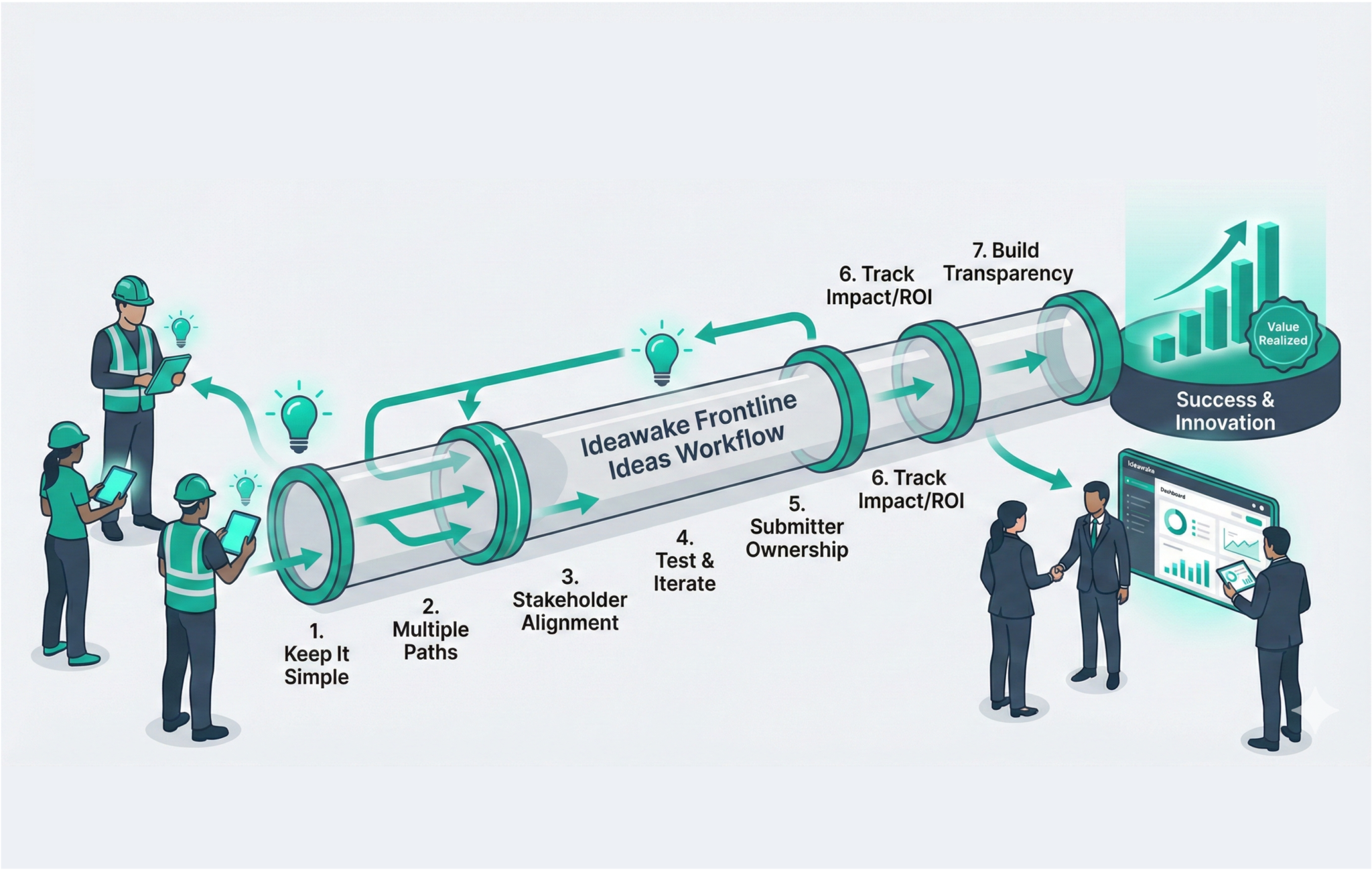
One of those mistakes often includes the most complex part of your frontline ideas program – designing your workflow. If you’re building or refining a frontline ideas program, this post is for you. Here are seven best practices we’ve experienced and learned from the hard way so you don’t have to.
1. Keep It as Simple as Possible, Especially in the Beginning
One of the biggest mistakes companies make is trying to build every minute step into their workflow right out of the gate. It’s okay (and even good) to have some complexity eventually, but trying to get there on day one almost always backfires.
This is especially true if this is your first time launching a program. A lean, simple workflow that actually gets used will outperform a comprehensive one that creates confusion and delays. Start with the core steps, get it live, and add layers as you learn what your team actually needs.
2. Test and Iterate
Because a frontline ideas program spans the entire company, there’s often pressure to get everything exactly right before launch. Too many cooks in the kitchen leads to over-engineering, and over-engineering leads to delay.
We’ve seen companies spend four months designing their workflow before going live, only to have a leadership change kill the program before it ever launched. That’s not a hypothetical, it happens more often than you might think.
Leadership changes are common. The best way to protect your program is to get something live and working while momentum is on your side. Early engagement and activity metrics become your justification when the organizational chart shifts. Build simply, validate your assumptions, and iterate quickly.
3. Provide Multiple Paths and Create an Outlet for Out-of-Scope Ideas
Most programs start with a focus on either innovation or continuous improvement. But in practice, frontline idea programs attract both types of ideas regardless of the stated focus. When stakeholders simply mark out-of-scope ideas as rejections and move on, real value gets lost.
A better approach: create a specific category for ideas that fall outside your current program’s scope but could be relevant to another team. Share those ideas with the right stakeholders after the campaign closes, and track them within your platform. Submitters stay informed, cross-functional value gets captured, and nothing slips through the cracks.
4. Involve Implementation Stakeholders Early and Get Hard Commitments
This one sounds obvious, but we see it missed constantly. Often, the person running the ideas campaign isn’t the same person who controls the budget or has the authority to approve implementation. That disconnect creates a frustrating bottleneck: ideas get scoped and validated, business cases get built, and then everything stalls when it reaches the actual decision-maker.
The fix is simple: loop in budget owners and subject matter experts early in the shortlisting process, not after the work is done. Getting alignment up front saves everyone time and dramatically improves your throughput.
5. Involve the Submitter and Give Them Ownership of Their Idea
Letting idea submitters drive their own ideas forward isn’t just a nice cultural touch. It’s a meaningful driver of real business value. This is especially relevant in continuous improvement programs, but it applies to innovation use cases too, particularly in the early stages of business case development or idea validation.
When employees feel genuine ownership over an idea, engagement and follow-through improve significantly. The retention value of that experience, feeling heard, respected, and involved, goes well beyond the potential ROI of the idea itself.
6. Build a Process to Track Projected and Actual Business Impact
Not tracking ROI is one of the most common and costly mistakes we see. If you can’t show the value your program generates, it’s very hard to sustain leadership support over time.
After ideas pass initial screening, bring in a subject matter expert to provide a high-level estimate of return on investment and implementation complexity. It doesn’t need to be precise. A ballpark figure at the right stage is far better than nothing. Then, once ideas are implemented, assign an owner and close the loop by tracking actual outcomes against those projections.
For a deeper dive on this topic, check out our post: How to Track the ROI of Your Employee Ideas Program.
7. Build Transparency Into Your Process for Submitters
Most companies invest heavily in promoting idea submission upfront, and that matters, but it’s not the most important thing. What keeps people sharing ideas over the long run is knowing what happens to them afterward.
According to Ideawake’s State of Employee Ideas survey of 700 employees across the U.S., one in five employees who had ideas stopped sharing them because they felt like their ideas disappeared into a “black hole.” Notably, whether or not their idea actually got implemented didn’t even rank in the top ten reasons people stopped sharing. What they cared about was transparency, knowing where their idea went and why.
Given that 50% – 95% of ideas you receive will be rejected, having a personalized, structured communication process to update submitters on status and reasoning isn’t just a nice-to-have. It’s essential to long-term program health.
Putting These Best Practices Into Action
These seven practices aren’t theoretical. They come directly from watching what works and what doesn’t across hundreds of real programs. Keep it simple to start, build in transparency, get your stakeholders aligned early, and don’t let the pursuit of perfection delay your launch.
Do those things, and you’ll be set up for higher throughput, better engagement, and a stronger ROI for your employee ideas program at your organization.