
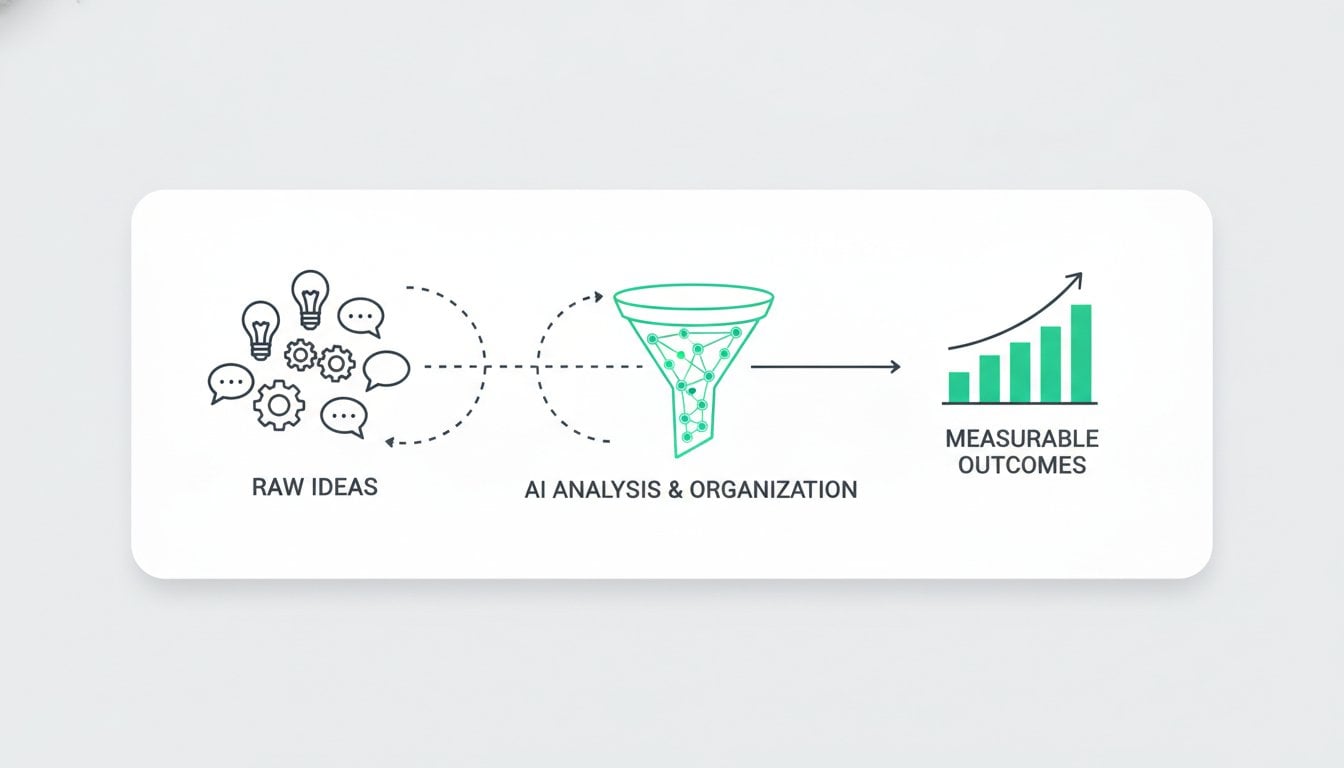
According to McKinsey research, 84% of CEOs believe innovation is the primary engine for growth, yet fewer than 10% are satisfied with their organization’s actual results. It is a staggering disconnect that often stems from a lack of systemized structure rather than a lack of talent. While the global idea management market has climbed to $1.8 billion in 2026, many enterprises remain trapped in a cycle of low employee engagement and high administrative friction. You’ve likely felt the frustration of watching high-potential ideas stall in review or struggling to quantify the financial impact of your initiatives to the board.
This guide changes that narrative. You’ll discover evidence-based strategies for fostering innovation in the workplace that transform your workforce into a high-output engine and move your programs from passive ideation to measurable ROI. We are moving beyond the traditional suggestion box to provide a structured framework that increases participation across departments; utilizes AI to slash administrative overhead; and ensures clear ROI tracking for every implemented idea. It is time to stop settling for average results and start building a culture where innovation is a predictable, scalable outcome.
Key Takeaways
- Learn why moving from a centralized R&D model to decentralized, bottom-up participation is the only way to scale innovation in 2026.
- Discover proven cultural strategies for fostering innovation in the workplace by building psychological safety and leveraging cognitive diversity.
- Eliminate administrative bottlenecks by replacing outdated spreadsheets with AI-driven scoring systems that categorize thousands of ideas instantly.
- Execute high-impact innovation challenges that focus your team’s energy on specific business problems to ensure every idea has a clear path to implementation.
- Master the KPIs necessary to prove financial ROI to the C-suite and justify the long-term value of your innovation initiatives.
Beyond the Suggestion Box: Defining Innovation in the 2026 Workplace
Innovation isn’t just about “new ideas.” It’s a rigorous business process. By 2026, the global innovation management market is estimated to reach $3.12 billion. This growth reflects a fundamental shift from centralized R&D labs to decentralized, bottom-up models. To stay competitive, leaders must adopt strategies for fostering innovation in the workplace that empower every employee to act as a problem-solver. Without a structured pipeline, even the most creative organizations struggle; research indicates that a lack of process is the primary reason many initiatives fail to scale.
Creativity vs. Innovation: Why the Difference Matters
It’s vital to distinguish between raw creativity and commercial innovation. Creativity is the generation of novel ideas, while innovation is the disciplined implementation of those ideas to generate value. Many companies have a “creativity surplus” but an “execution deficit.” Understanding the gap between creativity vs. innovation is essential for setting clear business expectations. High execution capability is what separates market leaders from those who simply brainstorm without results. ROI is only achieved when an idea moves from a whiteboard to a workflow.
The Death of the Physical Suggestion Box
The traditional suggestion box is a relic of the past. These passive systems are often perceived as “black holes” where employee insights go to die, leading to rapid disengagement. In contrast, a digital employee suggestion platform provides the transparency necessary to drive 3x higher participation rates compared to legacy methods. Modern innovation management frameworks replace these static boxes with dynamic, collaborative environments where ideas are visible, debated, and refined.
This evolution leads us to the “Innovation Lifecycle.” This modern standard treats growth as a repeatable system rather than a series of lucky accidents. By moving toward a decentralized model, you ensure that your innovation pipeline is fed by real-world data from the front lines. This structured approach is the foundation for any successful enterprise growth strategy in the coming years. It allows organizations to move beyond passive feedback and start building a high-output engine for sustainable performance.
Cultural Strategies for Fostering Inclusive Innovation
Building Psychological Safety in Remote and Hybrid Teams
With 70% of remote-capable workers preferring hybrid models in 2026, maintaining a culture of open dissent is harder but more vital than ever. Managers must actively foster innovation in the workplace by rewarding the reporting of errors and the sharing of “wild” ideas. You can encourage this through a simple three-point approach during meetings:
- Frame the work as a learning problem: Shift the focus from pure execution to discovery.
- Acknowledge your own fallibility: When leaders admit they don’t have all the answers, it gives others permission to speak up.
- Model curiosity: Ask open-ended questions that require more than a “yes” or “no” response.
Digital platforms also play a key role here by allowing for anonymous idea submissions, which significantly reduces the fear of judgment from peers.
Lessons from Google’s 20% Time and Other Success Stories
Autonomy is a powerful driver of employee engagement. Analyzing Google’s 20% time program reveals that giving employees dedicated space to pursue side projects can lead to breakthroughs like Gmail. However, innovation isn’t reserved for engineers. The Flamin’ Hot Cheetos story proves that a janitor’s insight can be just as transformative as a C-suite strategy. The challenge for modern enterprises is balancing this “innovation time” with daily operational excellence. You don’t necessarily need to allocate a full day each week. Even a 5% allocation of dedicated time can yield significant results if it’s supported by a structured pipeline.
Incentivizing these behaviors shouldn’t rely solely on monetary rewards. Gamification, such as leaderboards and digital badges, often drives higher long-term participation than one-off bonuses. These methods tap into the intrinsic desire for mastery and purpose. If you’re ready to see how these cultural shifts look in practice, you might schedule a walkthrough to explore modern engagement tools that support these frameworks.
Systematizing Innovation: The Role of Modern Idea Management Platforms
Innovation is often romanticized as a “soft” cultural trait, but without a rigorous business process, it quickly becomes an organizational liability. To move from passive ideation to measurable ROI, you need a modern innovation management platform that treats ideas as valuable assets. Many organizations face the Build vs. Buy dilemma when establishing their infrastructure. While custom-built tools seem attractive, they rarely keep pace with the rapid evolution of AI and cloud-based deployments, which now account for 68% of the market. A dedicated system ensures that your strategies for fostering innovation in the workplace are backed by a hard business process rather than just good intentions.
AI and Automation in the Innovation Lifecycle
Administrative friction is the primary reason innovation programs stall. Ideawake AI addresses this by identifying duplicate ideas and emerging trends in real-time, preventing the “review fatigue” that plagues manual systems. By leveraging AI tools for innovation managers, leadership can automatically categorize and score thousands of submissions based on strategic alignment. This automation drastically reduces the “time-to-feedback” loop. When employees receive rapid, data-backed responses to their contributions, engagement levels remain high, and the path from ideation to implementation becomes a predictable pipeline rather than a guessing game.
Spreadsheets vs. Dedicated Software: A Performance Comparison
Relying on spreadsheets for innovation is a recipe for version control chaos and manual tracking nightmares. The Ideawake vs. Spreadsheets comparison highlights how manual systems fail to scale once participation crosses departmental lines. Implementing structured strategies for fostering innovation in the workplace means having a “Value Vault,” where every submission is searchable and preserved for future R&D cycles. This structural transparency removes the user adoption barriers common in legacy systems. Instead of hunting through email threads or static documents, stakeholders have a single source of truth that tracks the progress and financial impact of every initiative in real-time.
A structured system isn’t just about organization; it’s about speed. By systematizing your approach, you can process high volumes of data without increasing your administrative headcount. It allows your team to focus on the high-value work of implementation rather than the low-value work of data entry. In a market projected to grow at a CAGR of nearly 12% through 2035, the ability to rapidly filter and execute the best ideas is the only way to maintain a competitive edge.
A Step-by-Step Framework for Executing Workplace Innovation
The most significant hurdle in enterprise growth isn’t a lack of ideas; it’s the “Implementation Gap.” Organizations frequently collect thousands of suggestions only to watch them stagnate in a backlog because they lack a structured execution framework. To move from passive ideation to tangible results, you must replace vague brainstorming with a rigorous, stage-gated process. This requires specific strategies for fostering innovation in the workplace that prioritize high-impact business problems over general feedback. By focusing employee energy on clearly defined objectives, you ensure that every hour spent on innovation contributes directly to the bottom line.
Phase 1: Capturing and Crowdsourcing Ideas
Effective innovation starts with precision. Instead of asking for general improvements, launch structured innovation challenges that target specific operational pain points. The methodology behind successful idea crowdsourcing relies on high-quality “Challenge Statements.” A well-crafted statement doesn’t just ask for ideas; it defines the constraints, the target outcome, and the available resources. This level of detail inspires actionable solutions rather than abstract concepts. Frontline employees are your most valuable asset in this phase. They are uniquely positioned to identify “Lean Waste” and operational inefficiencies that are often invisible to upper management. Using the best crowdsourcing platforms allows you to decentralize this discovery process, capturing insights from every corner of the organization simultaneously.
Phase 2: Evaluation and Implementation
Selection bias is the silent killer of enterprise innovation. To remove subjectivity, you must establish a standardized idea evaluation process using weighted scorecards. These scorecards should measure ideas against key business drivers such as technical feasibility, strategic alignment, and projected ROI. Once the “winners” are identified, move immediately into a rapid prototyping phase. This allows you to test assumptions with minimal resource investment before a full-scale rollout. Learning how to implement innovative ideas without disrupting core operations is a balancing act that requires integrating innovation workflows with your existing project management tools. Incremental innovation is the primary driver of 2026 operational excellence, focusing on steady, continuous improvements to existing products and processes.
Execution is a discipline, not an accident. By systematizing your framework, you turn innovation into a predictable business function rather than a series of sporadic events. This structure provides the clarity employees need to participate confidently and the data leaders need to invest decisively. If you’re ready to bridge the gap between ideation and execution, you can see our framework in action with a personalized walkthrough of our platform’s execution tools.
Measuring Success: Turning Workplace Ideas into Tangible ROI
What isn’t measured can’t be defended. To maintain executive buy-in, your strategies for fostering innovation in the workplace must transition from anecdotal success stories to rigorous, data-driven reporting. The C-suite demands a clear line of sight between employee contributions and organizational growth. By focusing on three primary KPIs, participation rate, implementation rate, and realized financial impact, you transform innovation from a perceived cost center into a verifiable profit driver. It’s about proving that every dollar invested in the system returns a multiple in operational efficiency or new revenue.
Calculating the Financial Impact of Innovation
Proving ROI is the only way to secure long-term funding for your initiatives. Organizations should utilize an idea management ROI calculator to forecast potential gains before a full-scale rollout. Beyond hard currency, you must also track “soft ROI” metrics. Research from Paylocity revealed that 82% of employees would consider leaving their job due to burnout; however, robust employee ideation programs significantly improve retention by giving workers a sense of agency and purpose. To measure the health of your pipeline, calculate your “Innovation Yield,” which is the ratio of total ideas submitted to the total financial value implemented. This metric provides a snapshot of your system’s efficiency and helps identify where ideas are stalling in the review process.
Scaling Innovation: From Pilot to Enterprise-Wide
The transition from passive ideation to a high-output innovation engine is a journey of systematization and cultural commitment. By leveraging modern platforms, you remove the administrative burden and let the data speak for itself. If you’re ready to see how a structured approach can drive measurable results for your organization, sign up for a demo to explore how Ideawake automates these frameworks and provides real-time ROI tracking for every implemented idea.
Future-Proofing Your Enterprise Innovation Engine
The transition from a passive suggestion box to a high-performance innovation engine is no longer optional. As we move through 2026, the organizations that thrive will be those that treat employee ideas as strategic assets rather than administrative burdens. By implementing structured strategies for fostering innovation in the workplace, you move beyond the “Implementation Gap” and begin delivering measurable financial value to the board. Success requires a balance of psychological safety, decentralized participation, and a rigorous execution framework that prioritizes ROI over raw ideation.
Modern enterprise scale demands modern tools. Ideawake provides the architecture needed to manage global operations while utilizing AI-driven insights to evaluate ideas 10x faster than manual processes. With end-to-end ROI tracking from submission to implementation, you can finally prove the tangible impact of your programs. Stop the chaos and start innovating. See how Ideawake automates your innovation lifecycle. You already have the talent; now it’s time to give them the system they deserve.
Frequently Asked Questions
What are the most effective strategies for fostering innovation in a remote workplace?
Digital infrastructure is the most critical component for remote teams. Effective strategies for fostering innovation in the workplace during remote shifts include using asynchronous collaboration tools that allow for 24/7 participation. This ensures that employees in different time zones aren’t excluded from the ideation process. By centralizing all submissions in a single digital hub, you create a level playing field that maintains momentum without requiring constant live meetings.
How can I encourage employees who are afraid of failure to share their ideas?
Establishing anonymity and gamified rewards can significantly reduce the fear of failure. Many employees don’t share ideas because they worry about looking foolish in front of peers or management. Providing an anonymous submission option removes this social friction. Additionally, rewarding the “act of sharing” through digital badges or recognition points shifts the focus from perfect outcomes to active participation, making the process feel safer for everyone involved.
What is the difference between an employee suggestion box and an idea management platform?
Transparency and lifecycle management are the primary differences. A traditional suggestion box is a one-way, opaque channel where ideas often disappear into an administrative “black hole.” In contrast, an idea management platform offers a visible pipeline where contributors can track progress, receive feedback, and collaborate with peers in real-time. This digital approach ensures every idea is evaluated fairly and contributors are kept informed of the status.
How do I measure the ROI of my company’s innovation efforts?
You should track the implementation rate and the resulting cost savings or revenue growth generated by new initiatives. While participation numbers are useful for measuring engagement, true ROI is found in the net value of executed ideas. It’s best to compare the total cost of your innovation program against the verified financial gains of implemented projects over a 12 to 24 month period to see the full impact.
Can AI really help in the brainstorming and ideation process?
Yes, AI is a powerful tool for scaling the evaluation phase of ideation and identifying high-value trends. It doesn’t just “brainstorm” for you; it identifies patterns in thousands of submissions and flags duplicates instantly. This allows innovation managers to focus on high-potential concepts rather than manually sorting through repetitive data. AI can also help summarize complex technical proposals, making them easier for non-technical stakeholders to evaluate quickly.
What are some examples of successful bottom-up innovation in large companies?
The development of Post-it Notes at 3M is a classic example of an employee-led breakthrough that started as a failed adhesive experiment. Another significant example is Amazon Prime, which began as a suggestion from a software engineer looking to simplify the shipping experience. These successes demonstrate that frontline employees often possess the technical insights and customer-facing perspectives needed to create high-value, market-shifting products and services.
How often should we run innovation challenges or hackathons?
Most high-performing enterprises run structured innovation challenges on a quarterly basis. This cadence prevents “innovation fatigue” while maintaining a steady pulse of new ideas throughout the fiscal year. Smaller, department-specific hackathons can occur more frequently to solve immediate operational bottlenecks or technical hurdles. The key is to ensure that you have the resources available to actually implement the winning ideas from each event before starting the next one.
What role does leadership play in fostering a culture of innovation?
Leadership must act as the primary facilitator by allocating specific budgets and time for experimentation. Beyond funding, leaders must model the behavior they want to see by actively participating in challenges and publicly celebrating both successful implementations and the lessons learned from failed ones. When executives prioritize innovation in their communication, it signals to the entire organization that creative problem-solving is a core business requirement rather than a side project.