
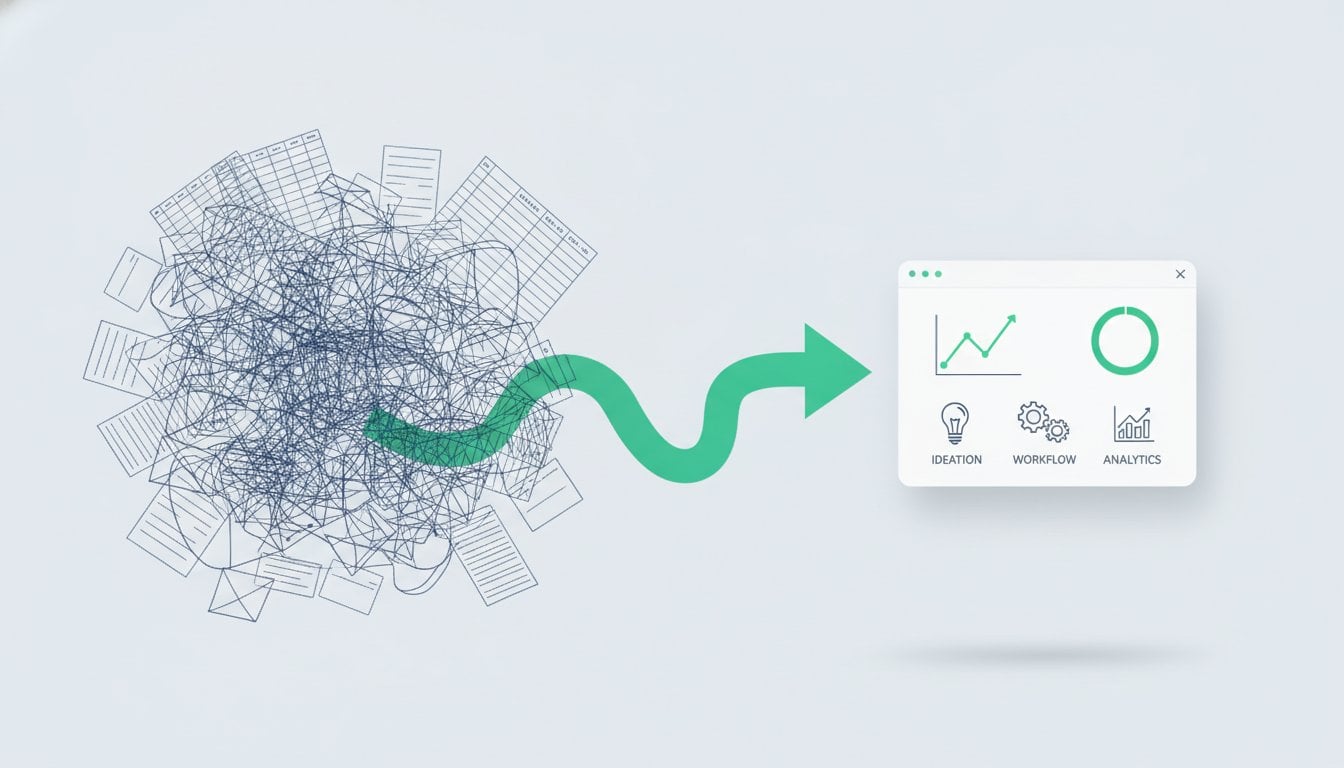
In 2026, the gap between organizations that “do” continuous improvement and those that digitize it has become a chasm that separates market leaders from those falling behind. Most suggestion boxes are effectively graveyards for innovation, where manual tracking and fragmented spreadsheets ensure that high-potential ideas never see the light of day. You likely recognize that your frontline staff holds the keys to significant efficiency gains, yet the struggle to track ROI and maintain employee engagement remains a constant barrier. These continuous improvement process examples demonstrate that operational excellence is no longer a periodic event but a digital-first ecosystem. Manual systems fail because they can’t scale.
With the release of ISO 9001:2026, the industry has shifted its focus toward building a proactive quality culture that prioritizes ethical behavior and risk management. Research indicates that every $1 spent on preventive measures can save an estimated $3 to $5 in emergency fixes later, according to IEEE research. This article provides a clear list of actionable examples and a framework for scaling CI across a global workforce. You’ll discover how top-performing organizations turn frontline ideas into measurable ROI while moving away from the chaos of manual data entry.
Key Takeaways
- Learn how to modernize traditional frameworks like the PDCA cycle and identify the eight forms of lean waste within your current business operations.
- Explore ten high-impact continuous improvement process examples ranging from frontline safety protocols to real-time supply chain optimization.
- Understand why transitioning from fragmented spreadsheets to a centralized platform is essential for scaling operational excellence across global teams.
- Discover how gamification elements like voting and leaderboards drive employee adoption and prevent suggestion programs from becoming inactive.
- Master the specific KPIs needed to track the compound financial impact of marginal gains and turn small ideas into measurable ROI.
What is the Continuous Improvement Process? A 2026 Perspective
Continuous improvement isn’t a one-time project; it’s a permanent operational posture. The Continual Improvement Process is a systematic, recurring effort to refine products, services, or internal workflows. In 2026, this concept has evolved beyond simple efficiency. It’s now the primary defense against rapid technological disruption. Organizations that rely on static models find themselves obsolete within months. Modern CI demands agility. It requires a digital infrastructure that captures frontline insights and converts them into data-driven actions. The upcoming ISO 9001:2026 standard reinforces this by placing a fresh emphasis on quality culture and ethical behavior, signaling that improvement is as much about people as it is about processes.
Transitioning from “analog” suggestion boxes to sophisticated idea management platforms is no longer optional. Traditional methods lack the visibility required to sustain momentum. When looking at continuous improvement process examples in high-performing firms, you’ll notice a common thread: they’ve replaced the physical box with a transparent, digital ecosystem. This shift allows for real-time feedback loops and immediate ROI tracking. It turns a passive “wait and see” approach into an active search for value.
The Core Philosophy: Kaizen vs. Innovation
Operational excellence requires a dual-track approach. Kaizen, or “change for the better,” focuses on small, incremental improvements that compound over time. Radical innovation, on the other hand, seeks disruptive breakthroughs that redefine market positions. Understanding the difference between creativity vs. innovation is vital. While creativity generates the spark, innovation is the disciplined execution of that idea. Balancing incremental vs. radical innovation ensures you aren’t just making the “wrong things” faster. You need both to survive. Kaizen keeps the lights on and margins healthy; radical innovation secures the future. Organizations that ignore one for the sake of the other eventually hit a performance ceiling.
Why Manual CI Processes Fail at Scale
Physical suggestion boxes are the “black holes” of corporate strategy. Ideas enter but rarely return as implemented solutions. This lack of transparency kills employee engagement. If workers don’t see their contributions valued, they stop contributing. Managing these workflows via spreadsheets creates an unsustainable administrative burden. Data becomes fragmented. Tracking the lifecycle of an idea from submission to implementation becomes nearly impossible without a centralized system. Comparing Ideawake vs. spreadsheets reveals that automation is the only way to prove ROI at scale. Without a single source of truth, CI remains a series of isolated events rather than a cohesive strategy. Successful continuous improvement process examples show that a “Value Vault” approach, where every small gain is documented, is the only way to build lasting momentum.
Proven Frameworks: The Foundation of Improvement
Frameworks turn abstract goals into repeatable results. They provide the roadmap for the continuous improvement process examples we see in top-tier organizations today. While Total Quality Management (TQM) serves as the cultural foundation for long-term success, specific methodologies like Six Sigma provide the surgical precision needed for complex problem-solving. Six Sigma’s DMAIC (Define, Measure, Analyze, Improve, Control) framework is particularly dominant in manufacturing, which accounts for 38% of Six Sigma implementations as of 2026. This data-driven approach ensures that decisions are based on statistical evidence rather than gut feeling. TQM, meanwhile, ensures that every employee, from the CEO to the frontline, is personally invested in the quality of the final output.
The PDCA Cycle in a Digital Environment
The Continuous Improvement Model often centers on the Plan-Do-Check-Act (PDCA) cycle. PDCA is a four-stage iterative process used by businesses to achieve continuous improvement through rapid testing and verification. In a modern setting, PDCA is a high-speed loop designed for rapid iteration rather than a slow, quarterly review. Digital platforms now automate the ‘Check’ and ‘Act’ phases by providing real-time data visualization and automated feedback loops. During the ‘Do’ phase, teams can use rapid prototyping to test frontline ideas without committing significant resources. This creates a fail-fast environment where only the most viable improvements move to the control phase, maximizing efficiency while minimizing risk.
Lean Thinking: Eliminating the Friction
Lean is about the relentless pursuit of value by removing anything that doesn’t add it. You must look for the 8 forms of waste, including overproduction, waiting, and untapped employee talent. Bottlenecks often hide in administrative workflows just as much as on the factory floor. Identifying these bottlenecks is only half the battle; you need a system to act on them. Using continuous improvement process examples like real-time waste reporting allows teams to fix issues before they impact the bottom line. By using the top continuous improvement tools available, companies empower frontline workers to spot waste using mobile devices. This ensures that a worker on the shop floor can document a process friction point in seconds. If you’re ready to see how these frameworks look when fully automated, you can explore a digital-first approach to operational excellence.
Moving from theory to execution requires a library of proven continuous improvement process examples that deliver measurable ROI. It’s one thing to understand Lean; it’s another to see it slash operational costs in real time. Organizations that empower their frontline workers to act as sensors for inefficiency often find the highest returns on their investment. These individuals see the friction points that executives miss. By capturing these insights through a centralized idea management software, companies ensure that no valuable suggestion is lost in a fragmented spreadsheet.
Consider frontline safety as a primary example. By using employee-led reporting instead of top-down audits, companies identify hazards before they lead to costly injuries. This proactive stance aligns with industry data showing that every $1 spent on preventive measures saves an estimated $3 to $5 in emergency fixes, according to savi.com. Supply chain optimization provides another high-value case. Instead of relying solely on automated GPS, top performers integrate real-time route adjustments based on driver feedback. Drivers spot local bottlenecks and changing conditions that static algorithms miss, ensuring faster delivery times and lower fuel consumption.
Operational & Manufacturing Examples
- SMED (Single Minute Exchange of Die): Reducing changeover time on production lines to increase flexibility.
- Digital ‘Andon’ Cords: Implementing virtual error reporting that allows workers to flag defects instantly.
Service & Administrative Examples
- Email Fatigue Reduction: Implementing structured collaboration tools to replace chaotic internal threads.
- Onboarding Optimization: Refining the employee onboarding process based on direct feedback from new hires.
- Process Flaw Identification: Using reverse brainstorming to flip problems on their head and find hidden vulnerabilities.
Scaling Improvement: Moving from Spreadsheets to Platforms
Spreadsheets are perfectly fine for managing a grocery list, but they’re where operational excellence goes to die. While manual tracking might work for a small team, it becomes a logistical nightmare when you attempt to scale across a global workforce. The administrative tax of manually updating rows and chasing status updates is the primary reason CI programs stall. It’s also a financial trap. IEEE research indicates that 60% of the total cost of software occurs during the maintenance phase, meaning organizations that try to build their own tracking systems often face mounting costs that outweigh the benefits. When analyzing continuous improvement process examples from high-growth organizations, the differentiator is always the shift from static documents to a centralized “Value Vault.”
A direct comparison of Ideawake vs. spreadsheets highlights a massive gap in visibility and engagement. Generic tools lack the specialized features needed to sustain a culture of improvement, such as gamification. Elements like voting, leaderboards, and public recognition are the engines that keep employee participation high over the long term. Without them, participation rates inevitably plummet as the initial novelty wears off. Furthermore, a structured idea submission process ensures that suggestions are high-quality and aligned with strategic goals, rather than a flood of irrelevant complaints.
The Role of AI in Modern CI
Managing a high volume of suggestions manually is an impossible task for lean management teams. This is where Ideawake AI features transform the workflow. AI reduces administrative overhead by automatically grouping similar ideas, which prevents the duplication that often plagues large-scale programs. It can also use sentiment analysis to gauge employee engagement in real time, allowing leadership to identify departments where morale might be lagging. By automating the initial evaluation, AI ensures that the most impactful continuous improvement process examples are prioritized based on data rather than subjective manager preference.
In technical settings, this automation extends to incident response. ZANALYSE provides an automated root cause analysis platform for IT organizations to generate structured reports from logs, timelines, and incident data, facilitating faster continuous improvement.
Building a Culture of ‘No Excuses’ Improvement
Leadership must incentivize participation by closing the loop on every submission. When an employee takes the time to suggest a fix and never receives feedback, they won’t contribute a second time. Transparent feedback loops prove to the workforce that their insights are valued and acted upon. This psychological benefit is often more powerful than a one-time cash bonus. It builds a culture where improvement is everyone’s job, not just a task for a specific quality department. When employees see their ideas turning into implemented reality, engagement becomes self-sustaining.
Measuring Success: Turning Small Ideas into Pure ROI
Vague claims about “better performance” are the hallmark of an amateur operational excellence strategy. Professional results require precise financial attribution. You can’t manage what you don’t measure. The most critical KPIs for any program focus on the delta between your participation rate and your implementation rate. High participation without execution is just noise; it creates a backlog that frustrates employees and stalls momentum. By analyzing successful continuous improvement process examples, we see that the real power lies in the “marginal gains.” A 1% improvement in a single workflow might seem negligible. When that 1% is compounded across a global workforce of 1,000 employees, the financial impact is transformative. It’s the difference between stagnant margins and aggressive growth.
Quantifying these wins is the only way to move CI from a “nice-to-have” initiative to a core business strategy. Organizations often struggle to put a price tag on frontline insights because they lack a standardized framework for valuation. You need a system that tracks every idea from the initial spark to the final implemented dollar. Using a dedicated ROI of idea management tool allows leadership to see exactly how small suggestions contribute to the bottom line. This level of transparency turns your CI program into a “Value Vault” that justifies its own existence through hard data.
Hard ROI vs. Soft ROI in CI
Executive buy-in depends on Hard ROI. This includes direct cost savings, recovered labor hours, and new revenue generated by employee-led innovations. However, focusing solely on the balance sheet ignores the “soft” metrics that drive long-term sustainability. Soft ROI includes improved employee retention, higher safety standards, and better cultural alignment. Tracking both is essential. Hard ROI pays for the platform; soft ROI builds the resilient, high-performance culture required to survive market shifts. Organizations that only track the dollars often lose the engagement that makes those dollars possible in the first place.
Next Steps: Launching Your 2026 CI Strategy
The path to operational excellence starts with a clear-eyed assessment of your current state. Don’t wait for a quarterly review to begin. Start with these three steps:
- Audit Manual Bottlenecks: Identify where your current “suggestion box” or spreadsheet system is failing to close the loop.
- Select a Pilot Department: Launch a targeted digital CI challenge in one department to prove the workflow before scaling.
- Standardize Your Evaluation: Use a structured idea evaluation process to ensure only the highest-impact continuous improvement process examples move toward implementation.
If you’re tired of seeing great ideas die in spreadsheets, it’s time to digitize your excellence. A centralized top innovation management solution provides the visibility, gamification, and ROI tracking needed to turn frontline insights into a permanent competitive advantage.
Book a demo to see Ideawake in action and start scaling your ROI today.
Mastering Operational Excellence in a Digital-First World
The era of passive suggestion boxes is over. Succeeding in 2026 requires a transition from manual data entry to a centralized, AI-enhanced ecosystem that captures every marginal gain. These continuous improvement process examples demonstrate that operational excellence is a result of disciplined execution and real-time visibility. By moving away from fragmented spreadsheets and adopting specialized PeopleSoft automation through PS WebSolution, you eliminate the administrative tax that kills employee engagement and stalls innovation. Organizations that prioritize end-to-end ROI tracking and user-friendly architecture set themselves apart as high-performance leaders.
Ideawake offers a modern architecture built for 10,000+ user scalability, ensuring your CI program remains effective as you grow. With AI-driven administrative reduction, you can finally prove the financial impact of every small improvement without the manual overhead. You have the framework and the evidence; now you need the infrastructure to scale. It’s time to stop settling for average results and start driving massive shifts in performance.
Your workforce is your greatest source of untapped potential. Take the first step toward a proactive quality culture and turn your organization into a permanent engine for growth.
Frequently Asked Questions
What is a real-world example of the continuous improvement process?
A hospital reducing patient discharge times by 20% through iterative frontline feedback is a classic example. By analyzing the “waiting” waste in the discharge cycle, staff can identify administrative bottlenecks that delay bed availability. This results in higher patient throughput and improved care quality. Many continuous improvement process examples in healthcare focus on these micro-adjustments to optimize resource allocation without increasing headcount.
How do you start a continuous improvement process in a large organization?
Begin by identifying a single department or high-friction process to serve as a pilot. Large organizations often fail by attempting to roll out CI across the entire enterprise simultaneously, which leads to cultural resistance. Instead, establish clear KPIs for the pilot, secure executive sponsorship, and use a digital platform to capture and track early wins. These initial successes provide the social proof needed to scale the program globally.
What are the 4 stages of the continuous improvement process?
The four stages are Plan, Do, Check, and Act, commonly known as the PDCA cycle. In the Plan phase, you identify an opportunity and create a hypothesis for improvement. The Do phase involves testing the change on a small scale. In the Check phase, you analyze the results against your goals. Finally, the Act phase involves standardizing the solution or refining the plan for another iteration.
What is the difference between Kaizen and continuous improvement?
Kaizen is a Japanese philosophy focusing on “change for the better” through daily, incremental improvements by every employee. Continuous improvement is the broader umbrella term that encompasses Kaizen along with other methodologies like Six Sigma and Lean. While Kaizen emphasizes a mindset and cultural habit, continuous improvement refers to the systematic processes and frameworks used to achieve measurable operational gains over time.
How can software help with continuous improvement process examples?
Software digitizes the entire lifecycle of an improvement, providing a transparent “Value Vault” for every idea. It eliminates the administrative burden of manual spreadsheets and ensures that frontline suggestions don’t get lost in a “black hole.” Modern platforms use gamification to sustain engagement and provide automated ROI tracking. This allows leaders to see which continuous improvement process examples are delivering the highest financial impact in real time.
How do you measure the ROI of continuous improvement ideas?
ROI is measured by calculating the net financial gain of an improvement against the cost of its implementation. Hard ROI includes direct cost savings, such as reduced material waste or energy consumption. Soft ROI focuses on labor hours recovered and improvements in employee retention or safety. To get an accurate picture, you must track these metrics from the initial submission through the final implementation phase using a standardized valuation framework.
What are common challenges when implementing continuous improvement?
Low employee engagement and fragmented data are the most frequent barriers to success. If workers don’t believe their ideas will be acted upon, they stop contributing, leading to a “zombie” program. Additionally, relying on manual suggestion boxes or disconnected spreadsheets makes it impossible to track progress or prove value to stakeholders. Overcoming these challenges requires a combination of transparent leadership and a centralized digital infrastructure.
Can AI be used for continuous improvement?
AI is a powerful tool for reducing the administrative overhead associated with high-volume CI programs. It can automatically group similar submissions to prevent duplication and use sentiment analysis to monitor organizational health. It helps prioritize ideas by predicting their potential impact based on historical data. This allows management to focus their resources on the improvements that are most likely to drive significant bottom-line results.