
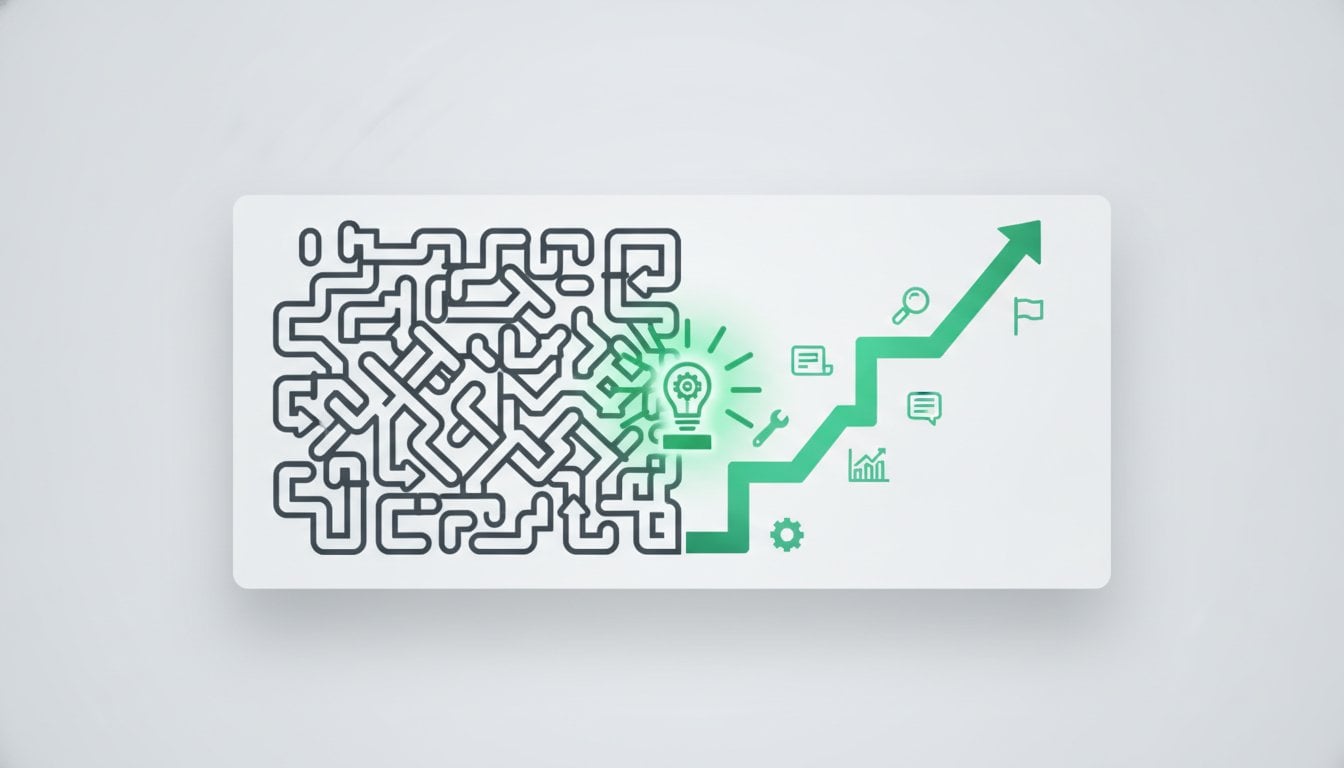
According to research from McKinsey & Company published in May 2026, approximately 70% of organizational transformations fail to reach their objectives because they lack internal buy-in. This staggering figure proves that overcoming resistance to new ideas in business isn’t just a leadership challenge; it’s a significant threat to your bottom line. You’ve likely seen high-potential projects stall because of bureaucratic gatekeeping or a culture stuck in the “this is how we’ve always done it” mindset. It’s exhausting. Watching innovation programs suffer from low engagement while competitors move faster is a recipe for mediocrity.
We’re here to change that narrative. You’ll learn the psychological and structural strategies required to transform organizational inertia into a measurable competitive advantage. This article provides a repeatable framework for idea adoption, leveraging research-backed methods to reduce middle management friction and increase the ROI on your internal innovation projects. We’re moving beyond stagnant experimentation toward a high-performance culture that treats innovation as a predictable science rather than a roll of the dice.
Key Takeaways
- Identify the biological roots of “Status Quo Bias” to shift your strategy from simple persuasion to creating genuine psychological safety.
- Focus on dismantling structural and psychological “friction” instead of merely adding more incentives, which can often inadvertently increase defensiveness.
- Implement small-scale “Beacon Projects” to provide tangible proof of concept and drastically reduce the perceived risk for high-level stakeholders.
- Develop a transparent, five-step lifecycle for overcoming resistance to new ideas in business by eliminating the information gaps that fuel employee fear.
- Deploy modern idea management platforms to automate the evaluation process and use AI-driven insights to strip away human bias and gatekeeping.
The Psychology of “No”: Why Businesses Resist New Ideas
Resistance isn’t a character flaw. It’s a biological imperative. Your brain is hardwired to prioritize survival, which in a corporate environment translates to predictability. This preference for the known creates a “Status Quo Bias” where teams prefer familiar inefficiency over the perceived threat of uncertain improvement. It’s why overcoming resistance to new ideas in business feels like a constant struggle against gravity. Leaders often fall victim to “Loss Aversion,” a psychological phenomenon where the pain of losing $1 is felt twice as intensely as the joy of gaining $2. Consequently, decision makers often default to “no” to protect existing assets rather than saying “yes” to capture new value.
The “Not Invented Here” (NIH) syndrome adds another layer of complexity. It triggers an automatic rejection of ideas originating from outside a specific department, effectively strangling cross-functional collaboration. Understanding the Diffusion of Innovations Theory is critical here; it explains that adoption depends less on the objective quality of an idea and more on how it’s perceived within the social system of your company. If an idea feels foreign, the system rejects it.
Cognitive Biases That Kill Innovation
Managers often suffer from the “Endowment Effect,” where they overvalue existing processes simply because they currently own and operate them. This creates a massive barrier when trying to distinguish between creativity vs. innovation in a practical setting. However, you can pivot this psychological hurdle by leveraging the “IKEA Effect.” When people contribute to the creation of a solution, they value it more highly. By involving stakeholders early in the idea evaluation process and criteria development, you transform potential critics into invested co-creators. Research indicates that high cognitive load significantly increases resistance to novelty, as the brain lacks the energy required to process complex changes. Simplify the message to lower the barrier to entry.
The Institutional “Immunological Response”
Corporate bureaucracy functions much like a biological immune system. It identifies “foreign” ideas as pathogens and deploys administrative antibodies, such as excessive meetings and redundant approvals, to neutralize them. This response is most aggressive in the “Middle Management Permafrost,” a layer of the organization where innovative concepts are frozen by risk-averse supervisors protecting their KPIs. Organizational inertia is essentially corporate physics; a business at rest stays at rest unless acted upon by a disruptive force strong enough to break the friction of its own weight. To win, you must stop pushing harder and start removing the friction that holds the system in place.
Fuel vs. Friction: A Framework for Idea Adoption
Most leaders assume that overcoming resistance to new ideas in business requires a more compelling sales pitch. They focus on “Fuel”—the incentives, benefits, and data designed to push an idea forward. While fuel is necessary to spark interest, it’s rarely enough to sustain momentum. When you encounter pushback, adding more fuel often backfires. It signals to your team that the change is so difficult or undesirable that it requires an aggressive bribe to accept. Real progress happens when you stop pushing and start identifying the “Friction” holding your organization back. Friction is the psychological and structural drag that makes even the best ideas feel like a burden.
To dismantle this resistance, you must address four specific types of friction:
- Inertia: The powerful urge to stick with the default path because it’s familiar.
- Effort: The actual or perceived energy required to implement the new idea.
- Emotion: The fear of looking foolish, losing status, or failing in a new system.
- Reactance: The defensive response people have when they feel their autonomy is being threatened.
Reactance is particularly toxic to innovation. When employees feel a new idea is being “forced” upon them, they don’t just resist the idea; they actively work to protect their sense of control. This is why top-down mandates often fail while collaborative initiatives thrive.
Why Incentives (Fuel) Often Fail
Relying on external rewards can trigger the “Overjustification Effect,” where employees lose their intrinsic motivation because the focus shifts to the reward rather than the value of the work itself. Furthermore, dumping “more data” on skeptical stakeholders rarely changes minds. Skeptics often view excessive data as a manipulation tactic rather than evidence. If you look at historical innovation failures, the root cause is rarely a lack of benefits. It’s almost always a failure to account for the human friction that makes adoption feel impossible. If the friction is high enough, no amount of fuel will move the needle.
Identifying and Neutralizing Friction
Effort friction is the most common silent killer of new initiatives. Administrative hurdles, such as complex submission forms or redundant approval layers, stop ideas before they’re even voiced. Behavioral science suggests that every additional “click” or step in a process can reduce participation by significant margins. To win, you must make the right path the easiest path. Emotional friction is equally dangerous; it’s the quiet fear that a new process will make a manager’s current skills obsolete. You must frame new ideas as tools that enhance existing status rather than replace it. If you’re ready to see how a streamlined system can remove these barriers, you might consider how to optimize your innovation workflow to ensure the best ideas actually reach the finish line.
Structural De-risking: Using “Beacon Projects” and Prototypes
Executives don’t hate innovation; they hate unquantifiable risk. Overcoming resistance to new ideas in business requires a structural shift from abstract pitches to tangible “Beacon Projects.” These are small-scale, high-visibility initiatives designed specifically to prove a concept with minimal resource drain. By utilizing prototypes, you provide a physical or digital artifact that stakeholders can interact with. This collapses the “perceived risk” that often leads to a flat “no” from leadership. Prototyping turns a theoretical threat into a manageable experiment that invites curiosity rather than defensiveness.
Familiarity is your strongest ally in de-risking. Humans are biologically wired to seek patterns and safety in the known. If an idea feels like a radical departure from the norm, it triggers the institutional “immunological response” that attacks foreign concepts. Successful innovators frame their proposals as logical extensions of existing success. You aren’t replacing the system; you’re providing the high-performance upgrade it currently lacks. This framing makes the “new” feel like a natural evolution rather than a dangerous disruption.
Selecting the right team for your initial pilot is a strategic necessity. Don’t simply assign the most senior people to the project. Instead, identify the internal influencers who possess both the technical skill to execute and the social capital to evangelize the results. You need early adopters who can translate technical success into organizational enthusiasm. These early wins create a sense of momentum that makes subsequent scaling feel like an inevitable next step rather than a forced mandate.
The Power of Incremental vs. Radical Innovation
Radical ideas face 10x more resistance because they threaten larger portions of the status quo and existing power structures. To bypass this, you must master the balance of incremental vs radical innovation. The most effective strategy involves framing a radical vision as a series of small, digestible steps. Each phase must provide immediate, measurable value while building the foundation for the larger transformation. This approach allows stakeholders to acclimate to change at a pace that doesn’t trigger their defensive instincts.
Measuring ROI Early to Silence Critics
Skepticism dies in the face of hard data. You must measure performance from day one to silence the critics who view innovation as an expensive “cost center.” It’s helpful to use an innovation ROI calculator to project potential gains and set benchmarks before you even launch. Social proof from a successful pilot project consistently overrides theoretical objections. When you can show that a new idea delivers tangible results in a real-world scenario, you remove the last hiding place for institutional resistance.
Transparency and Gamification: Building a Culture of Buy-in
Fear thrives in the dark. In many organizations, “Information Asymmetry” is the primary driver of friction. When frontline staff don’t understand the “why” behind a decision, they naturally assume the worst, leading to defensive behavior. This lack of clarity is a major hurdle in overcoming resistance to new ideas in business. To solve this, you must build a transparent idea lifecycle that eliminates the “black hole” where suggestions often disappear. A visible process transforms a top-down mandate into a collaborative journey. When every stakeholder can see the status, criteria, and progress of an initiative, the perceived threat of the “unknown” evaporates.
The “IKEA Effect” is a powerful psychological tool for building buy-in. Research shows that people value things more when they have a hand in building them. By involving employees in the refinement and voting stages of an idea, you move them from passive observers to active owners. This shift is critical for long-term adoption. Unlike static spreadsheets that hide data from the very people who generated it, a modern platform ensures that the entire lifecycle is open for inspection. This visibility builds trust and ensures that even rejected ideas provide value through clear, constructive feedback loops.
A transparent idea lifecycle follows five critical stages:
- Open Submission: Removing barriers to entry to ensure every voice is heard.
- Peer Review: Using public voting to surface high-potential concepts early.
- Expert Evaluation: Utilizing transparent, data-backed criteria to score ideas fairly.
- Selection Feedback: Providing clear, logical reasons for the path forward.
- ROI Tracking: Showing the tangible impact of the implemented idea to prove value.
The Role of Psychological Safety
Innovation requires a baseline of psychological safety. As Harvard Business School professor Amy Edmondson has demonstrated, teams that feel safe to take risks and admit mistakes are significantly more effective at implementing new ideas. A “blame-free” environment is a prerequisite for any successful innovation program. If an employee fears looking foolish for suggesting a concept, they’ll stop contributing altogether. To sustain momentum, you must handle rejected ideas with extreme care. Providing data-backed reasons for why an idea wasn’t selected ensures that the individual feels heard and remains willing to participate in the future.
Gamification Mechanics That Work
Gamification isn’t about trivializing work; it’s about turning organizational change into a shared challenge. Public voting and leaderboards are excellent tools to validate ideas before they ever reach management. This peer-level validation provides a layer of “social proof” that reduces the burden on leadership to act as the sole gatekeepers. When you use these mechanics, you unlock the benefits of employee ideation programs by creating a sense of community around improvement. While spreadsheets often lead to administrative waste and silos, a gamified platform creates a high-energy environment where the best ideas naturally rise to the top through collective intelligence.
Scaling Innovation: How Idea Management Platforms Automate Buy-in
While many leaders treat overcoming resistance to new ideas in business as a purely psychological challenge, the reality is often structural. Traditional methods like the physical “Suggestion Box” or unmonitored email aliases are high-friction systems destined to fail. They offer no transparency, provide zero feedback, and eventually become a graveyard for employee creativity. In contrast, a modern idea management platform automates the very processes that usually trigger organizational pushback. By centralizing the entire lifecycle, you create a “single source of truth” that provides the accountability and visibility necessary to win over even the most cynical stakeholders.
Administrative overhead is a silent killer of innovation. When managers are forced to manually track, score, and follow up on hundreds of entries, they quickly become the bottleneck. This burden creates institutional resistance because the system itself is too heavy to move. Shifting to a centralized platform removes this weight. It replaces subjective gatekeeping with objective, data-driven workflows. When the process is automated, the “Middle Management Permafrost” begins to thaw because supervisors are no longer overwhelmed by the logistics of change. Efficiency isn’t just about speed; it’s about removing the excuses for saying “no.”
AI and the Future of Idea Evaluation
The introduction of Ideawake AI has fundamentally changed how organizations handle the evaluation phase. By using machine learning to score ideas against predefined criteria, you strip away human bias and political gatekeeping from the decision-making process. This objectivity is vital for building trust across the organization. Automated workflows drastically reduce “Effort Friction” for both the submitter and the evaluator, ensuring that no high-potential concept is lost to administrative fatigue. If you’re currently researching tools, review the best idea management software list for 2026 to see how these AI capabilities are being integrated into top-tier solutions.
Transitioning from Spreadsheets to Platforms
Many organizations attempt to manage innovation through Excel, but this often leads to “Innovation Chaos.” Spreadsheets are static, siloed, and lack the real-time engagement features required to build a culture of buy-in. There’s a significant efficiency gap when you compare Ideawake vs Spreadsheets, particularly regarding data integrity and ROI tracking. Fragmentation creates confusion, and confusion breeds resistance. A centralized platform ensures that every stakeholder has access to the same information at the same time, removing the uncertainty that fuels fear. It’s time to stop fighting a broken system and start building one that drives results.
Sign up for a demo today to see how to dismantle resistance and scale your innovation program with total confidence.
Turning Resistance into Your Competitive Engine
The landscape of organizational innovation is shifting from a battle of wills to a science of adoption. You’ve seen how identifying friction points like reactance and effort can dismantle barriers that no amount of incentives could overcome. By utilizing small-scale beacon projects and leveraging the IKEA effect, you can transform skeptics into invested co-creators. The future of overcoming resistance to new ideas in business depends on replacing administrative gatekeeping with transparent, AI-driven workflows that provide a single source of truth.
Ideawake is trusted by enterprise leaders to scale innovation through a platform built on modern architecture. Our AI-driven evaluation removes human bias while proven ROI tracking capabilities provide the hard data needed to satisfy executive stakeholders. It is time to stop fighting the system and start building one that empowers every employee to contribute to your success.
You now have the framework to move beyond the status quo. Start small, build transparency, and watch your organization’s inertia become its greatest source of momentum. The path to a high-performance culture is clear; it is time to take the first step.
Frequently Asked Questions
How do you handle a boss who is resistant to new ideas?
You handle a resistant boss by reframing your proposal to minimize perceived risk and align with their existing KPIs. Utilize “Beacon Projects” to provide a low-cost, high-visibility proof of concept that doesn’t require a massive budget or long-term commitment. By focusing on how the new idea prevents potential losses rather than just promising gains, you tap into the psychological principle of Loss Aversion to make a “yes” feel safer than a “no.”
What are the most common reasons employees resist change in 2026?
In 2026, the primary drivers of resistance include fear of AI-driven displacement and a lack of transparency regarding how new processes impact individual roles. Research from McKinsey indicates that 70% of transformations fail due to lack of buy-in. Employees don’t necessarily resist the change itself; they resist being changed without their input. Addressing “Information Asymmetry” through transparent, automated communication is the most effective way to dismantle these defensive barriers.
Can gamification actually improve innovation adoption rates?
Gamification significantly improves adoption rates by leveraging the “IKEA Effect,” where people value solutions more when they participate in their creation. Features like public voting, leaderboards, and peer recognition turn “change” into a collaborative challenge rather than a top-down mandate. This creates social proof, showing that peers already support the initiative, which reduces the perceived risk and psychological friction for the rest of the workforce.
How does an innovation management platform reduce psychological friction?
An innovation management platform reduces psychological friction by providing a transparent, predictable lifecycle for every submission. Friction often stems from the “black hole” effect, where ideas are submitted but never receive feedback. By automating status updates and providing clear evaluation criteria, these platforms eliminate the uncertainty and perceived unfairness that lead to employee disengagement and institutional resistance.
What is the “Not Invented Here” syndrome and how do I fix it?
“Not Invented Here” (NIH) syndrome is the automatic rejection of ideas originating from outside a specific department or group. You fix it by involving cross-functional stakeholders during the early ideation phase rather than after the solution is finalized. When teams from different departments co-create a concept, they develop a sense of ownership that bypasses the natural “immunological response” usually triggered by “foreign” ideas.
Is it better to build or buy an idea management solution?
Buying a specialized solution is almost always superior to building one internally due to the complexity of modern AI integration and the high cost of ongoing maintenance. Internal tools often lack the gamification and automated evaluation features required for overcoming resistance to new ideas in business. A purpose-built platform reduces implementation time and administrative overhead, allowing your team to focus on high-value innovation rather than troubleshooting software.
How do you measure the ROI of a new idea before it is fully implemented?
You measure the ROI of a new idea by establishing clear baseline metrics and using an innovation ROI calculator to project potential gains against implementation costs. During the initial pilot phase, track specific KPIs like time saved, waste reduced, or participation levels. This early data provides the “social proof” needed to silence critics and justifies the resources required for a full-scale rollout across the organization.
What role does AI play in overcoming organizational bias?
AI plays a critical role in overcoming organizational bias by scoring submissions against objective data rather than subjective human opinions. Human evaluators often fall victim to the “Endowment Effect” or political gatekeeping. AI-driven evaluation ensures that every idea is judged on its merits and alignment with corporate strategy, which builds a culture of fairness and encourages participation from every level of the workforce.