
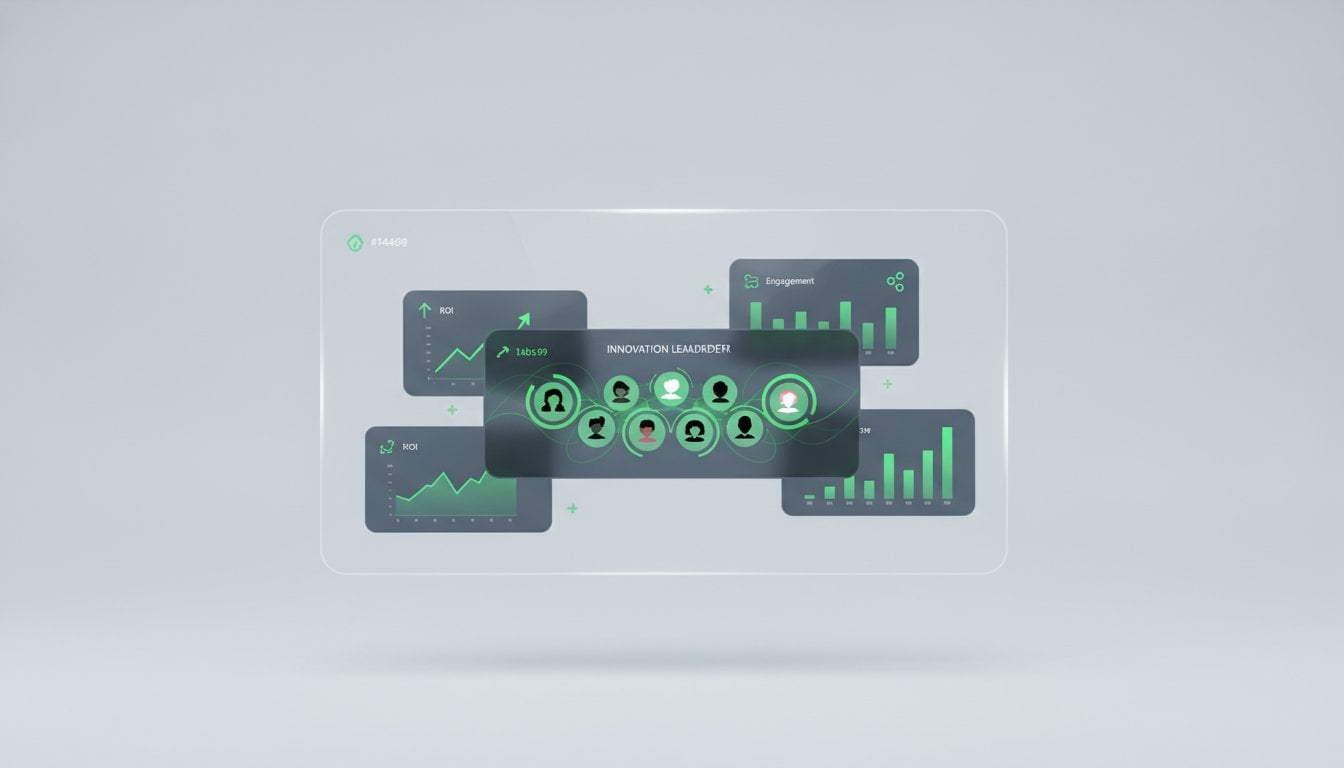
A staggering 90% of employees report that gamification makes them more productive at work, yet many organizations still rely on static suggestion boxes that collect dust rather than breakthroughs. If your innovation program feels like a chore for your team, it’s because it lacks the psychological triggers that drive consistent participation. Implementing high-performance innovation leaderboard software isn’t just about adding a scoreboard; it’s about building a transparent ecosystem where contribution is visible, measurable, and rewarded in real time.
You likely recognize that manual administration of rewards and the inability to identify your top-tier innovators are holding your culture back from its full potential. This article will show you how to leverage game mechanics to transform stagnant idea portals into high-participation engines that deliver clear, data-backed results. We’ll examine the specific strategies for 2026 that automate recognition, provide clear data on top contributors, and secure a proven ROI from employee-generated ideas.
Key Takeaways
- Transition from static suggestion boxes to dynamic digital hubs that offer real-time transparency and peer-driven ranking.
- Discover how modern innovation leaderboard software uses automated point-based incentives to drive participation while eliminating manual administrative tasks.
- Leverage core psychological drivers like the Endowment Effect to foster a deep sense of idea ownership and sustained intrinsic motivation.
- Apply a rigorous 5-step framework to align your gamification mechanics with measurable business outcomes and innovation KPIs.
- Identify the critical differences between modern, AI-enhanced platforms and legacy tools to maximize your program’s long-term ROI.
What is Innovation Leaderboard Software?
Innovation leaderboard software is a specialized digital ecosystem designed to track, rank, and incentivize employee contributions to the organizational innovation process. It functions as a centralized engine that quantifies engagement by assigning values to specific behaviors, such as submitting an idea, collaborating on a colleague’s proposal, or participating in the evaluation phase. By providing a real-time view of top contributors, this software transforms abstract participation into a tangible, performance-driven metric.
The primary goal of these platforms is to foster a culture of continuous improvement through visibility. When employees see their contributions acknowledged publicly, it validates their effort and encourages sustained engagement. Core components typically include automated point systems, activity tracking modules, and dynamic ranking displays that update instantly as new data enters the system.
The Evolution from Suggestion Boxes to Gamified Platforms
Traditional suggestion boxes often represented a passive feedback loop where ideas were submitted and then effectively disappeared. This lack of transparency created a black hole effect that discouraged future participation. Modern platforms solve this by clarifying the distinction between creativity vs innovation. While creativity involves the generation of raw concepts, innovation requires the structured refinement and implementation of those concepts. Innovation leaderboard software makes this entire journey visible, replacing the silence of email-based suggestions with a transparent, social, and interactive hub.
Why Modern Enterprises are Moving Toward Gamification
Enterprises are increasingly adopting Gamification techniques because they align workplace tasks with fundamental human psychology. Research indicates that 83% of employees who receive gamified training feel more motivated in their work, a sentiment that carries over into ideation programs. Leaderboards directly address the visibility gap often found in remote and hybrid teams by ensuring that high-performing innovators are recognized regardless of their physical location.
Beyond individual motivation, these systems provide critical data for leadership. By tracking who the top contributors are, companies can identify emerging talent and subject matter experts who might otherwise remain hidden. This structured approach to recognition is one of the key benefits of employee ideation programs, as it links individual performance to broader organizational health and long-term retention strategies. The result is a self-sustaining cycle of participation that drives actual business value.
Core Features of High-Impact Innovation Leaderboards
High-impact innovation leaderboard software functions as more than a simple ranking tool. It’s a sophisticated engine that drives specific cultural behaviors. By utilizing points-based incentives for actions like submissions, detailed comments, and peer voting, organizations can reward the quality of collaboration as much as the initial spark of an idea. This granular tracking ensures that every meaningful contribution is captured and valued.
Tiered ranking systems are essential for maintaining engagement across large enterprises. While a global leaderboard highlights top-tier talent, departmental or regional tiers prevent lower-ranked employees from feeling discouraged by distant leaders. Research on the Impact of Tier-Based Leaderboards suggests that localized competition often yields higher sustained participation rates. This software also automates the administrative burden of prize fulfillment and awards digital badges to verify expertise, ensuring that recognition is both immediate and public.
AI-Driven Scoring and Evaluation
Human bias is a common pitfall in traditional innovation programs. Integrating AI tools for innovation managers ensures that idea evaluation remains objective and data-driven. Ideawake AI, for example, acts as an automated filter that scores proposals based on strategic alignment and feasibility. This prevents the leaderboard from becoming a popularity contest. AI also clusters similar concepts, which keeps the platform organized and prevents repetitive submissions from diluting the impact of unique breakthroughs.
Transparency and Social Proof Mechanics
Peer voting serves as a critical validation layer. It allows the collective intelligence of the workforce to filter high-potential ideas before they ever reach a manager’s desk. Public leaderboards leverage social proof to create a healthy sense of accountability. When employees see their peers making progress on the activity feed, it reinforces the belief that their contributions will lead to actual change. If you’re ready to see how these mechanics can scale your program, you can book a free demo to explore the platform’s full capabilities.
The Psychology of Competition: Why Leaderboards Drive Participation
Understanding why humans are drawn to digital rankings requires a deep dive into behavioral science. High-performance innovation leaderboard software does not just display names; it leverages core psychological triggers that convert passive observation into active contribution. By making progress visible, organizations tap into the “Endowment Effect,” a phenomenon where individuals attribute higher value to things they feel they own. When an employee sees their idea gaining traction on a leaderboard, they develop a psychological sense of possession, leading to a 60% increase in engagement as they work to defend and refine their concept.
A primary concern for many leaders is the risk of “toxic” competition. However, modern platforms mitigate this by utilizing collaborative scoring logic. Instead of rewarding only the quantity of submissions, points are distributed for peer-voting, constructive commenting, and refining the ideas of others. This ensures that the leaderboard reflects a culture of mutual support rather than a zero-sum game. This visibility also serves as powerful social proof, signaling to “lurkers” that innovation is the cultural norm, which eventually pulls them into the participation cycle.
Intrinsic vs. Extrinsic Rewards
While cash prizes can trigger initial interest, data shows that 83% of employees feel more motivated by gamified systems that prioritize recognition. Innovation leaderboard software excels at providing “status,” a powerful intrinsic motivator. High-performers are often more driven by visible expertise and professional standing than by small monetary bonuses. Effective programs frequently use non-monetary rewards, such as professional development opportunities or a lunch with the CEO, to validate the contributor’s value to the organization’s future.
Avoiding Participation Fatigue
Sustaining momentum requires a strategic approach to reinforcement. If a leaderboard is static and permanent, new employees may feel they’ll never catch up to early leaders, which leads to burnout. To prevent this, organizations use sprint-based challenges that reset periodically. This creates a sense of urgency and provides multiple “fresh starts” for the workforce. This structured approach is a critical lesson learned from Google’s 20% time program, which demonstrated that while autonomy is essential, a lack of clear milestones and structured competition can lead to inconsistent participation over time. By using intermittent reinforcement, you keep the excitement of the “game” alive without exhausting your team’s creative energy.
Implementing Innovation Leaderboard Software: A 5-Step Framework
Transitioning from a passive suggestion box to a high-participation ecosystem requires more than just new tools. It requires a structured strategy. While legacy consultants often claim that enterprise implementation takes six to twelve months, modern cloud-based innovation leaderboard software allows organizations to deploy and scale in a fraction of that time. To ensure your program delivers immediate value, follow this 5-step framework.
- Step 1: Define clear KPIs. Establish baseline metrics for success, such as a target participation rate or a specific idea-to-implementation ratio, to track progress from day one.
- Step 2: Configure point values. Align your gamification mechanics with your business goals by assigning higher point values to the behaviors you want to encourage most.
- Step 3: Establish a multi-tiered prize structure. Use a mix of departmental and global rewards to ensure that employees at every level feel they have a realistic chance to win.
- Step 4: Execute a high-energy internal launch. Build momentum through a dedicated internal campaign that explains the “why” behind the new system and showcases potential rewards.
- Step 5: Monitor the evaluation cycle. Consistently review the idea evaluation process to ensure that high-ranking ideas on the leaderboard are moving toward implementation.
Setting the Right Point Values
Success isn’t just about the volume of submissions. It’s about the quality of collaboration. You should reward constructive feedback and peer evaluations more heavily than simple “likes” to drive meaningful refinement. Weighting points for the four main types of business collaboration ensures that the individuals who help bridge the gap between a raw concept and a viable solution are just as visible as the original submitters. To keep the competition fresh, consider resetting leaderboards quarterly. This prevents early leaders from becoming untouchable and gives new participants a recurring opportunity to top the charts.
Measuring ROI and Long-Term Success
To secure continued executive buy-in, you must translate leaderboard activity into financial impact. Leveraging an idea management ROI calculator allows you to tie specific employee engagement metrics to tangible bottom-line gains. Tracking the “Innovation Pipeline” from the moment an idea hits the leaderboard to its final market-ready state provides a clear narrative of success. When reporting to stakeholders, lead with data-backed metrics that show how gamification has reduced administrative overhead and accelerated the delivery of high-potential projects.
Choosing the Best Innovation Leaderboard Software for Your Organization
Selecting the right innovation leaderboard software requires looking past superficial features to evaluate the underlying architecture. Legacy systems often rely on rigid, complex frameworks that require extensive training and heavy manual oversight. In contrast, modern platforms prioritize automation to eliminate the administrative burden of tracking points and fulfilling rewards. You should seek an “AI-first” solution that supports the entire innovation lifecycle, from initial ideation to final ROI measurement, rather than a simple front-end submission tool. This ensures that your program remains scalable and results-driven as it grows.
Build vs. Buy: The Case for Dedicated Platforms
Many organizations initially attempt to build leaderboards using internal tools like SharePoint or standard spreadsheets. However, the hidden costs of maintenance, security vulnerabilities, and limited scalability often outweigh any perceived savings. For a detailed breakdown of these trade-offs, decision-makers should consult our build vs buy idea management software guide. Dedicated SaaS platforms offer a superior path forward by providing out-of-the-box gamification mechanics that are purpose-built for enterprise security and rapid global scaling, ensuring that your data remains protected while your program expands.
Why Ideawake is the Leader in Gamified Innovation
Ideawake stands out as a premier strategic innovation management platform because it combines modern architecture with a focus on user experience. Unlike legacy tools that can take months to deploy, Ideawake is designed for rapid implementation, allowing teams to launch high-participation challenges in weeks. The platform leverages Ideawake AI to automate scoring and evaluation, ensuring the leaderboard remains a fair and objective reflection of real business value rather than just a popularity contest.
The intuitive interface and seamless social features drive sustained participation without the need for constant management intervention. This shift from manual administration to automated engagement is what allows organizations to scale their innovation engines effectively across multiple departments. If you’re ready to transform your culture and see these mechanics in action, sign up for a demo today to explore how our leaderboard technology drives measurable ROI and identifies your organization’s top-tier talent.
Building a Sustainable Culture of High-Performance Innovation
Transforming your organization’s creative potential into a measurable financial asset requires moving beyond the passive feedback loops of the past. By integrating high-performance innovation leaderboard software, you tap into the psychological drivers that turn average employees into top-tier contributors. Success in 2026 hinges on objective, AI-driven scoring and a tiered ranking system that maintains momentum across every department. These mechanics ensure that participation remains high while administrative chaos disappears.
Ideawake provides the modern architecture needed to launch these programs in weeks rather than months. Leading enterprises already use our platform to capture thousands of actionable ideas; meanwhile, our AI-driven evaluation tools reduce manual administrative work by up to 80%. It’s time to stop settling for stagnant suggestion boxes and start building a self-sustaining innovation engine that rewards excellence and drives growth.
Your team’s next breakthrough is waiting for the right platform to bring it to light. Empower your workforce and secure your competitive advantage today.
Frequently Asked Questions
How do I prevent people from ‘gaming’ the leaderboard points system?
You prevent gaming by weighting point values toward high-impact behaviors rather than simple activity volume. Instead of awarding points for every comment, innovation leaderboard software should prioritize points for peer-validated refinements and successful evaluations. Ideawake AI further mitigates this by objectively scoring the quality of ideas, ensuring that only strategically aligned contributions rise to the top. This shift from quantity to quality discourages participants from spamming the system for artificial rank.
Will an innovation leaderboard discourage introverted employees from sharing ideas?
Leaderboards actually empower introverted employees by providing a structured, digital environment that bypasses the need for vocal dominance in meetings. These platforms offer a transparent hub where ideas are judged on merit rather than presentation style. Because the software facilitates asynchronous collaboration through voting and commenting, it allows thoughtful contributors to engage at their own pace. This ensures that valuable insights from all personality types are captured and recognized within the organizational hierarchy.
What are the most effective prizes for a corporate innovation leaderboard?
The most effective prizes blend extrinsic rewards with high-status intrinsic recognition. While gift cards provide immediate gratification, long-term engagement is driven by professional development opportunities, such as “lunch with the CEO” or sponsorship for a certification course. Digital badges and public expertise rankings also serve as powerful motivators. According to research, 83% of employees feel more motivated when their training and contributions are gamified through these non-monetary status symbols.
Can I integrate innovation leaderboard software with tools like Slack or Microsoft Teams?
Seamless integration with Slack and Microsoft Teams is a standard feature of modern innovation platforms. These integrations allow employees to submit ideas, vote, and track leaderboard standings directly within their existing workflows. By removing the need to log into a separate system, organizations significantly reduce adoption barriers and maintain a steady pulse of engagement. This ensures that the innovation leaderboard software remains a central part of the daily digital workplace rather than an isolated tool.
How often should an innovation leaderboard be reset to maintain engagement?
Resetting your leaderboard quarterly or at the end of specific “sprint” challenges is the most effective way to maintain long-term engagement. Periodic resets prevent a few early leaders from becoming untouchable, which can discourage new participants from joining the program. By providing “fresh starts,” you create recurring opportunities for different departments and individuals to reach the top. This cadence keeps the competitive element exciting and ensures that the culture of innovation remains dynamic and inclusive.
Is gamification suitable for highly regulated industries like healthcare or finance?
In specialized fields like medical technology, One Health Connect demonstrates how integrated health solutions and cloud-based radiology software can similarly transform traditional workflows into high-performance digital environments.
Companies using gamification in their programs report up to a 60% increase in engagement compared to traditional, non-gamified methods. While a passive suggestion box might see participation from only a small fraction of the workforce, a leaderboard-driven system taps into core human psychological drivers for progress and recognition. This shift in performance transforms innovation from a niche activity into a company-wide engine that consistently generates high-quality, actionable ideas for the business.
This trend of digital transformation is also evident in clinical settings; for example, TeleDIETS provides medical nutrition therapy software as an AI engine for healthcare professionals looking to leverage SaaS solutions for better patient outcomes.
How does AI help in managing a large-scale innovation leaderboard?
AI manages the administrative complexity of large-scale leaderboards by automating the scoring and evaluation of thousands of ideas. Ideawake AI uses machine learning to cluster similar concepts and rank submissions based on their strategic alignment, which reduces manual administrative work by up to 80%. This allows innovation managers to focus on high-potential projects rather than getting bogged down in data entry. AI ensures that the leaderboard remains an objective, data-backed reflection of the most valuable contributions.