
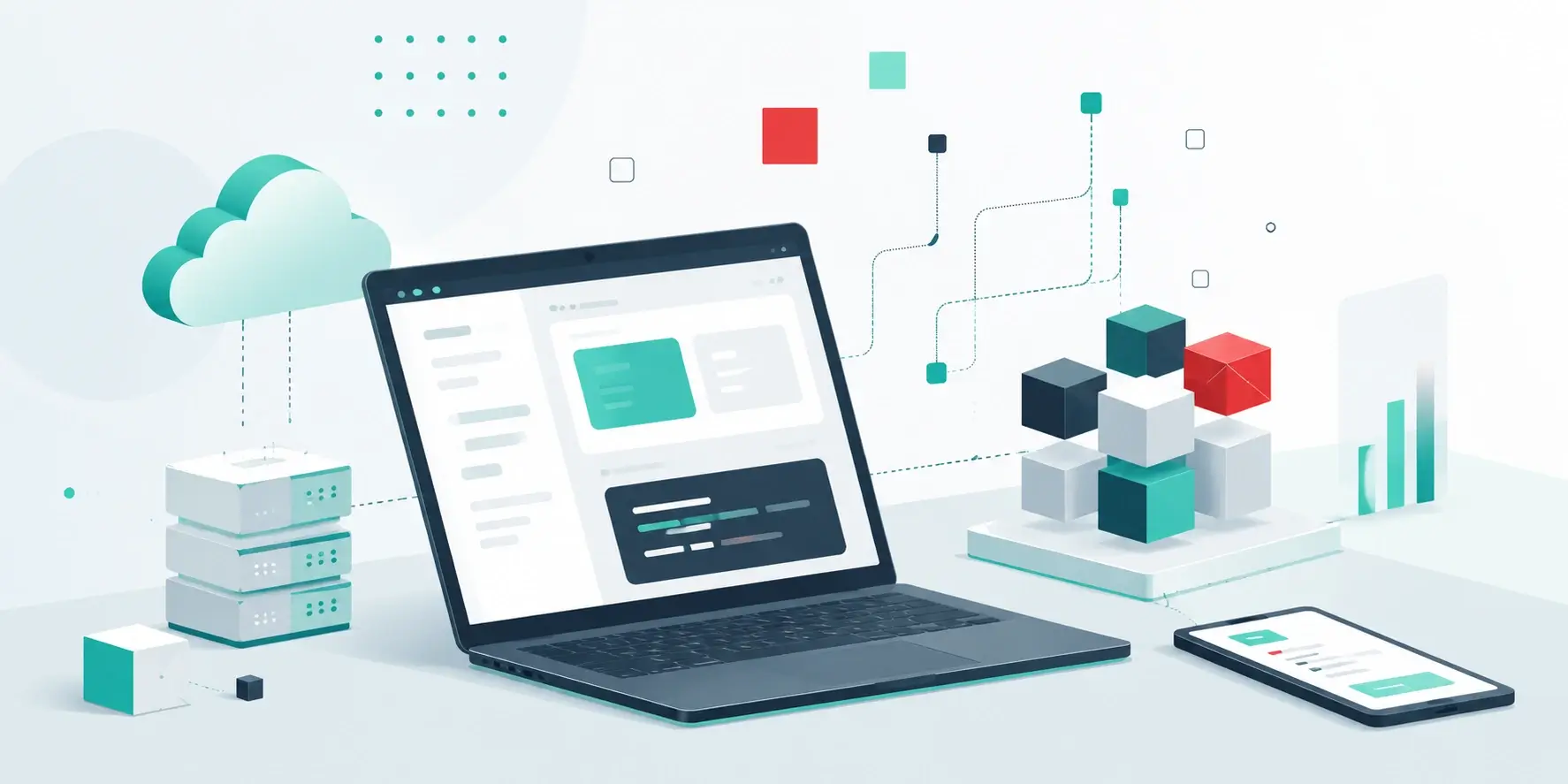
Computing innovation is a new or improved technology, system, product, process, or service that depends on computer code, algorithms, software, or digital systems to function. It can be as visible as a smartphone, mobile app, or self-driving car, or as hidden as a fraud detection model, cloud infrastructure, or supply chain automation system.
At its core, computing innovation uses data and computing power to solve problems, improve decisions, automate work, or create capabilities that were not possible before. It can exist as software, hardware, a connected device, a digital platform, or a physical product powered by code.
For businesses, computing innovation is not only a technical concept. It is a major driver of productivity, operational efficiency, customer experience, digital transformation, and new business models.
Computing Innovation Definition
A computing innovation includes a computational element that performs meaningful work. That element may be code, software, firmware, a data model, an algorithm, a microchip, a connected device, or a digital platform.
The innovation should also have a practical purpose. It should make something faster, safer, easier, more accurate, more scalable, or more accessible.
Simple Definition Of Computing Innovation
A computing innovation is a new or improved solution that uses computing power to perform a useful task. It may process data, automate a decision, connect users, predict outcomes, manage transactions, or control a physical device.
Examples include artificial intelligence tools, e-commerce recommendation systems, online banking platforms, smart thermostats, medical imaging software, cloud storage, GPS navigation, and autonomous vehicle systems.
The category is not defined by industry. It is defined by the role computing plays in the solution. If code, data processing, and computational logic are central to how it works, it can qualify as a computing innovation.
The Three Core Parts Of A Computing Innovation
Most computing innovations include three core elements.
The first is the computational artifact. This is the program, app, platform, device, algorithm, website, microchip, or digital system that performs the work.
The second is data processing. A computing innovation usually consumes, produces, stores, analyzes, or transforms data. A fitness tracker, for example, collects movement and heart-rate data, processes it through software, and produces activity insights.
The third is practical application. The innovation should serve a real-world purpose, such as improving healthcare, logistics, education, finance, communication, manufacturing, or internal business operations.
What Qualifies As A Computing Innovation?
Not every modern technology is a computing innovation. The deciding factor is whether computing is essential to the main function of the solution.
A product may include digital features without being a strong example of computing innovation. The question is whether software, algorithms, data, or computational systems create the primary value.
It Must Rely On Code Or Computing Power
For a technology to qualify, computing cannot be a minor add-on. A basic chair is not a computing innovation. A smart wheelchair that uses sensors, navigation software, obstacle detection, and automated movement can be.
The same distinction applies across industries. A traditional thermostat is a mechanical control device. A smart thermostat that learns usage patterns, connects to a mobile app, adjusts based on occupancy, and optimizes energy use is a computing innovation.
Have a Digital Innovation Idea Worth Exploring?
Capture ideas from across your organization, collaborate on solutions, and identify opportunities with Ideawake’s innovation challenges.
Explore Innovation Challenges →It Must Use Data In A Meaningful Way
Computing innovations often work by collecting, processing, transforming, or generating data. That data may come from users, sensors, transactions, images, text, audio, location signals, machines, or connected systems.
A route-planning app consumes location data, traffic data, and map data. It transforms that information through algorithms and produces route suggestions. That data-driven function is what makes the app valuable.
It Must Solve A Real Problem Or Create A New Capability
A computing innovation should do more than display technical novelty. It should create measurable value.
That value may come from lowering costs, improving accuracy, expanding access, saving time, reducing risk, enabling personalization, or opening a new market. Strong computing innovation connects technical capability to a practical outcome.
Common Examples Of Computing Innovation
Computing innovation appears across nearly every sector because software and data now sit inside many business and consumer systems. Some examples are familiar, while others operate quietly behind the scenes.
The strongest examples show how digital systems can change the way people work, buy, communicate, learn, travel, and make decisions.
Artificial Intelligence And Machine Learning
Artificial intelligence is one of the clearest examples of computing innovation. AI systems use algorithms, models, and large datasets to recognize patterns, generate outputs, and support decisions.
Common applications include fraud detection in banking, predictive maintenance in manufacturing, AI chatbots in customer support, recommendation engines in e-commerce, computer vision in healthcare, and language models that help teams summarize, classify, draft, and analyze information.
Machine learning is especially valuable because it can improve as more data becomes available. That makes it useful in areas where rules are too complex or too variable to define manually.
Cloud Computing
Cloud computing changed how organizations store data, run applications, and scale infrastructure. Instead of buying and maintaining physical servers, companies can use cloud platforms for storage, processing power, software delivery, analytics, and security.
Common cloud models include software as a service, infrastructure as a service, platform as a service, and serverless computing. These models help companies deploy tools faster, reduce hardware costs, and support distributed teams.
Cloud infrastructure also supports other computing innovations. Many AI, IoT, analytics, and collaboration tools depend on scalable cloud systems.
Internet Of Things
The Internet of Things connects physical devices to digital networks. These devices collect data from the physical world and send it to systems that monitor, analyze, or respond.
Examples include smart home devices, industrial sensors, connected vehicles, wearable health devices, smart meters, warehouse tracking systems, and factory equipment with real-time monitoring.
IoT is powerful because it turns physical environments into data sources. That data can help teams detect problems earlier, reduce downtime, improve safety, and optimize resource use.
Blockchain And Distributed Ledgers
Blockchain is a computing innovation because it uses cryptography, distributed networks, and consensus mechanisms to create shared digital records.
It is best known for cryptocurrency, but its broader applications include supply chain traceability, smart contracts, digital identity, financial settlement, and tamper-resistant records.
Blockchain is most useful when multiple parties need a shared record and no single party should fully control the system.
E-Commerce And Digital Platforms
E-commerce platforms, search engines, social media networks, online marketplaces, payment systems, and streaming services are all computing innovations.
These systems use software, databases, algorithms, payment infrastructure, personalization engines, and user interfaces to create digital markets and communication channels.
Their impact extends beyond convenience. Digital platforms changed how companies sell, advertise, distribute content, manage customer relationships, and collect market signals.
Edge Computing And Real-Time Systems
Edge computing processes data closer to where it is created instead of sending everything to a central cloud. This matters when speed, reliability, privacy, or bandwidth constraints are important.
Examples include autonomous vehicles, factory automation, medical monitoring devices, logistics systems, and smart city infrastructure. In these cases, real-time processing can support faster decisions and safer operations.
Quantum Computing
Quantum computing is still developing, but it represents a major shift in computational methods. It uses principles of quantum mechanics to process certain types of problems differently than classical computers.
Potential applications include complex simulation, optimization, cryptography, materials research, and advanced drug discovery. While broad commercial use is still limited, quantum computing is important because it may change what types of problems computers can solve efficiently.
What Is Not A Computing Innovation?
Clear boundaries help teams avoid calling every digital feature an innovation. A tool or product should not be labeled a computing innovation only because it includes a screen, chip, or basic electronic component.
The main test is whether computing drives the primary function and value.
Technology With No Meaningful Computing Layer
A traditional hammer, chair, notebook, or mechanical lock is not a computing innovation. These products may be useful technologies, but they do not depend on software, algorithms, or data processing to perform their core function.
This distinction matters because computing innovation usually involves different design, governance, privacy, security, and implementation requirements.
Technology That Uses Software As A Minor Feature
Some products include basic software without being strong computing innovations. A kitchen timer with a digital display uses electronics, but the computing layer does not create a substantial new capability.
A connected kitchen system that tracks inventory, recommends recipes, adjusts cooking settings, and syncs with grocery ordering would be a stronger example because computing drives the user experience.
Why Physical Products Can Still Count
A physical product can absolutely be a computing innovation. Smartphones, smartwatches, drones, autonomous vehicles, medical imaging systems, robotics, and smart factory equipment all qualify when software and data processing are central to how they work.
The format does not decide the category. The function does.
Why Computing Innovation Matters
Computing innovation matters because it changes the cost, speed, scale, and intelligence of work. It helps organizations automate manual processes, analyze large datasets, personalize services, and build products that were not possible with older systems.
It also affects society by changing access to information, healthcare, education, financial services, transportation, and communication.
Business Efficiency And Automation
Businesses use computing innovation to reduce repetitive work and improve operational speed. Workflow automation, robotic process automation, AI document review, inventory forecasting, and digital approval systems are common examples.
These tools can reduce cycle time, lower error rates, and free employees to focus on higher-value work. The result is not only cost reduction. It can also improve quality, consistency, and decision speed.
Better Customer Experiences
Computing innovations support faster and more personalized customer interactions. Recommendation engines, mobile apps, customer portals, AI support tools, digital payments, and self-service platforms all reduce friction.
A better customer experience often comes from connecting data across touchpoints. When systems understand purchase history, support issues, preferences, and behavior, companies can respond with more relevance and speed.
New Business Models
Many modern business models depend on computing innovation. Subscription software, digital marketplaces, usage-based pricing, streaming platforms, app ecosystems, and data products all rely on software infrastructure and data processing.
These models scale differently than traditional physical products. They can reach wider markets, update continuously, and create recurring revenue streams.
Scientific And Medical Progress
Computing innovation supports research and healthcare through modeling, diagnostics, genomics, medical imaging, drug discovery, patient monitoring, and clinical decision support.
Machine learning can help detect patterns in medical images. Computational biology can support faster research into diseases and treatments. These systems do not replace expert judgment, but they can improve speed and accuracy when designed responsibly.
Accessibility And Inclusion
Computing innovations can expand access for people with disabilities and underserved communities. Screen readers, speech-to-text tools, real-time captions, adaptive interfaces, remote learning platforms, telehealth systems, and assistive devices are strong examples.
The social value of computing innovation often comes from reducing barriers that previously limited participation.
Beneficial And Harmful Effects Of Computing Innovation
Computing innovation creates value, but it also introduces risk. Responsible organizations evaluate both before building, buying, or scaling a new system.
A balanced view helps teams make better decisions and avoid preventable harm.
Beneficial Effects
The benefits include productivity gains, faster communication, better access to information, improved healthcare support, safer transportation systems, lower transaction costs, stronger analytics, and more responsive public services.
For companies, the main benefits are often operational efficiency, better decision-making, improved customer experience, and new revenue opportunities.
Harmful Effects
Risks include data privacy concerns, cybersecurity threats, algorithmic bias, misinformation, surveillance, job displacement, digital addiction, and unequal access to technology.
A system that improves efficiency for one group may create disruption for another. Automation may reduce manual workload, but it can also require reskilling when job tasks change.
Why Context Matters
The impact of a computing innovation depends on how it is designed, governed, and used. A facial recognition system, for example, can support security workflows, but it can also raise concerns about privacy, consent, accuracy, and bias.
The technology itself is only part of the story. Governance, transparency, security, and user impact determine whether the innovation creates sustainable value.
How Computing Innovations Use Data
Data is central to most computing innovations. A system may collect raw information, transform it through code, and produce outputs that guide action.
Understanding the data flow helps teams evaluate value, risk, feasibility, and compliance needs.
Data Consumed
Computing innovations may consume location data, transaction data, health data, text, audio, video, images, sensor readings, clickstream data, or machine performance data.
The quality of the input affects the quality of the output. Poor data can lead to poor recommendations, inaccurate predictions, or biased decisions.
Data Produced
These systems may produce alerts, recommendations, scores, reports, predictions, classifications, dashboards, and automated decisions.
A fraud detection system produces risk scores. A logistics platform produces route changes. A customer analytics tool produces segments and behavior insights.
Data Transformed
Algorithms transform raw data into useful outputs. A predictive maintenance system may convert vibration and temperature readings into a failure-risk alert. A search engine may transform a query into ranked results.
This transformation is where much of the innovation happens.
Data Privacy And Security Concerns
Because computing innovations often handle sensitive data, privacy and security should be considered early. Teams need clear rules for access, consent, retention, encryption, compliance, monitoring, and data governance.
Security should be part of the design, not an afterthought.
Computing Innovation In Business
For organizations, computing innovation is valuable when it connects technology to measurable business outcomes. The goal is not to adopt every new tool. The goal is to solve important problems with the right digital capability.
This is where structured innovation management becomes important.
How Companies Use Computing Innovation
Companies use computing innovation to automate workflows, improve forecasting, manage supply chains, analyze customer feedback, detect fraud, support remote work, personalize marketing, and build new digital services.
The best use cases begin with a business problem, not a technology label. “We need AI” is weaker than “We need to reduce customer support resolution time by 30% without lowering quality.”
Computing Innovation Vs Digital Transformation
Computing innovation is often one part of digital transformation. A new automation workflow or AI tool may be the innovation. Redesigning teams, processes, metrics, and customer experiences around that tool is the broader transformation.
Organizations can build on computing innovation by giving employees a structured way to share and develop new ideas. Using idea management software helps teams organize suggestions, assess opportunities, and move promising concepts toward implementation.
This distinction helps leaders avoid overestimating what technology can do by itself.
Computing Innovation Vs Technology Innovation
Technology innovation is broader. It can include mechanical, chemical, biological, material, or energy-related breakthroughs.
Computing innovation specifically depends on software, algorithms, data processing, digital systems, or computational infrastructure.
How Ideawake Helps Teams Manage Computing Innovation
Many organizations already have strong computing innovation ideas inside the business, but those ideas are often scattered across departments, spreadsheets, meetings, and informal conversations. The challenge is not always idea generation. The challenge is capturing, evaluating, prioritizing, and implementing the right ideas.
Ideawake helps organizations create a structured process for that work.
Computing Innovation Starts With The Right Problems
Teams often chase tools before defining the problem. Ideawake helps organizations collect ideas from employees, customers, and partners, then connect those ideas to strategic priorities.
That matters because computing innovation works best when it is tied to a clear use case, measurable outcome, and responsible owner.
Turning Digital Ideas Into A Prioritized Pipeline
An innovation management platform helps teams move beyond suggestion boxes. Ideawake supports idea submission, collaboration, duplicate detection, scoring, evaluation workflows, and progress tracking.
This gives leaders a clearer view of which ideas deserve testing, which should be parked, and which need more evidence before investment.
Evaluating Feasibility, Impact, And ROI
Computing innovation ideas should be evaluated across impact, feasibility, risk, implementation effort, strategic fit, and expected value.
Ideawake helps teams compare ideas consistently, rather than relying on the loudest voice in the room. That creates a fairer process and stronger decision quality.
Moving From Ideas To Implementation
A computing innovation only creates value when it is tested, adopted, and measured. Ideawake helps teams manage the path from idea capture to review, approval, experimentation, implementation, and reporting.
That structure turns digital innovation from a loose conversation into an accountable pipeline.
Best Practices For Developing Computing Innovations
Organizations do not need to overcomplicate the process. They need discipline at the right points: problem definition, stakeholder input, testing, governance, and measurement.
A few practices help teams avoid wasted effort.
Start With A Clear Use Case
Do not start with a tool. Start with the workflow, decision, customer pain point, cost driver, compliance issue, or growth opportunity.
A clear use case makes it easier to select the right technology and measure whether it worked.
Involve Cross-Functional Teams
Computing innovation usually touches more than one department. IT, security, legal, operations, finance, product, customer success, and frontline teams may all need input.
Cross-functional involvement reduces blind spots and improves adoption.
Test Before Scaling
Pilots, prototypes, MVPs, sandbox tests, and limited rollouts reduce risk. They allow teams to validate assumptions before committing full resources.
The best teams define success criteria before the test begins.
Measure Outcomes
Strong metrics may include cost savings, cycle time reduction, adoption, error reduction, revenue impact, customer satisfaction, and risk reduction.
Without measurement, teams cannot separate interesting experiments from valuable innovations.
FAQs
What Is A Computing Innovation In Simple Terms?
A computing innovation is a new or improved product, system, service, or process that depends on computer code, algorithms, software, or data processing to work.
What Are Examples Of Computing Innovation?
Examples include artificial intelligence, cloud computing, mobile apps, e-commerce platforms, blockchain, IoT devices, edge computing, smartwatches, self-driving cars, and search engines.
Is AI A Computing Innovation?
Yes. AI is a computing innovation because it uses algorithms, data, models, and computational systems to analyze information, identify patterns, and generate outputs.
Is A Smartphone A Computing Innovation?
Yes. A smartphone is a physical computing innovation because its main value comes from software, sensors, apps, operating systems, data processing, and network connectivity.
What Are The Main Characteristics Of A Computing Innovation?
The main characteristics are a computational artifact, meaningful data use, and real-world application. The innovation must rely on computing power and produce a useful function.
What Are The Risks Of Computing Innovation?
Risks include data privacy issues, cybersecurity threats, algorithmic bias, misinformation, job displacement, surveillance, and unequal access to technology.
How Do Businesses Benefit From Computing Innovation?
Businesses use computing innovation to automate work, improve customer experience, analyze data, reduce costs, build new products, and make faster decisions.
Final Thoughts
Computing innovation turns code, data, algorithms, and digital systems into practical tools that improve how people work, communicate, buy, learn, travel, and make decisions. It is one of the strongest forces behind modern business change.
The most successful organizations do not adopt computing innovations randomly. They identify the right problems, involve the right people, test before scaling, and measure outcomes after implementation.
Ideawake helps teams manage that process by turning ideas into a structured innovation pipeline. When computing ideas are captured, evaluated, prioritized, and implemented with discipline, they become more than technology projects. They become measurable business progress.