
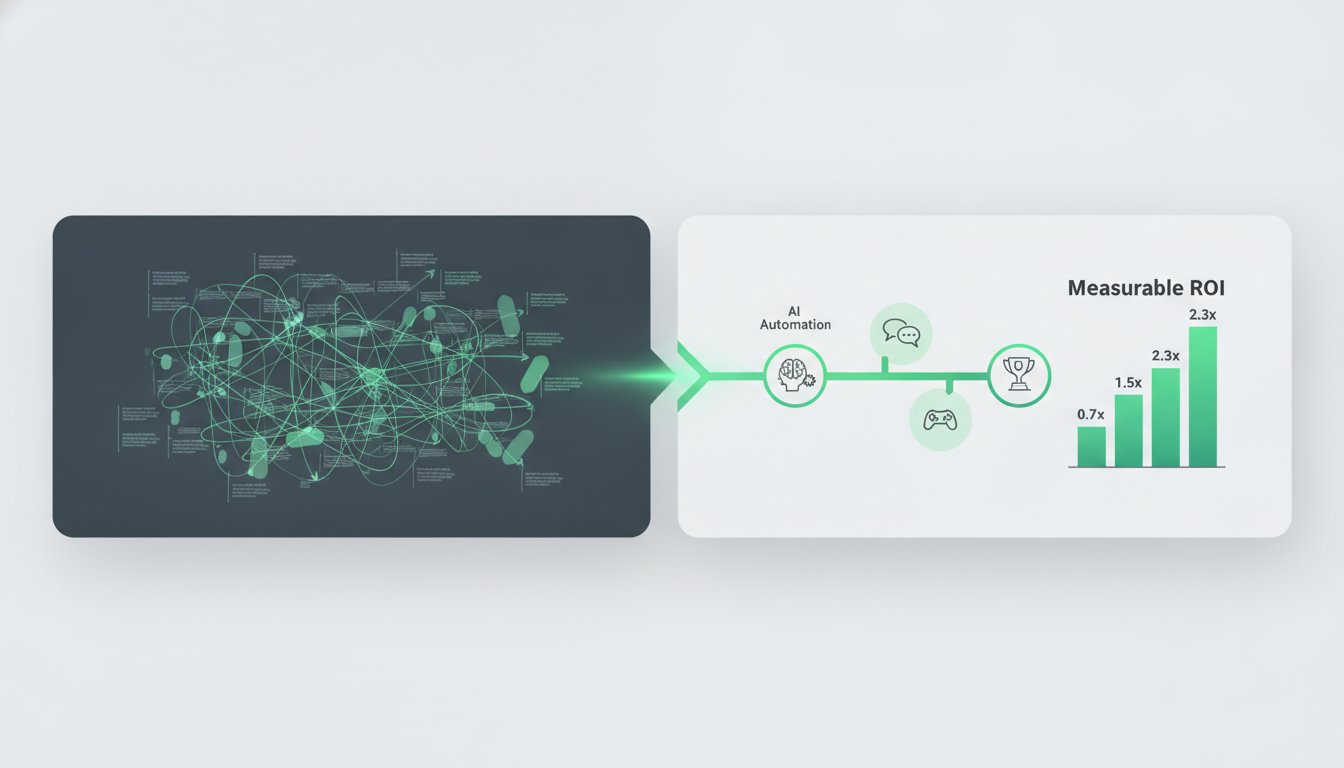
Legacy innovation software has officially become a “participation tax” that drains corporate resources without delivering clear financial returns. While the global innovation management market is projected to reach $20.48 billion in 2026, many organizations searching for a modern Spigit alternative find themselves stuck with platforms that require full-time administrative teams just to keep the lights on. You likely recognize the frustration. High-potential ideas often stall because the manual evaluation process is too slow or the interface is too clunky for widespread adoption.
Finding a superior solution isn’t just about switching vendors; it’s about moving from a passive suggestion box to a results-driven ecosystem. This article explains why enterprises are transitioning away from complex legacy systems in favor of agile, AI-first platforms that automate the innovation lifecycle. We’ll examine how to select a solution that uses gamification to drive participation and provides the end-to-end ROI measurement necessary to prove your program’s value to the board. By the end, you’ll have a clear framework for selecting a partner that turns raw creativity into a measurable competitive advantage.
Key Takeaways
- Understand the shift from centralized databases to collaborative ecosystems and learn how to eliminate the administrative burden inherent in legacy systems.
- Identify a Spigit alternative that utilizes AI-driven automation to reduce manual administrative tasks by up to 50% through automated duplicate detection.
- Compare implementation timelines to see how modern cloud-native architectures enable full enterprise deployment in just 4 to 6 weeks.
- Discover how to leverage gamification and leaderboards to drive sustained employee engagement and increase participation across your innovation pipeline.
- Follow a structured framework for auditing existing data and transitioning active ideas to ensure zero disruption to your innovation ROI.
The Evolution of Innovation Management: Why Legacy Spigit Users are Switching
The landscape of innovation management has undergone a fundamental transformation since the early days of centralized databases. In the “Idea Management 1.0” era, platforms functioned as static repositories where suggestions often went to die. Today, the 2026 enterprise requires a collaborative ecosystem that prioritizes action over storage. Many organizations are realizing that their legacy tools are essentially digital suggestion boxes that fail to drive real growth. This realization is fueling the search for a modern Spigit alternative that can handle the complexities of a decentralized workforce while maintaining high levels of engagement and transparency.
One of the most significant burdens of legacy systems is the “Administrative Tax.” Older platforms often require one or two full-time administrators just to manage workflows, filter duplicates, and chase status updates. This overhead is a hidden cost that eats into the program’s budget. Common administrative drains include:
- Manual categorization of hundreds of similar submissions.
- Constant follow-up with subject matter experts for evaluations.
- Generating manual reports for executive leadership.
The Rise of the Agile Innovation Lifecycle
The rigid, waterfall-style workflows of the past have been replaced by iterative, agile pipelines. Speed-to-market is now the primary metric for success. Organizations must balance incremental vs radical innovation to stay competitive in a digital-first world. A modern Spigit alternative facilitates this by allowing teams to test, pivot, and scale ideas quickly. This shift ensures that the innovation lifecycle remains fluid rather than getting stuck in endless committee reviews. It’s about moving fast and learning faster to capture value before the market shifts.
The Adoption Problem: Why “Shelfware” Happens
Software only works if people use it. Complex, over-engineered user interfaces often lead to a sharp decline in employee participation. Some industry professionals report that poorly designed platforms can see engagement drop by as much as 70% over time. These innovation failures often stem from the psychological barrier of “tool fatigue.” Instead of focusing on innovation skills for generating new ideas, employees spend their time trying to navigate confusing forms. Success in 2026 requires a platform that feels as intuitive as a consumer app, removing friction at every touchpoint to keep the creative pipeline full.
4 Non-Negotiable Features of a Modern Spigit Alternative
Selecting a Spigit alternative in 2026 requires looking beyond basic feature lists. You need a platform that actively reduces the workload for your innovation team while maximizing the quality of output. Legacy tools often fail because they focus on the volume of ideas rather than the velocity of implementation. To avoid the “shelfware” trap discussed in the previous section, your new platform must excel in four specific areas: AI-driven automation, strategic gamification, verifiable ROI tracking, and administrative self-sufficiency. These aren’t just “nice-to-haves.” They are the backbone of a program that survives the first year of deployment.
AI Tools for Innovation Managers: The Efficiency Leap
The primary bottleneck in enterprise innovation is evaluation. Using AI tools for innovation managers allows your team to score and prioritize thousands of submissions without manual intervention. Instead of spending weeks on keyword searches, Ideawake AI automates the “first pass” evaluation by clustering similar ideas and detecting duplicates instantly. This saves hundreds of hours of administrative work. AI also provides sentiment analysis and trend spotting across global teams, identifying high-potential concepts that might otherwise be buried in the noise. It turns a chaotic inbox into a prioritized roadmap.
Gamification and Employee Engagement Dynamics
Sustaining long-term interest in employee ideation programs requires more than just a submission form. Strategic gamification, including leaderboards and voting, creates a sense of community and healthy competition. Industry research suggests that gamified platforms can increase participation rates significantly compared to static systems. You can also deploy specific “Innovation Challenges” to solve urgent business problems in under 30 days. These time-bound sprints focus the collective intelligence of your workforce on high-value targets, ensuring engagement stays high because employees see their contributions leading to tangible action.
Finally, your platform must offer end-to-end ROI tracking and administrative efficiency. You should be able to link a raw idea directly to its final dollar-value impact through a transparent dashboard. If you need to change a workflow or update a scoring criterion, you shouldn’t have to call an expensive consultant. This level of self-service configuration is what defines a top-tier Spigit alternative. If you’re ready to see how these features function in a live environment, you can explore our full suite of innovation tools to see how they fit your specific needs.
Comparing Planview IdeaPlace vs. Modern Alternatives
When evaluating a Spigit alternative, the primary differentiator is the technical architecture. Planview IdeaPlace is integrated into a broad Work Resource Management suite, which often results in a complex, legacy-integrated structure. In contrast, modern platforms like Ideawake are cloud-native. This architectural difference directly impacts implementation speed. While legacy enterprise deployment can drag on for 6 to 12 months, a modern cloud-native system allows organizations to go live in just 4 to 6 weeks. This speed is critical for maintaining momentum and proving early value to stakeholders.
The user interface also marks a clear divide. Legacy tools often mirror the design of 2010-era enterprise software. A modern alternative provides a consumer-grade UX that feels as intuitive as the apps employees use in their personal lives. This reduces the learning curve and encourages adoption across all departments, not just the R&D team. When software is easy to navigate, participation rates remain stable rather than tapering off after the initial launch.
Administrative Complexity: The Hidden Cost
The total cost of ownership (TCO) for legacy software extends far beyond the licensing fee. You must account for the administrative headcount required to keep the system functional. When applying the build vs buy idea management software logic, buying a modern platform is almost always more cost-effective than maintaining a legacy one. For example, launching a new innovation challenge in a legacy system might require dozens of clicks and manual configuration. Ideawake’s implementation model focuses on self-sufficiency, allowing innovation managers to set up new workflows in minutes without calling a consultant. This shift from manual labor to automated configuration significantly lowers long-term operational costs.
Integrations and the Modern Tech Stack
In 2026, an innovation platform cannot exist in a vacuum. It must integrate seamlessly with the tools your employees already use daily. Robust software integrations with Microsoft Teams, Slack, and Jira are non-negotiable. A successful Spigit alternative meets employees where they work, reducing the friction of switching between multiple tabs. Advanced APIs also allow for the automatic pushing of data from the innovation platform directly into ERP systems or project management tools. This connectivity ensures that high-potential ideas aren’t just captured but are automatically funneled into the execution pipeline, creating a unified flow from raw concept to final product.
Maximizing ROI: How to Transition Without Disrupting Your Pipeline
Transitioning to a Spigit alternative doesn’t have to be a high-risk operation that halts your current innovation momentum. A successful migration is built on a foundation of data hygiene and strategic planning. Start by conducting a comprehensive audit of your existing pipeline. You should categorize every submission as active, archived, or “junk” to ensure only high-value data moves to the new system. This prevents legacy clutter from obscuring fresh opportunities in your new environment. It’s often better to leave the noise behind and focus on the concepts that truly align with your 2026 strategic goals.
Once you’ve cleaned your data, map your historical submissions to your new idea evaluation process and criteria. This alignment allows for consistent reporting and helps you track the long-term progress of ideas that originated in the legacy system. To secure executive support, use a dedicated idea management ROI calculator. Presenting the CFO with a side-by-side comparison of legacy maintenance costs versus the projected efficiency gains of a modern platform makes the financial case for migration undeniable. Proving a potential adoption lift through a small pilot challenge can also validate the switch before a full-scale rollout.
Data Migration Best Practices
Exporting data from Planview IdeaPlace requires careful attention to metadata preservation. You don’t want to lose the timestamps, contributor histories, or evaluation scores that provide vital context for your innovation archive. It’s best to maintain a read-only archive of historical data while starting fresh with active challenges in your modern tool. During this transfer, prioritize security protocols. Ensure your new provider adheres to SOC2 or GDPR standards to maintain data integrity and corporate compliance throughout the migration process. This keeps your intellectual property safe while you modernize your infrastructure.
Change Management: Getting Buy-in from the Frontline
Many employee suggestion programs fail because they don’t clearly communicate the personal value to the user. When switching to a Spigit alternative, highlight the simplified user experience and new gamification features like leaderboards or instant recognition. This reduces the psychological barrier to entry that often plagues over-engineered enterprise tools. Training a group of “Innovation Champions” within different departments is also essential. These internal advocates lead by example, demonstrating how the new platform makes it easier to submit ideas and see them through to execution without the administrative friction of the past.
Why Ideawake is the Leading Enterprise Alternative to Spigit
Ideawake stands out as the premier Spigit alternative because it directly addresses the administrative burnout that kills most enterprise programs. While legacy systems focus on complex resource management, our platform is built to reduce manual administrative work by up to 50%. This efficiency gain allows your team to focus on high-level strategy rather than filtering through redundant submissions. Choosing a modern Spigit alternative shouldn’t be a gamble; it should be a strategic upgrade to your company’s growth engine that prioritizes user adoption and measurable financial impact over rigid, outdated workflows.
The 2026 innovation landscape demands more than just a suggestion box. According to the AI-driven innovation software: the 2026 enterprise trend report, the most successful organizations are those that leverage intelligent automation to bridge the gap between ideation and execution. You can explore our specific product features to see how we’ve integrated these trends into a cohesive, user-friendly experience. We encourage you to compare innovation management platforms side-by-side to see how our cloud-native architecture outperforms legacy-integrated suites in both speed and flexibility.
The Ideawake Advantage: Built for ROI
The Ideawake Advantage: Built for ROI
It’s time to move past the limitations of legacy tools and embrace a platform that works as hard as your team does. We offer a no-nonsense implementation guarantee, ensuring your program is up and running in weeks, not months. You’ll see a definitive lift in participation and a significant reduction in the time spent on manual evaluations. Don’t let your best ideas get lost in a complex, legacy database. Book a demo of the Ideawake platform today and see how we can transform your organization’s creative potential into a measurable competitive advantage.
Future-Proof Your Enterprise Innovation Strategy
The transition toward agile, AI-first innovation management is no longer a luxury for enterprises looking to maintain a competitive edge in 2026. Moving to a modern Spigit alternative allows your organization to reclaim the vast resources currently lost to legacy “administrative taxes.” By automating the evaluation process and utilizing end-to-end ROI measurement, you can transform a passive suggestion box into a high-impact growth engine that drives tangible financial results.
Ideawake specifically targets these historical pain points by reducing administrative complexity by up to 50% through AI-driven automated idea evaluation. This ensures your innovation team spends less time on manual data entry and more time on high-value implementation. With a cloud-native architecture that deploys in weeks rather than months, the path to a more efficient and engaged workforce is clearer than ever. It’s time to stop settling for low adoption rates and start empowering your employees with a platform built for the modern era.
Your organization has untapped creative potential waiting to be harnessed. Taking the next step toward a modernized innovation lifecycle is the surest way to guarantee long-term success and a measurable return on your investment.
Frequently Asked Questions
What happened to Spigit and is it the same as Planview IdeaPlace?
Spigit was acquired by Planview in December 2018 and has since been rebranded as Planview IdeaPlace. While it remains a functional part of the Planview suite, the rebranding reflects its integration into a larger Work Resource Management ecosystem. This shift is why many organizations now seek a specialized Spigit alternative that focuses exclusively on the innovation lifecycle rather than being a small piece of a much broader enterprise resource tool.
How long does it typically take to migrate from Spigit to a modern alternative?
Migrating to a cloud-native platform like Ideawake typically takes 4 to 6 weeks. This timeline is significantly faster than the 6 to 12 months often required for legacy enterprise deployments. The speed of transition depends on how much active data you choose to migrate. Modern architectures allow for rapid configuration, ensuring your innovation pipeline remains functional and productive throughout the entire process of switching vendors.
Can I keep my historical idea data when switching innovation platforms?
You can retain your historical data by exporting metadata and contributor histories into a structured format before the transition. Most organizations choose to maintain a read-only archive of legacy ideas while moving active, high-priority concepts into their new platform. This strategy ensures you don’t lose valuable intellectual property or past insights. It provides a clean slate for new challenges without sacrificing your long-term innovation record or historical context.
Does Ideawake integrate with my existing enterprise tools like Microsoft Teams?
Ideawake offers robust, native integrations with essential tools including Microsoft Teams, Slack, and Jira. These connections allow employees to submit ideas and participate in voting directly within the applications they use daily. By meeting users where they already work, you remove the friction associated with logging into a separate destination. This seamless connectivity is a critical requirement for any modern Spigit alternative aiming for high employee adoption rates.
How does the pricing of modern Spigit alternatives compare to legacy licenses?
Modern platforms generally offer a lower total cost of ownership by eliminating the administrative tax associated with legacy systems. Older tools often require dedicated full-time staff for maintenance and complex configurations, which adds significant overhead. Modern alternatives prioritize self-service and automated workflows, reducing the need for expensive third-party consultants. This shift in operational efficiency often results in a more sustainable and predictable budget for your innovation program.
What are the main benefits of using an AI-driven innovation platform?
AI-driven platforms provide an efficiency leap by automating the most time-consuming parts of the innovation lifecycle. Key benefits include automated duplicate detection, idea clustering, and sentiment analysis across global teams. These tools allow innovation managers to process thousands of submissions in a fraction of the time it takes manually. By scoring and prioritizing concepts automatically, you ensure that high-potential ideas reach the evaluation stage faster, increasing your overall speed-to-market.
Is Ideawake suitable for global enterprises with 10,000+ employees?
The platform is specifically designed to handle the scale and complexity of global enterprises with tens of thousands of users. Its cloud-native architecture ensures consistent performance across different geographical regions and time zones. Features like multi-language support and decentralized administrative controls allow large organizations to run simultaneous innovation challenges across multiple departments. This scalability ensures your program can grow alongside your workforce without hitting the technical or performance bottlenecks of legacy systems.
How does Ideawake help in measuring the ROI of employee ideas?
Ideawake provides a transparent, end-to-end dashboard that tracks every idea from the initial submission to its final implementation. By linking specific outcomes to their original concepts, you can calculate the exact dollar-value impact of your innovation program. This data-driven approach allows you to justify program costs to executive leadership with verifiable evidence. It moves your reporting from subjective engagement metrics to objective financial returns that prove the program’s strategic value.