
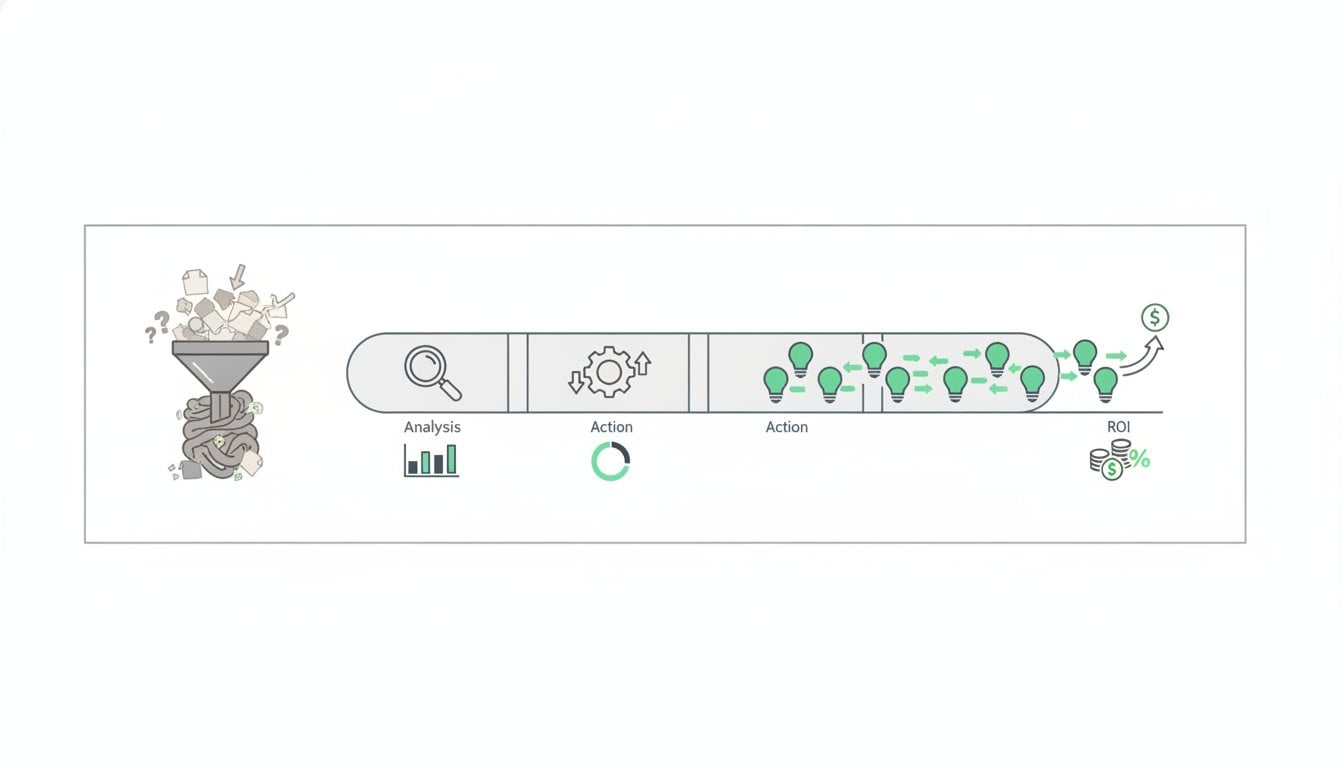
If only 21% of your workforce is engaged at work, you aren’t just losing morale; you’re losing the competitive edge hidden within your own ranks. Data from 2026 indicates that employees who are encouraged to innovate are three times more engaged, yet most organizations still rely on “suggestion boxes” that yield nothing but silence. You likely recognize that your frontline staff holds the answers to your most persistent bottlenecks, but without the right systems, those insights remain trapped in silos. This guide details how to encourage employees to share ideas by treating silence as a design flaw in your systems rather than a lack of initiative from your people.
Key Takeaways
- Identify why the “Futility Factor” is the primary driver of employee silence and how psychological safety acts as a foundation for organizational performance.
- Discover how to encourage employees to share ideas by launching time-bound Innovation Challenges that focus team energy on specific business problems.
- Apply the IDEA framework and transparent idea evaluation criteria to ensure high-impact suggestions are prioritized and implemented.
- Move beyond the “black hole” of physical suggestion boxes by centralizing your innovation pipeline within a digital employee suggestion platform.
- Build a sustainable culture of participation by closing the feedback loop and measuring the tangible ROI of implemented improvements.
Understanding the Barrier: Why Employees Stop Sharing Ideas
Most managers assume employees stay quiet because they’re afraid of being wrong or facing criticism. The data suggests a more frustrating reality. The “Futility Factor” is often the real killer of innovation. If a team member believes their suggestion will disappear into a void, they simply stop contributing. This isn’t just a loss of morale; it’s a structural failure that creates a “silence climate.” Understanding the root of this behavior is the first step in learning how to encourage employees to share ideas effectively.
The Psychology of the Silent Employee
The Cost of Lost Insights
The traditional suggestion box is a relic of an era that didn’t value transparency. In most offices, it’s a physical or digital graveyard. This lack of a visible feedback loop reinforces the Futility Factor. The financial impact is real. Every unshared idea represents a missed opportunity to eliminate one of the 8 forms of waste, such as waiting times or non-utilized talent.
Designing the Invitation: How to Ask for Ideas Effectively
The Art of the Strategic Question
Open-ended questions outperform yes/no queries because they demand analysis rather than simple compliance. Use these five courageous questions to prompt deep thinking during your next team meeting:
- If you had to cut our turnaround time by 50% without losing quality, where would you start?
- What is the most redundant task you perform weekly that adds zero value to the end user?
- Where are we most vulnerable to a competitor’s strategy right now?
- What process do we use that feels like a relic of a decade ago?
- If you were in charge of this department with a blank check, what’s the first thing you’d change?
Active listening must follow these questions. If you ask but don’t document the response, you’re merely performing engagement rather than facilitating it. Employees need to see that their input is recorded and considered in real-time to overcome the “Futility Factor” discussed in the previous section.
Time-Bound Innovation Challenges
Structure matters. A 30-day innovation challenge focused on a single bottleneck provides the necessary constraints to spark creative solutions. Research suggests that limited time and resources often force teams to move past obvious answers toward more radical improvements. For high-energy bursts of participation, many organizations now use hackathons to prototype solutions in real-time. These events transform abstract concepts into tangible results in a matter of hours.
You can inspire your team by highlighting successful innovation examples that started as simple responses to specific challenges. If you find your team is stuck, try reverse brainstorming. Instead of asking how to improve a system, ask how to make it fail. This often reveals hidden roadblocks that standard brainstorming misses. To see how these frameworks look in practice, you can book a free demo of a structured innovation system.
The IDEA Framework and Structured Evaluation
Generating a high volume of suggestions is only half the battle. If your team feels their input is judged arbitrarily, they’ll quickly revert to silence. High-participation cultures are built on the back of transparent, objective systems. To master how to encourage employees to share ideas, you must provide a clear roadmap for what happens after the “submit” button is clicked. The IDEA framework serves as this roadmap, transforming vague suggestions into actionable business cases while protecting managers from the “idea overload” that often leads to administrative paralysis.
The IDEA framework consists of four critical pillars:
- Interesting: Does the idea solve a documented pain point or align with current strategic goals?
- Doable: Is the solution technically feasible within our current resource constraints?
- Engaging: Will the implementation improve the experience for employees or customers?
- Actions: Are there clear, immediate steps we can take to test or prototype the concept?
Moving beyond simple acronyms requires establishing firm idea evaluation criteria. When these metrics are public, you eliminate the perception of favoritism. Use an “Impact vs. Effort” matrix to visualize these criteria. This helps the organization prioritize “quick wins” that build momentum while identifying the high-resource “moonshots” that require deeper vetting.
Teaching Employees to Self-Vet
Quality improves when employees act as the first line of evaluation. Provide a simple rubric that encourages staff to move from sharing an “opinion” to building a “business case.” A well-structured submission should include the specific problem, the proposed solution, and the anticipated outcome. This shift in mindset encourages incremental vs. radical innovation, showing employees that small, daily improvements are just as valuable as disruptive breakthroughs. When staff understand the “why” behind evaluation, they’re more likely to contribute high-quality data rather than raw complaints.
The Manager’s Role in Evaluation
Building the Infrastructure: Moving Beyond the Suggestion Box
The Digital Advantage
Gamification and Engagement
Healthy competition can be a powerful driver of participation. Using leaderboards and points creates a sense of progress that keeps employees coming back to the platform. While cash rewards can provide a temporary boost, research suggests that social recognition and digital “badges” often lead to higher long-term engagement. A user-friendly interface is non-negotiable. If the system is difficult to navigate, adoption will stall regardless of the incentives offered. To see how a structured system can transform your culture, book a free demo to explore the features that drive high-participation innovation.
Closing the Loop: Recognition, Implementation, and ROI
Effective Feedback Mechanisms
Silence is more damaging than a rejection. A “No, because…” response provides coaching and transparency that “Yes, and…” cannot always match. If an idea isn’t feasible, explaining the specific constraints helps the employee refine their next submission. This turns a rejection into a professional development opportunity. For those ideas that do make it through, creating a “Hall of Fame” for implemented improvements provides lasting public praise that carries more weight than a one-time gift card.
Tracking the Numbers
Transforming Your Workforce into a Scalable Innovation Engine
Dismantling the “Futility Factor” requires more than an open-door policy; it demands a structured approach that combines psychological safety with high-performance digital tools. By replacing stagnant suggestion boxes with a transparent evaluation framework, you transform raw feedback into a measurable corporate asset. This guide has detailed how to encourage employees to share ideas by focusing on strategic questioning, the IDEA framework, and rigorous ROI tracking. It’s about shifting your culture from passive observation to active, high-impact participation.
The path to a high-participation culture is paved with accountability. When managers provide consistent feedback and leadership prioritizes implemented improvements, innovation becomes a sustainable habit rather than a one-time event. Ready to turn your employees into an innovation engine? Ideawake is trusted by organizations to manage thousands of ideas through AI-powered evaluation that saves managers time and built-in ROI tracking that proves your program’s value. See how Ideawake automates the process by booking a free demo.
The potential within your organization is vast. With the right systems in place, you’re ready to unlock it.
Frequently Asked Questions
How do I motivate employees who are afraid to speak up?
You motivate hesitant employees by establishing psychological safety where the risk of sharing is lower than the reward of participation. Silence is rarely a personality trait; it’s a rational response to a “silence climate” where employees feel their input is ignored or punished. Focus on reducing the perceived stakes by asking for small, incremental improvements rather than radical breakthroughs. When staff see that pointing out an inefficiency leads to a better workflow rather than a reprimand, their defensive silence will naturally dissolve.
What is the best way to reward employees for their ideas?
How do I handle “bad” or unfeasible ideas without hurting morale?
Handle unfeasible ideas by providing transparent, data-backed feedback that explains the specific constraints preventing implementation. A “No, because…” response is significantly better than silence because it treats the employee like a professional partner. Use these moments as coaching opportunities to help the staff member refine their next submission. When you explain the “why” behind a rejection, you maintain trust and ensure the employee feels comfortable contributing again in the future.
Should I use a physical suggestion box or digital software?
Digital software is the only scalable choice for modern organizations because it eliminates the administrative “black hole” associated with physical boxes. Physical boxes lack transparency and make it nearly impossible to track ROI or provide timely feedback. A digital platform centralizes all insights into a “Value Vault,” allowing for cross-departmental collaboration and automated sorting. This infrastructure ensures that every idea is documented, evaluated, and archived for future use rather than being lost in a desk drawer.
How often should we run innovation challenges?
Run innovation challenges quarterly or whenever a specific departmental bottleneck requires a fresh perspective. Frequency matters less than the quality of the “ask.” If you run challenges too often without implementing previous winners, you risk “challenge fatigue.” A 30-day window is typically sufficient to generate high-energy participation and rapid prototyping. This time-bound structure creates a sense of urgency that pushes teams to move past obvious solutions toward more impactful improvements.
What role does leadership play in encouraging idea sharing?
How can we ensure that ideas from frontline staff reach upper management?
What are the most common reasons innovation programs fail?
Innovation programs fail primarily due to a lack of feedback and administrative complexity. If employees never hear back about their suggestions, they conclude that their effort is futile and stop participating. Understanding how to encourage employees to share ideas requires a commitment to closing the loop every single time. Additionally, programs often collapse when they rely on manual tracking like spreadsheets, which become unmanageable as the volume of ideas increases. Success demands both a culture of accountability and the right technical infrastructure.