
How much potential capital is sitting idle in your employees’ heads simply because there’s no place to capture it? With the enterprise idea and innovation management market projected to reach $14.94 billion by 2034, the cost of “lost” innovation has never been higher. You’ve likely felt the frustration of discovering two departments spent weeks solving the same problem independently or finding a brilliant suggestion buried in an unread email thread. This fragmentation doesn’t just waste time; it actively drains your organization’s competitive edge.
This guide shows you how to stop the leak by building a centralized idea management database that acts as a high-yield value vault for your company. We’ll explore how to eliminate duplicate efforts, track ROI from submission to implementation, and create a single source of truth that turns scattered thoughts into measurable growth. You’ll learn how to transform your innovation pipeline into a predictable asset that drives cross-departmental collaboration and ensures no high-impact suggestion ever falls through the cracks again.
Key Takeaways
- Learn why the traditional suggestion box is obsolete and how a centralized idea management database serves as a secure “Value Vault” for your organization’s intellectual capital.
- Discover the four critical layers of innovation architecture; capture, evaluation, implementation, and ROI tracking are essential for any high-performance system.
- Understand the “Spreadsheet Trap” and why manual tools like Excel fail to scale, often creating version control nightmares and fragmented data.
- Master the “Anatomy of an Idea” by identifying the specific metadata and strategic tags required to align every submission with your core business objectives.
- Explore how to leverage modern platforms to centralize organizational intelligence and track the full lifecycle of an idea from submission to tangible ROI.
Beyond the Suggestion Box: Defining the Centralized Idea Management Database
Traditional suggestion boxes are where good ideas go to die. For the 2026 enterprise, a centralized idea management database functions as the definitive source of truth for all intellectual capital, ensuring that no insight is lost to the void of unread emails or siloed Slack channels. It’s a fundamental shift from storing text to building a high-performance asset. This system transforms unstructured data into structured intelligence, allowing leaders to see the full trajectory of an innovation from its inception to its final impact on the balance sheet.
Centralization is the only way to scale. Without it, you aren’t managing innovation; you’re just managing noise. By consolidating every suggestion into a single searchable repository, you eliminate the risk of duplicate efforts and ensure that every department has visibility into the organization’s collective brainpower. This isn’t just a folder of files. It’s a dynamic “Value Vault” that protects your company’s most valuable resource: its future potential.
The Shift from Passive Collection to Active Management
Passive feedback loops fail because they lack direction. If you simply ask for “ideas,” you’ll likely receive a flood of low-quality, irrelevant noise that creates more work for your managers. High-performance organizations have moved toward a proactive, challenge-based model. This transition is a core component of what is computing innovation, utilizing digital frameworks to solve specific, high-priority business problems. Instead of waiting for inspiration to strike, you direct your team’s creative energy toward the obstacles that are currently hindering growth. This active management approach ensures that every submission has a clear path to implementation and a defined purpose within the broader corporate strategy.
Why Your Organization Needs a “Value Vault” Now
Intellectual waste is the silent killer of enterprise growth. When ideas are ignored or forgotten, the cost isn’t just the lost revenue from that specific improvement; it’s the erosion of employee trust. Research confirms that the benefits of employee ideation programs extend far beyond the ideas themselves. These programs are critical for retention and cultural health, making employees feel like active participants in the company’s success. A centralized idea management database ensures that every contribution is tracked, evaluated, and acknowledged. This transparency breaks down functional silos, allowing a solution developed in logistics to be discovered and adapted by the marketing team. It turns collaboration into a byproduct of your workflow rather than an additional task for your staff to manage.
The Architecture of Innovation: Core Components of a Modern Idea Hub
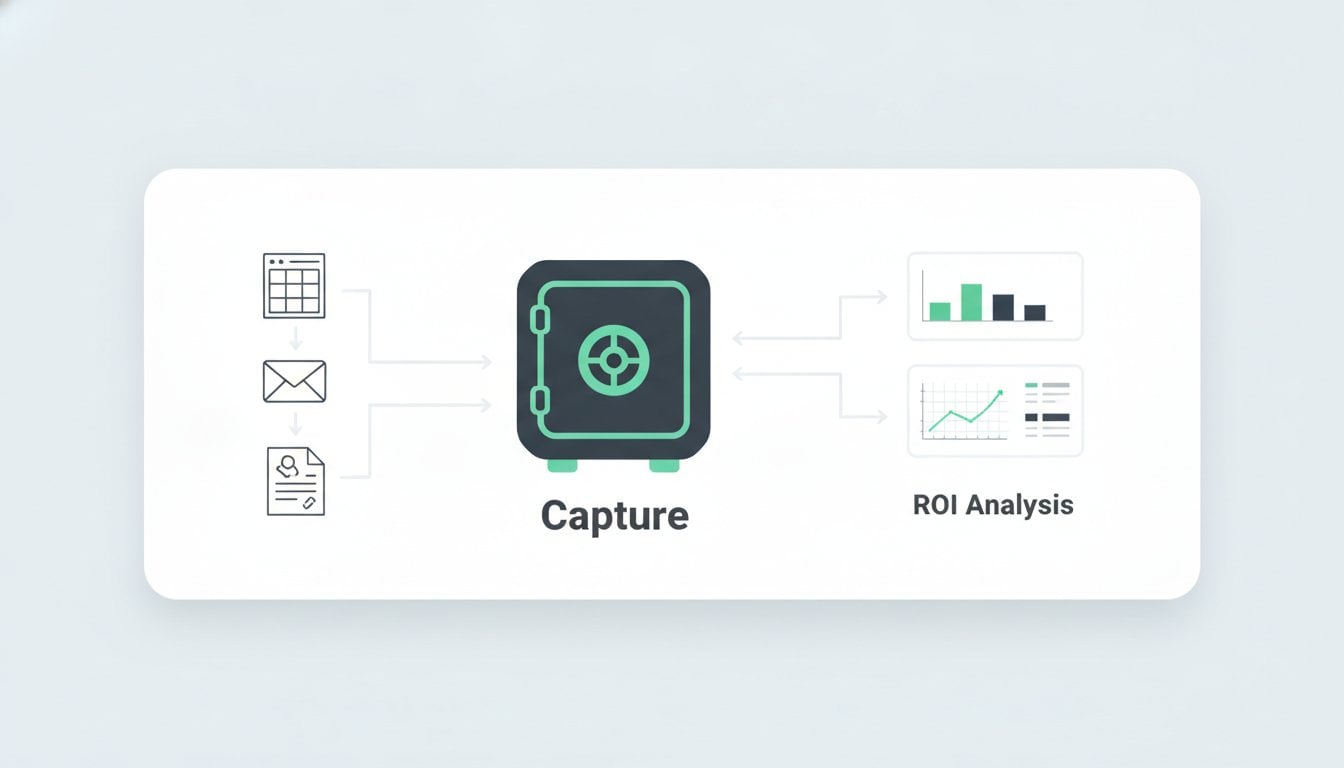
A high-performance centralized idea management database is not a static repository; it is a dynamic engine designed to move intellectual capital through a rigorous, transparent lifecycle. To function as a true Value Vault, the architecture must support four distinct layers: Capture, Evaluation, Implementation, and ROI Tracking. Without these interconnected stages, ideas remain stagnant. A modern hub uses cloud-based architecture to ensure global accessibility, allowing distributed teams to contribute and collaborate in real time. This accessibility is secured by role-based access control (RBAC), which protects sensitive strategic data while maintaining an open, inclusive environment for general submissions.
For the 2026 enterprise, scalability depends on shifting from manual oversight to automated intelligence. By structuring the database around these core components, leadership gains a birds-eye view of the entire innovation pipeline. You can see exactly where bottlenecks occur, which departments are over-performing, and how much potential value is currently in development. This level of visibility turns innovation from a “black box” into a predictable, manageable business process.
AI-Enhanced Categorization and Deduplication
The biggest threat to a growing database is the “duplicate work” trap. In large organizations, it’s common for two teams to submit nearly identical solutions to the same problem. Utilizing AI tools for innovation managers solves this by using natural language processing (NLP) to cluster related ideas into themes automatically. These tools identify similarities in intent, not just keywords, and can surface “forgotten” ideas from past years that have suddenly become relevant due to new market conditions. This ensures your centralized idea management database remains clean, actionable, and free of redundant clutter.
The Role of Gamification and Engagement Metrics
A database is only as valuable as the data flowing into it. To maintain a high volume of quality submissions, the architecture must incorporate gamification elements like peer voting, leaderboards, and public recognition. These interactive features transform the submission process from a chore into a competitive, rewarding experience. Engagement metrics allow managers to identify “innovation champions” within the frontline staff, while prizes and recognition programs reinforce the idea that the database is a legitimate path for professional impact. If you want to see how these architectural elements work together to drive measurable results, you can schedule a platform walkthrough to see the system in action.
Ad-Hoc Tools vs. Centralized Repositories: Why Spreadsheets Fail at Scale
Relying on “free” tools is one of the most expensive mistakes an innovation leader can make. While Excel or Google Sheets might seem like a low-barrier starting point, they quickly transform into a graveyard for high-potential insights. Once your collection exceeds 50 entries, manual tracking becomes unmanageable. Version control nightmares emerge as different stakeholders save local copies, leading to fragmented data and contradictory status reports. A centralized idea management database eliminates this friction by providing a single, real-time environment where every update is instantly visible to the entire organization.
The Ideawake vs. Spreadsheets Analysis
The difference between manual tracking and purpose-built systems is measurable in hours and dollars. When you compare idea management platforms against spreadsheets, the administrative time-savings are often staggering. Administrators typically reclaim 10 or more hours per week by automating status updates, notifications, and reporting. Manual systems suffer from “data decay” because they aren’t updated in real-time; by the time a manager reviews a spreadsheet, the information is often weeks old. A centralized idea management database ensures that your data remains fresh and actionable, allowing for rapid decision-making that spreadsheets simply can’t support.
The Build vs. Buy Dilemma
It’s tempting for enterprise IT departments to suggest building a custom internal database to “save money.” However, the build vs buy idea management software framework reveals that DIY solutions are frequently more costly in the long run. Internal builds often lack specialized features like native gamification, AI-driven deduplication, and sophisticated ROI tracking. The ongoing maintenance and security patches required for a custom tool drain IT resources that should be focused on your core business. Buying a proven architecture allows you to launch in days rather than months, ensuring you start capturing value immediately instead of waiting for a development cycle to conclude.
Maximizing the “Value Vault”: Best Practices for Database Structure and Metadata
A database without structure is just a digital junkyard. To turn a centralized idea management database into a high-yield asset, you must define the “Anatomy of an Idea” with surgical precision. This means capturing specific data points at the moment of submission that allow for objective comparison later. Strategic alignment is not optional; every idea should be tagged against specific business objectives like operational efficiency, cost reduction, or customer retention. This ensures that your innovation pipeline isn’t just full, but focused on the metrics that drive the C-suite’s agenda.
Tracking the lifecycle of an idea from a rough draft to measured ROI is what separates high-performance organizations from the mediocre. You need a transparent workflow where every stakeholder knows exactly where an idea stands. This is where a rigorous idea selection criteria for innovation and idea evaluation process becomes your most powerful filter. It maintains the quality of your database by ensuring only the most viable, high-impact suggestions consume your implementation resources, preventing the “clutter” that often kills manual systems.
Standardizing the Submission Process
Data integrity begins at the top of the funnel. A structured submission process ensures that you collect enough information to make an informed decision without overwhelming the contributor. Required fields should focus on the specific problem, the proposed solution, and the estimated impact. If you ask for too little, your managers waste hours chasing details; if you ask for too much, your submission rates will plummet. The goal is to capture the essence of the value proposition immediately so it can be categorized and prioritized by the system’s intelligence layers.
Metadata for ROI and Impact Measurement
You cannot manage what you don’t measure. Every entry in your centralized idea management database must eventually be attached to specific KPIs that justify the program’s existence. This includes tracking the actual cost to implement against the expected value over a 12 or 24-month period. Utilizing an idea management ROI calculator allows you to transform abstract suggestions into hard financial data. This evidence-driven approach is the only way to secure long-term buy-in from executive leadership and prove the tangible worth of your innovation efforts.
To see how to structure your own Value Vault for maximum financial impact, book a free platform demo today.
Executing the Vision: How Ideawake Centralizes Organizational Intelligence
Ideawake is engineered to serve as the definitive architecture for the entire innovation lifecycle. By moving beyond the limitations of manual tracking, it provides a purpose-built centralized idea management database that turns raw suggestions into high-yield organizational assets. The platform focuses on eliminating the friction between an idea’s inception and its final implementation. With a focus on speed, the implementation process is designed to integrate into your existing workflows in days, not months. This is a significant departure from the slow deployment cycles typical of legacy enterprise software, which often takes quarters to configure and launch. By choosing a modern SaaS framework, you ensure that your team can begin contributing value almost immediately.
The suite of product features available ensures that every stage of the “Value Vault” is fully automated. From AI-driven deduplication to sophisticated scoring rubrics, the system handles the heavy lifting so your leadership can focus on decision-making. This efficiency is critical in a market for enterprise idea management software that is projected to grow at a CAGR of 16.66% through 2034. It isn’t just about collecting data; it’s about creating a predictable engine for growth that is backed by hard evidence and real-time analytics. Organizations that invest in a collaborative idea management platform are better positioned to harness cross-departmental synergy and convert fragmented feedback into a structured, high-octane innovation engine.
End-to-End Visibility from Submission to ROI
Visibility is the cornerstone of accountability. Ideawake allows you to track the exact financial impact of every implemented suggestion, closing the loop between employee creativity and the balance sheet. The platform’s AI capabilities significantly reduce the administrative burden by automatically categorizing entries and identifying themes across thousands of submissions. This automation ensures your database stays organized without requiring a dedicated full-time manager. To ensure a seamless data flow, the system integrates with your existing tech stack, allowing ideas to move from communication tools like Slack or Microsoft Teams directly into your centralized idea management database without manual intervention. This connectivity prevents the “data silos” that often occur when innovation is treated as a separate, isolated task rather than a core part of the daily workflow.
Your Next Steps: Building the Foundation
The first step toward transformation is acknowledging where your current “idea silos” exist. Scattered emails and forgotten spreadsheets are costing your organization potential revenue every day. We invite you to sign up for a demo to see how a structured database can revolutionize your innovation pipeline. For those looking to deepen their understanding of these frameworks, our library of innovation resources provides the data and best practices needed to lead a successful cultural shift. Stop settling for fragmented feedback and start building your Value Vault today.
Transforming Intellectual Capital into Measurable Growth
The era of the passive suggestion box is over. To compete in the 2026 enterprise landscape, you need more than just good intentions; you need a system that captures, evaluates, and tracks insights with surgical precision. Transitioning to a centralized idea management database isn’t just an IT upgrade. It’s a strategic shift that ensures your organization’s collective intelligence is never wasted. By standardizing your submission process and implementing rigorous idea selection criteria for innovation, you turn a chaotic stream of suggestions into a predictable pipeline of high-yield assets.
Ideawake provides the modern architecture necessary to realize this vision. Our platform reduces administrative overhead by up to 80%, allowing your managers to focus on high-level strategy rather than manual data entry. With AI-driven deduplication and categorization, your database remains clean and actionable, while end-to-end ROI tracking provides the hard evidence needed to justify every implementation. Don’t let your next breakthrough get lost in a spreadsheet or a chat thread. Start building your innovation Value Vault with a free Ideawake demo today. Your team has the answers; it’s time you had the system to listen.
Frequently Asked Questions
What is the difference between an idea management database and a suggestion box?
A suggestion box is a passive repository that lacks transparency and tracking, while an idea management database is an active lifecycle engine. Suggestion boxes often lead to “intellectual waste” because there is no formal process for feedback or implementation. A database provides a structured environment where every submission is categorized, evaluated against KPIs, and tracked from inception to implementation, ensuring that high-value insights are never lost in a void of unread notes.
Can I use existing tools like Microsoft SharePoint or Excel as an idea database?
You can use these tools for small-scale projects, but they quickly become unmanageable once you exceed 50 ideas. Excel lacks real-time collaboration and automated workflows, leading to version control nightmares and fragmented data. A centralized idea management database provides specialized features like native gamification and automated status updates that manual tools cannot replicate. Relying on spreadsheets often costs administrators 10 or more hours per week in manual data cleaning.
How does AI improve the functionality of a centralized idea management database?
Artificial Intelligence eliminates the administrative burden of manual categorization and deduplication. By utilizing natural language processing, the system automatically clusters similar ideas into themes and identifies redundant submissions before they reach the evaluation stage. This ensures that your centralized idea management database remains clean and actionable. AI can also surface historical data from past challenges that may have become relevant due to new market conditions, maximizing the value of your existing intellectual capital.
Who should have access to the centralized idea database within a large enterprise?
Broad participation is critical for a healthy innovation culture, but access must be governed by role-based controls. Frontline employees should have the ability to submit, vote, and comment on ideas to drive engagement. Conversely, sensitive financial data and ROI tracking should be restricted to managers and executive leadership. This balance encourages organization-wide collaboration while protecting strategic information and ensuring that the evaluation process remains objective and secure.
How do you prevent the database from becoming a “black hole” where ideas go to die?
Transparency and automated feedback loops are the best defenses against the “black hole” effect. Every contributor should receive real-time notifications as their idea moves through the evaluation lifecycle. By establishing clear timelines for review and providing constructive feedback for rejected ideas, you maintain trust and momentum. When employees see that their contributions are being actively managed and implemented, they are far more likely to remain engaged in the long term.
What are the most important metrics to track within an innovation database?
You must track both activity and impact metrics to prove the value of your program. While submission counts and participation rates measure cultural health, the most critical data points are the “Implementation Rate” and “Realized ROI.” Tracking the actual cost to implement against the financial gain over 12 to 24 months provides the hard evidence needed to secure executive buy-in. These metrics transform abstract creativity into a tangible business asset that justifies continued investment.
How long does it take to implement a centralized idea management system?
Modern SaaS platforms can be configured and launched in as little as 48 hours, though full enterprise adoption typically spans 30 to 90 days. This timeline includes setting up custom evaluation rubrics, integrating with your existing tech stack, and training internal champions. This speed is a significant advantage over legacy enterprise software, which often requires months of custom development. Rapid deployment allows you to start capturing value and measuring impact almost immediately.
Is it possible to integrate the idea database with our current project management software?
Yes, seamless integration is a core requirement for any high-performance innovation hub. Connecting your database to tools like Jira, Asana, or Microsoft Teams ensures that approved ideas move directly into your development pipeline without manual data entry. This connectivity ensures that innovation is treated as a standard part of the operational workflow rather than an isolated task. It allows for a seamless data flow that keeps all stakeholders aligned on the progress of high-impact projects.