
Did you know the global market for idea management software is projected to reach $19.21 billion by 2035? According to Market Research Future, this 11.32% compound annual growth rate reflects a major shift in how enterprises prioritize internal innovation. You’ve likely experienced the frustration of seeing brilliant employee suggestions die in an overflowing inbox or a static spreadsheet. Most leaders agree that manual evaluation creates an administrative bottleneck that stifles growth and kills engagement. Adopting a collaborative idea management platform is the only way to scale these efforts without losing momentum.
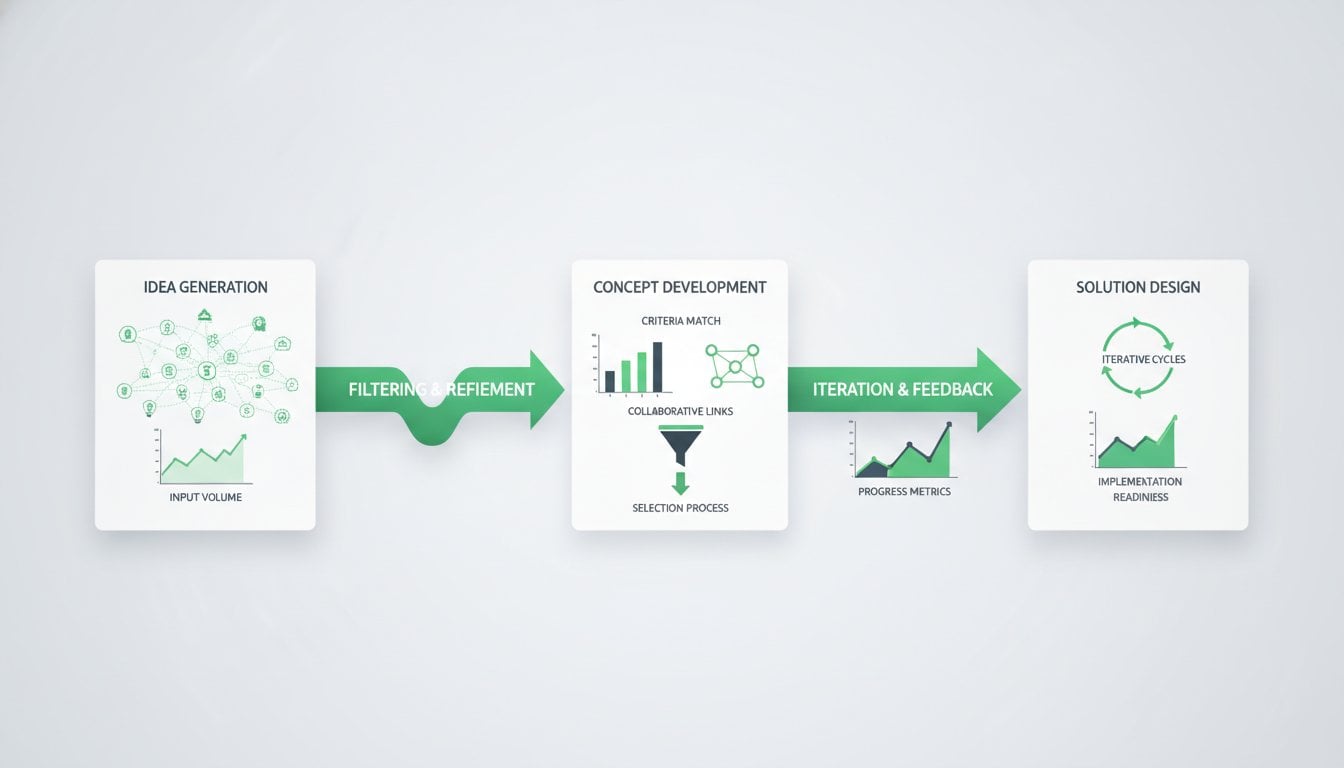
This guide demonstrates how modern platforms transform fragmented feedback into a high-octane innovation engine that drives measurable ROI. We’ll explore how to build a structured, automated pipeline that increases cross-departmental collaboration while providing clear data on the financial impact of every implemented idea. You’ll gain a comprehensive look at the AI-driven tools and engagement strategies that will define enterprise synergy through 2026. It’s time to move beyond simple collection and start executing ideas that move the needle.
Key Takeaways
- Learn how to transition from passive suggestion boxes to active engagement hubs that centralize collective intelligence across every department.
- Discover how a collaborative idea management platform uses AI-powered duplication detection and automated triaging to eliminate administrative bottlenecks.
- Identify the hidden costs and scalability issues associated with using spreadsheets or internal SharePoint builds for enterprise innovation programs.
- Implement a data-driven framework for idea evaluation that utilizes crowdsourced filtering to identify high-impact opportunities with measurable ROI.
- Master a structured 30-day roadmap for launching innovation challenges that integrate directly with your existing tools like Slack and Microsoft Teams.
The Evolution of the Collaborative Idea Management Platform
The traditional suggestion box is dead. In its place, the collaborative idea management platform has emerged as a high-performance ecosystem designed to harness collective intelligence at scale. While legacy tools treated employee feedback as a passive data stream, modern platforms function as active engagement hubs. This shift is largely driven by the broader evolution of Innovation management, which now prioritizes real-time interaction over static submissions. In 2026, true collaboration requires more than a shared document; it demands a structured environment where ideas are debated, refined, and scored using objective data.
The role of what is computing innovation is essential here, as underlying technology now enables organizations to process thousands of inputs without increasing administrative overhead. It’s no longer enough to just gather ideas. You need a system that filters the noise and focuses on the 1% of concepts that will actually drive performance. This transition from “suggestion collection” to “synergy management” represents the new standard for enterprise growth.
From Internal Crowdsourcing to Open Innovation
Internal crowdsourcing taps into the frontline expertise of your entire workforce. Employees on the ground often identify inefficiencies that leadership misses, providing a direct path to operational excellence. This model thrives on three specific pillars:
- Frontline Visibility: Capturing insights from those closest to the customer or product.
- Cognitive Diversity: Combining perspectives from different departments to solve problems.
- Scalable Engagement: Moving beyond small focus groups to company-wide participation.
The modern landscape is also expanding toward open innovation. This involves collaborating with customers, partners, and even suppliers to solve complex challenges. The challenge lies in balancing transparency with intellectual property security. A robust platform ensures that while the synergy is global, sensitive data remains protected through granular access controls and secure workflows.
The Synergy Between Creativity and Execution
Distinguishing between creativity vs innovation is critical for enterprise success. Creativity is the generation of novel ideas, but innovation is the successful implementation of those ideas to create value. An enterprise-grade collaborative idea management platform shouldn’t just be a “digital playground” for brainstorming. It must bridge the gap between initial ideation and project management. When collaboration is structured, it naturally dissolves organizational silos. Marketing, R&D, and Operations can finally work in tandem, ensuring that the best ideas don’t just exist on paper but actually reach the market. This integrated approach transforms a company’s culture from one of “having ideas” to one of “delivering results.”
Core Features That Drive High-Impact Engagement
A high-performance collaborative idea management platform is more than a digital bulletin board. It’s a structured engine designed to move concepts through a rigorous validation process. While basic tools offer simple comment threads, enterprise-grade solutions utilize sophisticated features to maintain momentum and ensure quality. For organizations with thousands of employees, manual oversight is impossible. You need automated systems that handle the heavy lifting while keeping the crowd engaged and productive. This shift from passive collection to active management is what separates market leaders from those stuck in administrative gridlock.
AI-Driven Insights and Automation
Administrative bottlenecks are the primary reason innovation programs fail. By leveraging Ideawake AI, managers can instantly categorize and score submissions based on strategic alignment. Using specific AI tools for innovation managers can reduce administrative overhead by up to 80%, allowing leaders to focus on execution rather than data entry. AI-powered duplication detection keeps the pipeline clean by identifying similar concepts in real time. This prevents the idea fatigue that occurs when the same problems are submitted repeatedly. Predictive analytics further enhance this by flagging potential winners before they enter expensive prototyping phases, ensuring resources are allocated to the highest-potential projects.
The Psychology of Gamification in 2026
Engagement isn’t accidental; it’s engineered. Modern platforms use social proof—likes, comments, and shares—to create a sense of community and urgency. Gamification elements like leaderboards and virtual prizes drive participation by tapping into human psychology. However, the most successful designs reward the quality of contributions over sheer volume. History shows that structured autonomy works. For example, Google’s 20% time program demonstrated that giving employees the space to innovate leads to world-changing products, but only when supported by a culture of accountability. To see how these features can be tailored to your specific organizational goals, you might consider how to customize your innovation workflow.
Finally, a mobile-first approach is non-negotiable in 2026. Frontline workers in manufacturing, healthcare, or retail don’t spend their days behind a desk. They need the ability to capture insights the moment they occur. By providing a mobile-optimized experience, you ensure that ideas move seamlessly through the phases of continuous improvement, regardless of where the employee is located. This accessibility, combined with automated workflows, ensures that your collaborative idea management platform acts as a catalyst for tangible results rather than just a repository for suggestions.
Legacy Software vs. Modern Collaborative Platforms
Many enterprises still attempt to manage innovation through a patchwork of general-purpose tools. They rely on SharePoint sites, Jira tickets, or static documents that were never designed for the unique lifecycle of an idea. While these systems are excellent for structured tasks, they fail to provide the high-energy engagement required for a collaborative idea management platform to thrive. Relying on outdated methods creates friction. It turns what should be a dynamic exchange of insights into a bureaucratic chore. Modern architecture prioritizes speed-to-implementation, allowing organizations to launch global initiatives in days rather than months.
The manual effort required to maintain legacy systems is often the silent killer of innovation programs. When you compare ideawake vs spreadsheets, the difference in administrative load is staggering. Spreadsheets lack real-time collaboration, automated notifications, and data visualization. This forces managers to spend more time cleaning data than actually implementing ideas. To scale from a single department to a global enterprise, you need a system that handles the complexity of thousands of participants without losing momentum.
The Build vs. Buy Framework
IT departments frequently argue for custom-built solutions, but the total cost of ownership (TCO) often tells a different story. Custom builds require ongoing maintenance, security updates, and feature development that can drain internal resources. Choosing specialized idea management software ensures you have access to industry-standard features like AI-driven triaging and advanced analytics immediately. General project management tools simply don’t offer the specific workflows needed to move an idea from a rough concept to a validated project. In a SaaS environment, you also benefit from enterprise-grade security and compliance standards that are updated automatically, protecting your organization’s intellectual property without additional internal effort.
Overcoming the “Suggestion Box” Stigma
Traditional employee suggestion programs have a reputation for being “idea cemeteries.” Ideas go in, but nothing ever comes out. This one-way communication destroys employee trust and kills future participation. A modern collaborative idea management platform transforms this “box” into a transparent, two-way portal. It forces accountability by making the status of every submission visible to the entire crowd. Closing the feedback loop is the most critical factor in maintaining long-term engagement. When employees see their peers’ ideas being evaluated, debated, and implemented, they’re far more likely to contribute high-value insights themselves. Transparency isn’t just a feature; it’s the foundation of a high-performance innovation culture.
A Data-Driven Framework for Idea Evaluation
Intuition is a poor substitute for evidence. In most organizations, the evaluation process is crippled by subjective “gut feelings” or the influence of the highest-paid person’s opinion. A high-performance collaborative idea management platform replaces this bias with a quantitative scoring model. By moving toward a data-driven framework, you ensure that resources are only funneled into projects with a high probability of success. This shift doesn’t just improve the quality of implemented ideas; it provides the accountability that leadership demands.
Collaborative triaging is the engine that makes this possible at scale. Instead of a small committee reviewing every submission, you let the “crowd” perform the first pass of filtering. When employees vote, comment, and provide feedback, they are effectively triaging the pipeline. This distributed evaluation identifies high-potential concepts early, ensuring that the innovation team only spends time on needle-moving opportunities. It’s a method that turns a potential administrative nightmare into a streamlined, self-filtering ecosystem.
Establishing Winning Criteria
Success requires clear idea selection criteria for innovation. Every submission should be measured against the triple-threat of feasibility, desirability, and viability. Feasibility asks if you can build it; desirability asks if anyone wants it; and viability asks if it makes financial sense. You must also customize your scoring rubrics based on the challenge type. A cost-cutting initiative needs different metrics than a new product launch. Managing the balance between radical vs incremental innovation is equally vital. Incremental ideas provide quick wins, while radical concepts drive long-term transformation. A robust platform allows you to track both in the same pipeline without confusing their distinct value propositions.
Measuring ROI and Financial Impact
If you can’t prove the financial impact, your innovation program is dead on arrival. Using an idea evaluation and scoring tool allows you to track an idea from the moment of submission through to its final P&L impact. This level of transparency is essential for securing executive buy-in and justifying continued investment. An idea management ROI calculator helps you estimate potential gains before you commit a single dollar to development. When ROI reporting is transparent, it drives higher levels of future collaboration because employees see that their contributions result in tangible organizational growth. Data isn’t just for the board; it’s the fuel that keeps the entire innovation engine running.
Ready to see how data-driven scoring can transform your innovation pipeline? Book a free demo today to explore our advanced evaluation frameworks.
Implementation: Turning Synergy Into Results
Strategy without execution is merely a hallucination. To move from a theoretical framework to a high-performance collaborative idea management platform, you need an aggressive but realistic implementation plan. Most successful enterprises follow a 30-day roadmap to launch their first innovation challenge. This timeline prevents the “analysis paralysis” that often stalls digital transformation. By integrating the platform directly into your existing tech stack, including Slack, Microsoft Teams, and Salesforce, you meet employees where they already work. This eliminates the friction of learning a new interface and ensures that ideation becomes a natural part of the daily workflow.
Winning the hearts and minds of middle management is often the most difficult hurdle in cultural change. Managers often fear that innovation programs will add to their already heavy workloads. You must demonstrate that the benefits of employee ideation programs actually solve their specific pain points by identifying efficiencies they didn’t know existed. When middle management sees innovation as a tool for their own success rather than a distraction, adoption rates skyrocket across the entire organization.
Best Practices for Launching Your First Challenge
The success of your pilot depends on the clarity of your ask. Instead of requesting general suggestions, define a problem statement that inspires specific action. If you ask for “new ideas,” you’ll likely receive a volume of low-value noise. If you ask “How can we reduce supply chain waste by 10% in the next quarter?” you’ll generate targeted, actionable solutions. During this phase, it’s vital to identify “Innovation Champions.” These are bottom-up advocates who drive adoption within their teams, bypassing the typical skepticism found in large organizations. Setting realistic KPIs, such as a 20% participation rate for the first challenge, provides a baseline for future growth.
The Ideawake Advantage: Modern Innovation at Scale
Ideawake is designed to handle the complexities of global enterprise innovation without the administrative drag. Our platform helps you automate innovation management workflow tasks, which can reduce administrative time by up to 90%. This efficiency allows your team to focus on the 1% of ideas that drive 99% of the ROI rather than getting bogged down in manual data entry or duplicate submissions.
This end-to-end capability takes you from initial crowdsourcing to final financial measurement, making synergy a measurable asset rather than a vague corporate concept. If you’re ready to disrupt the status quo and build a high-octane innovation engine that delivers tangible results, sign up for a demo of Ideawake today. It’s time to stop collecting suggestions and start executing the future of your business.
Mastering the Future of Enterprise Innovation
Success in 2026 requires moving beyond the “suggestion box” mentality and toward a fully integrated innovation ecosystem. Throughout this guide, we’ve analyzed how a collaborative idea management platform transforms raw employee insights into a structured pipeline for growth. By implementing AI-driven filtering and data-backed scoring rubrics, you’ll ensure that only the most viable, high-impact projects receive your organization’s resources. This shift eliminates the administrative bottlenecks that have historically stifled corporate creativity.
Ideawake is built on a modern 2026 architecture for rapid deployment, allowing you to launch global challenges in days. Our platform is trusted by global enterprises to drive millions in ROI and has been proven to reduce innovation administrative overhead by up to 90%. It’s time to stop managing spreadsheets and start scaling results. You already have the collective intelligence within your workforce; now you have the framework to execute it.
Ready to see Ideawake in action? Book your personalized demo now.
The potential for transformation is already present in your organization. We’re here to help you unlock it.
Frequently Asked Questions
What is a collaborative idea management platform?
A collaborative idea management platform is a centralized digital ecosystem designed to crowdsource, evaluate, and execute insights from your entire workforce. It provides a structured framework that moves beyond simple collection, turning raw employee feedback into a high-octane innovation engine. By centralizing collective intelligence, these platforms ensure that every department can contribute to strategic goals in real time.
How does an idea management platform differ from a suggestion box?
Accountability and transparency are the primary differentiators. Traditional suggestion boxes are often one-way streets where submissions disappear without feedback, leading to low engagement. A modern platform creates a two-way dialogue where every idea’s status is visible, and the feedback loop is closed through automated notifications and public scoring. This transparency builds trust and encourages long-term participation.
Can we integrate a collaborative idea platform with Slack or Microsoft Teams?
Yes, enterprise-grade platforms offer native integrations with Slack and Microsoft Teams to meet employees where they already work. This removes the friction of switching between applications and allows users to submit ideas or vote on concepts directly within their existing communication channels. Integration is essential for maintaining high engagement levels among remote and distributed teams.
How do you encourage employees to collaborate on ideas?
You drive engagement by leveraging social proof and gamification elements like leaderboards, badges, and virtual prizes. When employees see their peers’ contributions being publicly recognized and implemented, it creates a self-sustaining culture of innovation. It’s also vital to provide clear “Problem Statements” that give employees a specific target to focus their creative energy on.
Is AI really necessary for managing ideas in 2026?
AI is essential for organizations that want to scale their innovation programs without increasing administrative headcount. It handles the heavy lifting of duplication detection, automated categorization, and initial scoring. This allows innovation managers to bypass the noise and focus their limited resources on executing the high-potential ideas that will actually move the needle for the business.
How long does it take to implement a collaborative innovation platform?
A standard implementation typically follows a 30-day roadmap from initial setup to the launch of your first challenge. This timeline includes configuring the platform to match your organizational structure, integrating your existing tech stack, and training your internal “Innovation Champions.” Rapid deployment is a key competitive advantage, ensuring you begin seeing results almost immediately.
How do you measure the ROI of a collaborative idea management program?
You measure ROI by tracking the tangible financial impact of implemented ideas, such as direct cost savings, new revenue generation, or measurable productivity gains. By using an integrated collaborative idea management platform, you can link every implemented concept back to a specific P&L impact. This data-driven approach provides the hard evidence needed to justify the program’s value to executive leadership.