
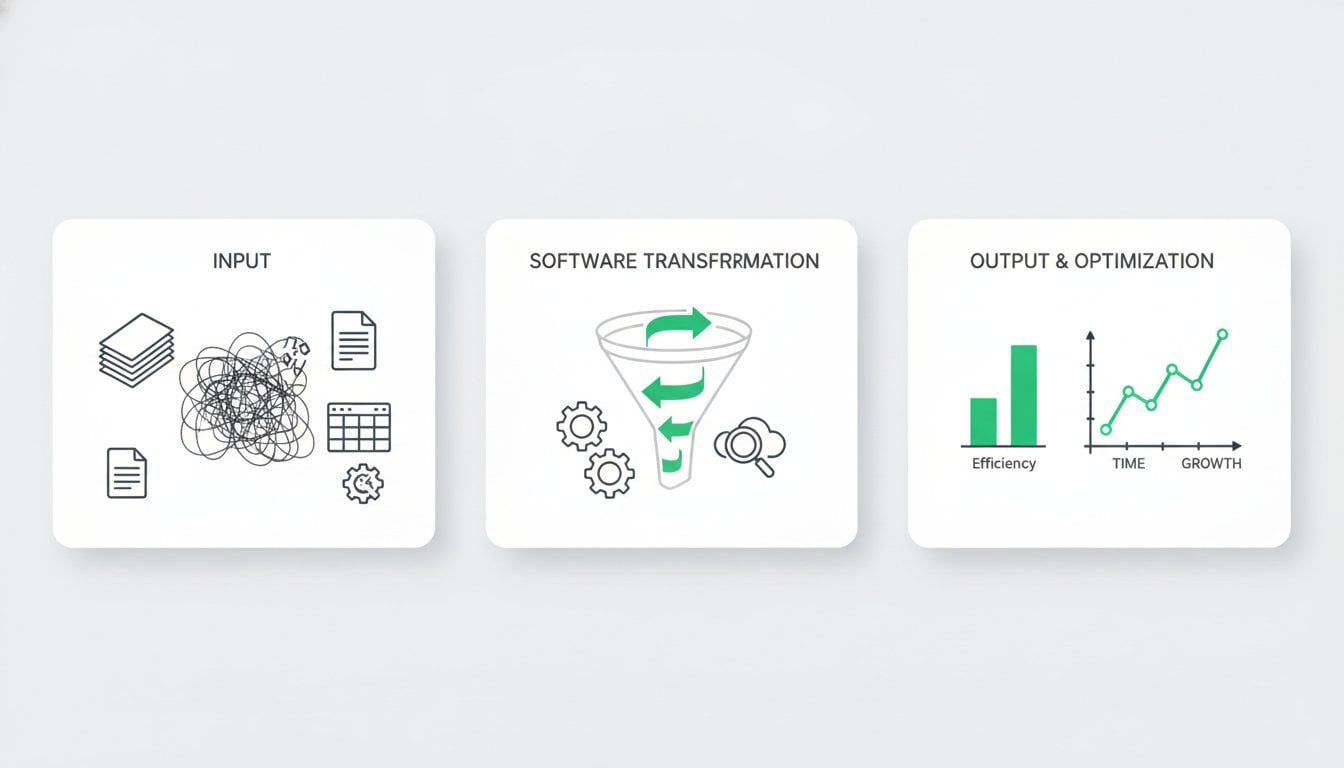
Why are 77% of organizations still flying blind while their competitors use real-time process intelligence to outpace them? Research indicates that only 23% of firms currently use process intelligence to support business transformation, which often results in a total disconnect between frontline activity and executive strategy. You likely recognize the frustration of watching high-potential ideas vanish into a black hole of spreadsheets and disconnected emails. Without the right continuous improvement software, it’s nearly impossible to track the financial impact of small changes or maintain the momentum needed for true operational excellence.
We agree that your organizational growth shouldn’t be a guessing game based on fragmented data. This guide will show you exactly how to evaluate and select a platform that bridges the gap between raw insights and measurable ROI. We’ll explore how to move toward a centralized source of truth for all projects, automate your reporting workflows, and implement the AI-augmented strategies that Gartner predicts will define 80% of organizations by 2030. It’s time to stop settling for average results and start scaling the intelligence already sitting on your factory floors and in your office cubicles.
Key Takeaways
- Learn why modern continuous improvement software must function as a centralized digital ecosystem rather than a passive suggestion box to ensure ideas move from capture to execution.
- Identify the 2026 must-have enterprise features that balance administrative oversight with the high adoption rates needed to sustain a culture of innovation.
- Apply an objective framework to the “build vs. buy” debate and see why generic project management tools often lack the specialized workflows required for operational excellence.
- Follow a clear roadmap for scaling your program from initial procurement to full organizational adoption while navigating the complexities of cultural change management.
- Discover how AI-augmented platforms and gamification strategies can finally bridge the gap between frontline insights and measurable financial impact.
What is Continuous Improvement Software? The 2026 Enterprise Definition
Continuous improvement software is a centralized digital ecosystem designed to capture, evaluate, and execute incremental improvements across an entire organization. It’s the infrastructure that transforms the abstract continual improvement process into a repeatable, data-driven workflow. In the current landscape, simply having a “suggestion box” isn’t enough. Modern platforms provide the execution framework required to turn a frontline insight into a measurable result, ensuring that no high-value idea is left to wither in an inbox.
Leading enterprises in 2026 have moved beyond reactive problem-solving. They now utilize these platforms to foster a culture of proactive, employee-led innovation. This shift is essential for maintaining a competitive edge. When every team member is empowered to identify inefficiencies, the organization gains a massive advantage in agility. The software acts as a force multiplier, aggregating thousands of small changes that collectively drive significant shifts in performance and profitability.
The Evolution from Kaizen Boards to AI-Driven Platforms
The journey of operational excellence began with physical Kaizen boards on factory floors. While effective for localized teams, these boards couldn’t scale across global operations. The first digital shift brought basic task managers, but these lacked the strategic oversight needed for true transformation. Today’s intelligent platforms have changed the game by integrating predictive analytics and automation. Modern systems use Ideawake AI to automatically identify duplicate ideas and predict potential impact based on historical data. Continuous improvement software is the engine of modern operational excellence.
Why Spreadsheets Stifle Operational Excellence
Essential Features of a Modern Continuous Improvement Platform
The right continuous improvement software integrates seamlessly into your existing tech stack, ensuring that insights don’t stay trapped in a single department. These platforms function as a central nervous system for change, connecting disparate teams and aligning their efforts with high-level corporate strategy. When features like automated notifications and visual Kanban boards work together, they eliminate the “black hole” effect where employees never hear back about their suggestions. Transparency is the fuel that keeps the improvement engine running.
AI-Powered Evaluation and Prioritization
Administrative overhead is the silent killer of improvement programs. Ideawake AI addresses this by automating the initial heavy lifting, which can reduce manual administrative tasks by as much as 50%. The system uses machine learning to score submissions based on strategic alignment and technical feasibility. Automated workflows then move these ideas through the pipeline without requiring manual intervention from a manager at every step. This ensures that the most impactful projects receive immediate attention while lower-priority suggestions are handled systematically.
Gamification and Employee Engagement Dynamics
Top-down mandates rarely produce lasting change. Crowdsourcing is far more effective because it leverages the collective intelligence of your entire workforce. By incorporating leaderboards, digital points, and social recognition, you create a competitive yet collaborative environment. These benefits of employee ideation programs extend beyond simple suggestions; they build a culture of ownership. When workers see their peers being recognized for improvements, participation rates naturally climb. Modern continuous improvement software integrates these tools into widely used methods of continuous improvement like PDCA or Lean, making excellence a daily habit rather than a quarterly chore.
Automated ROI Tracking and Reporting
Executives don’t care about “good ideas”; they care about impact. Real-time dashboards must provide a granular view of both hard financial savings and “soft” benefits like safety improvements or reduced turnover. You shouldn’t have to spend weeks compiling a report for leadership. The software should do it for you. Utilizing an idea management ROI calculator helps justify the initial investment by projecting long-term gains based on current participation rates. If you want to see how these features can transform your specific operation, you can schedule a personalized walkthrough of the platform.
Evaluating Your Options: Build vs. Buy and Platform Comparison
Choosing the right continuous improvement software is a high-stakes decision that determines whether your program scales or stalls. Many organizations make the mistake of using generic project management tools like Trello or Jira to manage their improvement pipeline. These tools excel at managing structured tasks, but they weren’t built to handle the high-volume, unstructured nature of frontline ideation. Without purpose-built features for crowdsourcing and automated evaluation, your team will spend more time managing the tool than implementing the actual improvements.
A true comparison framework for continuous improvement software must account for organizational maturity. Smaller teams might start with basic task managers, but enterprise-grade operations require a platform that provides a single source of truth across global sites. The goal is to minimize friction at every touchpoint. If your software requires extensive training just to submit a suggestion, your participation rates will plummet. You need a system that balances simplicity for the user with robust analytical power for the administrator.
The Hidden Costs of Building In-House Solutions
It’s tempting to think that your IT department can build a custom solution that perfectly fits your unique needs. However, the initial development cost is only the tip of the iceberg. Custom builds often suffer from “feature creep” and lack the dedicated support needed for long-term success. Maintaining a proprietary system requires constant updates to keep pace with security standards and browser compatibility, drawing resources away from your core business. You can find a detailed breakdown of these risks in our build vs buy idea management software guide. 2026 enterprises prioritize speed-to-value over custom development chaos.
Legacy Innovation Software vs. Modern Agile Platforms
Legacy platforms are often characterized by high complexity and low adoption rates. These systems were built for a “top-down” era where only a few experts were responsible for innovation. In contrast, modern agile platforms are designed for the “bottom-up” shift, prioritizing user experience to drive maximum engagement. Modern architecture is leaner, integrates more easily with your existing tech stack, and places a much lower burden on your IT department. For a deeper look at how to navigate these choices, you can explore our resources on best innovation management software. Shifting from legacy bloat to agile efficiency is the fastest way to see tangible returns on your operational excellence initiatives.
How to Implement Continuous Improvement Software at Scale
Procuring continuous improvement software is only the first step toward operational excellence. The real challenge lies in driving adoption across a diverse, often skeptical workforce. Successful implementation requires a shift from viewing software as a simple tool to seeing it as the foundation of your organizational culture. We recommend a “start small, scale fast” philosophy. By launching a pilot program in a single department, you can iron out workflow kinks and generate the social proof needed to convince the rest of the enterprise that their ideas actually matter.
Cultural change management is the engine of software success. You must clearly communicate the specific value proposition to your frontline staff. If employees believe their suggestions vanish into a digital void, they’ll stop contributing. Transparency in the evaluation process and visible recognition for implemented ideas are non-negotiable requirements. When workers see that the platform leads to tangible changes in their daily tasks, adoption rates climb. This bottom-up momentum is what separates high-performing organizations from those stuck in legacy mindsets.
Defining Success Metrics and ROI Benchmarks
You can’t manage what you don’t measure. Before launching your continuous improvement software, you must establish baseline metrics to track progress accurately. We recommend focusing on five key performance indicators:
- Participation Rate: The percentage of your workforce actively submitting or voting on ideas.
- Implementation Rate: The ratio of submitted ideas that actually move to completion.
- Cycle Time: The average duration from idea submission to final implementation.
- Hard Cost Savings: Direct financial impact generated by improved processes.
- Soft Savings: Quantifiable improvements in safety, employee retention, or customer satisfaction.
Setting these benchmarks early allows you to demonstrate the platform’s value to leadership within the first quarter of operation. For a deeper dive into these stages, see our guide on the phases of continuous improvement.
The 90-Day Implementation Roadmap
A structured timeline prevents implementation fatigue and ensures consistent momentum. Phase 1: Alignment and Configuration (Days 1-30) focuses on defining your strategic challenges, setting up user permissions, and integrating the software with your existing communication tools. Phase 2: Pilot Launch and Feedback Loop (Days 31-60) involves deploying the platform to a high-engagement team to gather feedback on the submission process and refine your evaluation criteria. Finally, Phase 3: Enterprise-Wide Rollout and Optimization (Days 61-90) scales the platform across all departments using success stories from the pilot to drive excitement. To ensure your rollout doesn’t stall at the execution stage, review our detailed framework on how to streamline idea implementation process workflows from submission to measurable result. If you’re looking for professional guidance during this transition, explore our ideawake implementation services to ensure a seamless rollout. To see how this roadmap fits your specific organizational needs, book a free demo today.
Ideawake: The Modern Choice for Continuous Improvement
After evaluating the market landscape and understanding the roadmap to implementation, the choice for enterprise leaders becomes clear. Ideawake is the only continuous improvement software designed to eliminate the friction that typically kills innovation programs before they can scale. We don’t just provide a digital place to store suggestions; we provide a high-performance engine that drives those suggestions through to completion. By combining advanced AI with intuitive gamification, Ideawake ensures your operational excellence initiatives move at the speed of your business rather than the speed of a static spreadsheet.
Bridging the Gap Between Idea Submission and Execution
Ideawake’s workflow engine acts as the backbone of your program, ensuring that no high-value insight is ever left behind in a digital void. From the initial submission to the final ROI report, our product features support every critical stage of the innovation lifecycle. To reduce friction even further, we offer seamless integrations with enterprise staples like Microsoft Teams and Slack. This allows your frontline workers to contribute to the continuous improvement process without ever leaving their primary workspace, which is the fastest way to achieve the high adoption rates we discussed in previous sections.
Transforming Culture Through Transparent Progress
Trust is the primary currency of any successful improvement program. Our platform for continuous improvement ideas builds this trust through radical transparency across all levels of the organization. When employees can see exactly where their suggestion sits in the pipeline and who is responsible for the next step, they feel a genuine sense of ownership over the outcome. Ideawake turns the suggestion box into a high-performance engine for growth. This cultural shift is what transforms a company from a reactive organization into a proactive, data-driven leader. Ready to see these results in your own operation? Sign up for a demo today and discover how we can bridge the gap between your frontline ideas and measurable ROI.
The Future of Operational Excellence Starts Today
Operational excellence is no longer a static goal but a dynamic capability powered by the right digital infrastructure. By transitioning from fragmented spreadsheets to a centralized continuous improvement software, you eliminate the data silos that currently trap high-potential ideas in disconnected email chains. You’ve learned that success in 2026 requires a shift toward AI-augmented evaluation and high-engagement gamification to ensure your program remains self-sustaining and transparent across the entire enterprise.
The path forward is clear. Organizations that leverage modern architecture and proven ROI tracking see a 50% reduction in administrative overhead while maintaining a direct line from frontline submission to measurable financial impact. You don’t have to settle for the inefficiency of legacy systems or the development chaos of custom builds. It’s time to empower your workforce and turn every employee into a catalyst for growth. Ready to see how Ideawake can scale your improvement efforts? Book a personalized demo today.
Your organization’s untapped potential is waiting. We look forward to helping you bridge the gap between frontline intelligence and your most ambitious performance targets.
Frequently Asked Questions
What is the difference between project management and continuous improvement software?
Project management tools are designed for top-down, structured tasks with specific start and end dates. In contrast, continuous improvement software is built for the ongoing, bottom-up collection and execution of incremental changes across an entire workforce. It prioritizes the ideation and evaluation phases that generic tools ignore, focusing on long-term culture and ROI tracking rather than just task completion.
How does AI help in the continuous improvement process?
AI eliminates the administrative “noise” that often stalls manual programs. It identifies duplicate submissions instantly and uses predictive modeling to estimate the potential impact of a new idea based on historical data. This allows managers to skip the manual filtering and move straight to high-value implementation tasks.
Can continuous improvement software integrate with our existing ERP or HR systems?
Modern platforms use robust APIs to connect with your existing tech stack. You can link improvement data to ERP systems for resource planning or HRIS platforms to align employee contributions with performance reviews. These integrations ensure that operational excellence is a core business function rather than a siloed activity.
How long does it typically take to see ROI from a continuous improvement platform?
Most organizations report a noticeable shift in employee engagement within the first thirty days. Hard financial ROI typically materializes between three and six months as the first wave of pilot projects reaches full implementation. This timeline depends on the speed of your internal approval workflows and the complexity of the initial projects.
Is continuous improvement software suitable for small teams or just large enterprises?
What are the most important KPIs to track in a continuous improvement program?
Focus on participation rates, the percentage of ideas implemented, and the net financial impact. You should also monitor the average cycle time from submission to completion. Tracking these metrics helps you identify bottlenecks in your pipeline and proves the program’s value to executive leadership.
How do we encourage frontline employees to actually use the software?
Mobile access is the most critical factor for frontline adoption. Workers need to submit ideas in seconds without leaving their stations or finding a desktop computer. Combining this accessibility with transparent feedback loops ensures they feel their contributions are valued and acted upon, which naturally drives long-term engagement.
What is the cost of implementing a continuous improvement solution?
Pricing is typically structured as an annual subscription based on your total user count or specific feature requirements. Beyond the license fee, you should account for the internal time dedicated to training and cultural alignment. Investing in a dedicated continuous improvement software prevents the massive opportunity costs associated with manual tracking and lost ideas.