
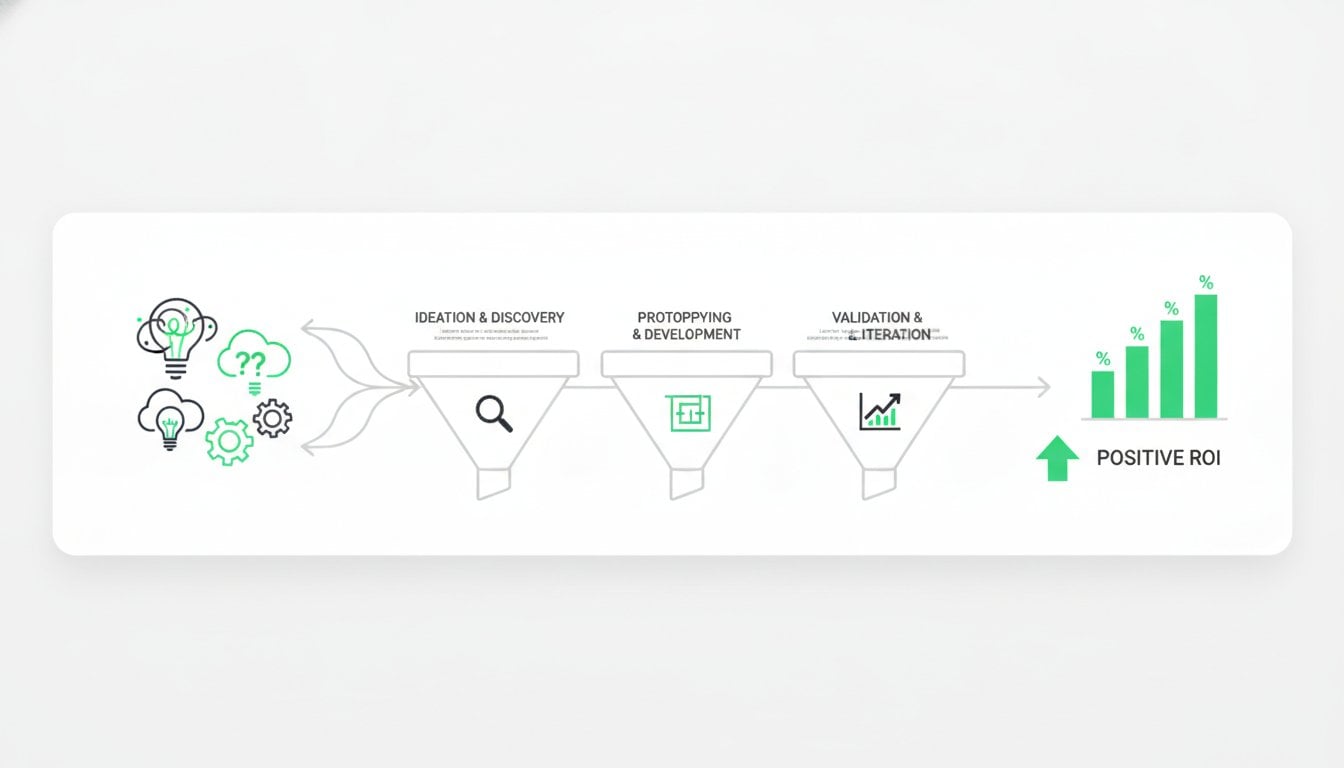
If your last internal event felt more like a catered lunch than a product incubator, you’re likely falling victim to “innovation theater.” Most corporate leaders recognize that while the energy of a 48-hour hackathon is undeniable, the transition from a rough prototype to a market-ready product is where most initiatives fail. Research from HackerEarth indicates that companies leveraging dedicated platforms see a 35-50% increase in participation and operational efficiency, yet many organizations still struggle with the administrative weight of manual judging and fragmented submissions.
We agree that your innovation budget should produce more than just good vibes; it should drive measurable ROI. This 2026 guide reclaims the format as a structured, cross-functional engine for solving your most critical business bottlenecks. You’ll discover how to build a robust framework for measuring success, integrate results directly into your innovation pipeline, and utilize modern tools to strip away the administrative burden that stifles great ideas.
Key Takeaways
- Learn how the modern hackathon has transitioned from a niche developer event into a cross-functional engine for solving complex enterprise bottlenecks.
- Identify the specific internal and external frameworks required to drive bottom-up innovation and engage your global partner community.
- Master the “Day 3” transition to ensure high-potential prototypes move successfully into your production pipeline rather than stalling after the event concludes.
- Discover how AI-driven platforms can significantly reduce administrative overhead while providing the data necessary to prove measurable ROI to stakeholders.
The Evolution of the Hackathon: From Coding Marathons to Enterprise Engines
The 2026 version of the high-intensity innovation event has shed its reputation as a niche, caffeine-fueled basement gathering for software developers. It has evolved into a structured, time-bound collaborative session designed to solve specific organizational challenges through rapid experimentation. While the history of the hackathon is rooted in technical “codefests,” modern enterprises now use these sessions to unite cross-functional teams from across the business. By bringing together designers, marketers, and analysts alongside engineers, companies can dismantle operational silos and significantly accelerate the innovation lifecycle. The modern hackathon is a precision-engineered tool for rapid prototyping and cultural transformation that bridges the gap between raw ideas and viable business solutions.
Hacking as Creative Problem Solving
In the enterprise context, “hacking” isn’t about breaching cybersecurity perimeters; it’s about finding unconventional, high-impact solutions to complex business problems. These events provide a unique sandbox where the tension between creativity vs innovation is resolved through immediate action. While creativity focuses on generating novel ideas, innovation requires the discipline to make those ideas useful. This approach is no longer confined to IT departments. “Business hacking” is now common in HR to redesign employee onboarding or in supply chain management to optimize logistics during global disruptions. It forces teams to think outside standard operating procedures to find the most efficient path forward.
Why Enterprise Hackathons are Surging in 2026
The surge in adoption is driven by the relentless pace of AI advancements. Organizations can’t afford months of deliberation when market conditions shift in weeks. These events offer a low-risk environment to test the spectrum of incremental vs radical innovation without the overhead of a full product launch. Data from HackerEarth indicates that companies utilizing dedicated platforms for these events report a 35-50% increase in both participation rates and operational efficiency. Instead of “innovation theater,” leaders are seeing tangible results. By June 2026, the shift toward hybrid models has made these sessions more inclusive, allowing global teams to collaborate on AI-powered solutions in real-time. This focus on measurable outcomes ensures that the energy generated during the event translates into actual bottom-line growth.
5 Enterprise Hackathon Frameworks: A Roundup of Modern Formats
The 2026 innovation landscape demands a departure from generic “codefests.” Success now depends on selecting a framework aligned with specific business outcomes. Most organizations fail because they treat every event as a technical exercise rather than a strategic intervention. To drive real value, you must choose a format that matches your current organizational needs, whether that is internal cultural alignment or external market expansion.
- Internal Innovation Hackathons: These events focus on driving bottom-up ideas from your existing workforce. They are designed to uncover operational efficiencies that often remain hidden within departmental silos. Citing the value of internal hackathons, industry leaders use these 24 to 48-hour windows to reinforce team culture while solving internal friction points.
- External/Open Innovation Challenges: This framework involves idea crowdsourcing from customers, partners, or the global developer community. It is particularly effective for solving complex technical hurdles that require fresh perspective or specialized skills not found in-house.
- AI-First Hackathons: These high-intensity events leverage Ideawake AI to accelerate the ideation and vetting process. By using machine learning to categorize and score submissions instantly, teams can focus entirely on execution rather than administrative sorting.
- Virtual and Hybrid Events: In 2026, the hybrid model is the enterprise standard. These events break down geographical barriers, allowing a global workforce to participate in real-time without the overhead of international travel.
- Customer Experience (CX) Sprints: These are laser-focused sessions aimed at solving specific user pain points. Teams use rapid prototyping to build and test features that directly improve customer retention and satisfaction scores.
Virtual vs. In-Person: Choosing the Right Venue
Logistics often dictate the success of your hackathon. While in-person events offer high-energy networking, they are frequently limited by physical capacity and travel budgets. Virtual formats provide superior scalability and data collection, making it easier to track participation metrics. For most global enterprises, the hybrid model offers the best of both worlds. It maintains a central “hub” of activity while providing digital avenues for remote contributors to collaborate through business collaboration tools that ensure no high-value idea is lost due to time zone differences.
The Role of AI in Modern Hackathons
Artificial intelligence has transformed these events from chaotic brainstorming sessions into data-driven development cycles. Modern AI tools for innovation managers can now summarize hundreds of submissions in seconds and identify duplicate ideas in real-time. This allows judges to focus on high-potential projects rather than wading through redundant entries. Furthermore, AI-assisted coding and design tools allow teams to generate high-fidelity prototypes in hours rather than days, significantly increasing the likelihood of a project moving toward implementation. To see how these frameworks scale in your organization, you can book a free platform demo to explore our specialized features.
The Anatomy of a High-Performance Hackathon: Structure and Roles
Building a high-impact event requires more than just booking a room and ordering pizza. It demands a rigorous structural design that aligns participant energy with specific corporate objectives. Without a clearly defined problem statement, teams often drift toward “cool” technology that lacks commercial viability. A successful hackathon starts with a specific challenge that addresses a real-world business bottleneck. This ensures that every line of code written and every slide designed serves a strategic purpose rather than just filling time.
The most effective solutions emerge from cross-functional teams. When you mix developers with designers and business analysts, you create a balanced ecosystem where technical feasibility meets market demand. To ensure these teams stay on track, you must integrate Subject Matter Experts (SMEs) as mentors. Their role is to guide teams away from unfeasible solutions before they waste precious hours on dead-end paths. Once the clock stops, the idea evaluation process and criteria must be entirely objective. Adopting a proven enterprise hackathon framework helps eliminate internal bias and ensures that projects are judged on their potential for implementation rather than just the quality of the final pitch.
Defining Your ‘North Star’ Metric
Participation rates are a vanity metric. True success is measured by the potential ROI and long-term strategic alignment of the output. Leaders must set KPIs that reflect actual business growth, such as operational cost reduction or the creation of new revenue streams. Utilizing an ROI calculator during the planning phase allows you to forecast the impact of winning projects and justify the event’s budget to stakeholders. It turns a creative exercise into a quantifiable business investment that demands accountability from every participant.
The Essential Tech Stack
Relying on spreadsheets and email to manage a hackathon is a recipe for administrative failure. You need a centralized idea board software to maintain transparency and keep submissions organized in real-time. This technology should manage the full innovation lifecycle, from the initial spark of an idea to its eventual implementation. Integrating these platforms with communication tools like Slack or Microsoft Teams ensures that collaboration remains seamless and that data flows directly into your innovation pipeline without the manual entry errors that typically kill momentum.
Beyond Innovation Theater: Overcoming Hackathon Failures
Most enterprise events suffer from a terminal lack of follow-through. We call this the “Day 3” problem. The high-energy presentations end on Sunday night, but by Monday morning, participants return to their overflowing inboxes and the prototypes are forgotten. This disconnect is the primary driver of innovation failures within large organizations. To fix it, you must treat the event not as a finish line, but as a starting gun for a dedicated incubation phase. Manual tracking via spreadsheets only compounds the issue, leading to fragmented data and lost momentum. You need a centralized system to ensure that high-potential projects don’t disappear into a digital black hole.
Clarity on Intellectual Property (IP) is equally critical. If your legal team hasn’t defined idea ownership before the first line of code is written, you’re inviting a bureaucratic nightmare that will stall implementation for months. Similarly, the 2026 standard for a successful hackathon has moved away from 48-hour sleepless marathons. Sustainable intensity, where schedules prioritize focused work while respecting employee well-being, prevents the post-event productivity slump that often follows traditional “death marches.”
Bridging the Gap from Prototype to Product
A prototype is not a product. To move beyond a proof-of-concept, winning teams require an “Incubation Phase” backed by formal resources. Executive sponsorship is the non-negotiable ingredient here; without a leader willing to fight for budget and headcount, even the most brilliant output will wither. Follow a structured checklist for how to implement innovative ideas to ensure your winners have a clear roadmap from the stage to the marketplace. This transition requires shifting from the “hacker” mindset to a disciplined project management approach.
Managing Expectations and Cultural Impact
Sometimes the most valuable outcome of a challenge is a validated “no.” Proving that a specific technology or business model isn’t viable saves your organization millions in future misallocated resources. Beyond the immediate output, the benefits of employee ideation programs include significantly higher long-term retention and engagement. Even for teams that don’t win, the experience of high-stakes collaboration builds a culture of ownership. Pairing your hackathon strategy with a robust approach to gamification for employee engagement can further sustain that culture of ownership long after the event concludes. To see how our platform automates this follow-through and eliminates administrative friction, you can book a free demo today to explore our specialized hackathon management features.
Scaling Results: How Modern Platforms Transform Events into ROI
The transition from a one-off event to a sustainable hackathon strategy requires a shift in infrastructure. Most organizations treat innovation like a lightning strike; they wait for inspiration to hit rather than building a conductor to catch it. By moving toward a continuous innovation pipeline, you ensure that the momentum generated during a 48-hour sprint doesn’t evaporate on Monday morning. Modern platforms act as the connective tissue between raw ideation and product delivery. They provide a centralized idea database that allows leadership to track the long-term ROI of every project, ensuring that high-potential concepts are never lost in a sea of email threads or outdated documents.
Efficiency is the primary differentiator in 2026. Research from HackerEarth reveals that companies using dedicated platforms see a 35-50% increase in operational efficiency and participation rates. This surge is largely driven by AI-powered insights that can reduce administrative overhead by up to 80%. Instead of manually sorting through hundreds of submissions, innovation managers use automated agents to summarize entries, identify duplicates, and score ideas against pre-set criteria. Integrating these workflows with your existing project management tools ensures that winning projects move directly into active development cycles without friction. If you’re evaluating your options, reviewing a comprehensive comparison of the best platform for innovation challenges can help you identify the specific AI capabilities and evaluation criteria that will drive the highest ROI for your program.
The ‘Build vs. Buy’ Decision for Innovation Tools
Leaders often face the build vs buy idea management software dilemma. While an in-house tool might seem tailored to your needs, the hidden costs of maintenance and the lack of specialized AI features often lead to a system that fails to scale. Generic collaboration tools simply aren’t designed to manage the specific phases of continuous improvement required for enterprise-grade results. Buying a purpose-built platform provides instant access to advanced analytics and security protocols that would take years to develop internally. It’s the difference between building your own car and just driving to your destination.
Conclusion: Your 2026 Hackathon Roadmap
The era of the “technical-only” coding marathon is over. In 2026, the hackathon is a strategic business tool used to solve specific operational bottlenecks and drive cultural transformation. Start by defining a narrow, high-impact challenge. Assemble cross-functional teams. Use specialized technology to strip away the administrative weight. Most importantly, have a plan for “Day 3” to ensure that the best ideas reach implementation. If you’re ready to stop settling for average results and start scaling your innovation efforts, schedule a demo to see how Ideawake powers enterprise hackathons and transforms raw potential into measurable growth.
Transform Your Innovation Pipeline into a Growth Engine
The 2026 enterprise landscape has no room for innovation theater. Transitioning from a one-off coding marathon to a high-impact hackathon strategy requires more than just creative energy; it requires a disciplined framework and a robust technological foundation. By prioritizing cross-functional collaboration and solving specific business bottlenecks, you ensure that every prototype produced has a clear, funded path toward implementation. You’ve seen how the right structure can dismantle silos and turn raw ideas into viable products.
Ideawake has empowered leading enterprises to drive over $100M in documented ROI through structured innovation. Our AI-powered features reduce administrative overhead by 80%, allowing your team to focus on execution rather than logistics. We provide the end-to-end support necessary to move ideas from the initial brainstorm to real-world product delivery. It’s time to stop letting high-potential ideas die on a spreadsheet and start building a more resilient, innovative organization.
Ready to launch your own high-impact hackathon? Get started with Ideawake today.
Don’t let your next event become another missed opportunity. Activate the untapped potential of your workforce and start delivering measurable results that move the needle for your business.
Frequently Asked Questions
What is the difference between a hackathon and an innovation challenge?
A hackathon is a high-intensity sprint focused on building a functional prototype in 24 to 48 hours. In contrast, an innovation challenge is a broader strategic program that typically spans several weeks to solicit and vet ideas. While the former prioritizes rapid execution and technical “hacking,” the latter focuses on high-level ideation and long-term feasibility across a larger participant pool.
How long should a corporate hackathon last?
The core sprint typically lasts between 24 and 48 hours. This timeframe provides enough pressure to drive rapid results without causing total burnout. It’s essential to include a week of pre-event preparation for team formation and problem definition. Post-event, you should allocate at least 30 days for a dedicated incubation phase to ensure the winning prototypes move toward implementation.
Do participants need to be developers to join a hackathon?
How do you judge a hackathon fairly?
Fairness depends on establishing objective evaluation criteria before the event begins. Judges should use a weighted scorecard that balances technical feasibility, business impact, and alignment with corporate strategy. Avoid relying solely on the quality of the final pitch. By using a centralized platform to track progress, you provide judges with the data they need to make informed decisions based on merit rather than charisma.
What are the most common reasons hackathons fail in a corporate setting?
The primary reason for failure is “innovation theater,” where the event lacks a dedicated budget for post-event development. If leadership doesn’t provide a clear path for implementation, the energy generated during the sprint evaporates instantly. Other common pitfalls include poorly defined problem statements and a lack of executive sponsorship. Without a high-level champion, even the most brilliant prototypes will die in the “Day 3” transition.
How much does it cost to run an enterprise-level hackathon?
Can a hackathon be held virtually for remote teams?
Yes, virtual and hybrid models are the 2026 standard for global organizations. Holding a hackathon virtually allows you to tap into the collective intelligence of your entire workforce regardless of their physical location. These events use digital collaboration tools and specialized platforms to manage submissions and judging. This approach reduces travel overhead while ensuring that remote teams have an equal opportunity to contribute to the innovation pipeline.
What happens to the intellectual property created during a hackathon?
Intellectual property rules are determined by the specific terms of the event. In an internal corporate setting, the organization usually retains ownership of all creations as work-for-hire. For external events, the 2026 standard is that participants own their IP while granting the organizer a license to showcase the projects. Organizers must also ensure compliance with new 2026 data privacy laws in states like Indiana, Kentucky, and Rhode Island.