
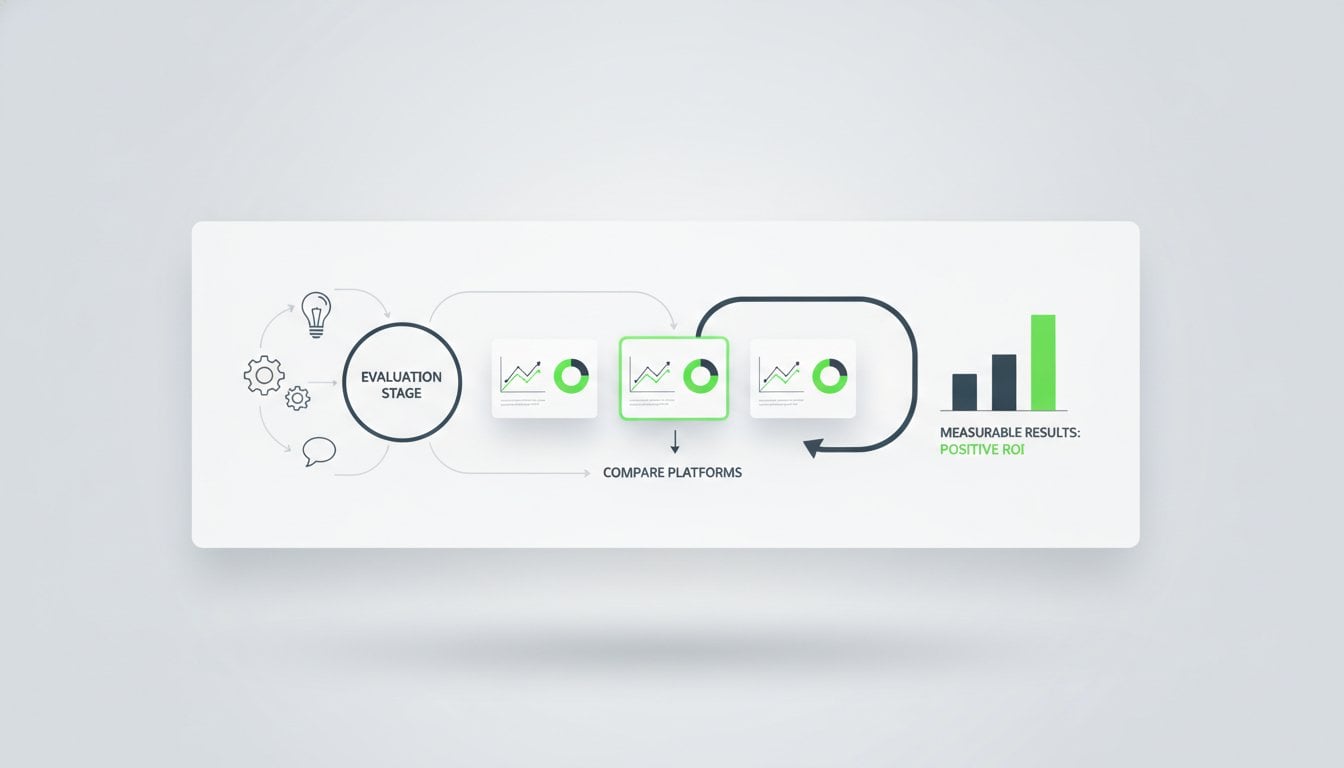
One organization using a top-tier innovation platform recently reported a realized Annual Operating Income Contribution of $262 million, proving that selecting the best platform for innovation challenges transforms ideation from a cost center into a massive profit engine. You likely already know that manual spreadsheets and passive suggestion boxes are where great ideas go to die. It’s frustrating to watch your team spend dozens of hours on administrative data entry while employee engagement numbers continue to crater. Most leaders are tired of “innovation theater” that fails to move the needle on the bottom line.
This 2026 guide will help you cut through the noise by breaking down the top-rated platforms and the specific criteria you need to evaluate to drive high engagement and measurable ROI. You’ll learn how to leverage new AI capabilities for trend reporting and decision coaching, ensuring your program produces viable business outcomes without doubling your workload. We’ll examine the shift toward customized pricing and end-to-end lifecycle support to help you choose a partner that provides a superior path forward. It’s time to stop settling for average results and start scaling your impact.
Key Takeaways
- Understand why user experience is the primary driver of adoption and how intuitive design prevents employee engagement from plummeting.
- Identify the best platform for innovation challenges by prioritizing agile, lightweight architectures that favor rapid deployment over legacy administrative bloat.
- Learn to eliminate “innovation theater” by implementing multi-stage evaluation workflows that move beyond ideation toward measurable execution.
- Discover how to secure executive buy-in by presenting performance metrics and data-backed insights that align directly with C-suite financial priorities.
- Explore how AI-powered automation can strip away the most tedious administrative tasks, allowing your team to focus on high-value strategic growth.
What is an Innovation Challenge Platform?
An innovation challenge platform isn’t just a digital repository; it’s a high-impact engine designed to solve specific business problems through structured, time-bound initiatives. It provides a centralized environment where organizations launch, manage, and scale their most critical problem-solving efforts. Unlike passive systems, it operates on a “pull” model. This means leadership identifies a specific operational bottleneck or market opportunity and invites the workforce to solve it. This proactive approach is exactly why the best platform for innovation challenges must offer more than just a place to submit ideas. It must coordinate cross-functional teams, manage external crowdsourcing, and track the financial impact of every successful pilot directly against the company’s bottom line.
The core components of these platforms involve submission portals that capture structured data, evaluation workflows that utilize multi-stage scoring, and impact tracking modules that link innovation to the P&L. Without these elements, you aren’t innovating; you’re just hosting a digital suggestion box. High-performance platforms ensure that every stakeholder, from the frontline employee to the C-suite executive, has visibility into the process, turning abstract creativity into a repeatable, data-driven workflow.
Innovation Challenges vs. Traditional Idea Management
Traditional idea management often suffers from the “evergreen” trap where ideas trickle in without context, leading to a massive backlog of irrelevant suggestions. Innovation challenges flip the script. By using structured Challenge Briefs, you guide participants toward high-priority strategic goals. This focused approach is a core tenet of open innovation, where internal and external talent collaborate on specific outcomes. Organizations that leverage idea crowdsourcing within these time-bound windows see significantly higher engagement rates because there’s a clear deadline and a defined “why” behind the effort. It creates a sense of urgency that passive suggestion loops simply cannot replicate.
The Role of Modern Architecture in 2026
Legacy R&D systems are failing to meet the speed requirements of modern business. They’re too slow, too rigid, and disconnected from the frontline. Modern architecture is cloud-based and mobile-first, ensuring that a technician on the factory floor has the same level of access as an analyst in the corporate office. Speed is the new currency of competitive advantage. In 2026, the best platform for innovation challenges must incorporate AI-driven analytics to automate the most tedious parts of the manager’s job, such as trend reporting and decision coaching. Computing innovation is the process of creating and implementing new technologies, such as cloud-native software and AI-driven analytics, to solve complex problems and improve organizational efficiency. By utilizing this modern architecture, organizations can move ideas from submission to implementation in days rather than quarters, ensuring they don’t miss critical windows of opportunity.
Key Criteria for Selecting the Best Platform for Innovation Challenges
Beyond the interface, your evaluation workflow must be robust enough to handle the volume of a global organization. You don’t want 500 ideas dumped on one manager’s desk. You need a system capable of multi-stage reviews and expert scoring. This ensures that only the top 5% of submissions, those with the highest potential for impact, move toward implementation. Real-world examples like the Community College Innovation Challenge demonstrate how structured, engaging environments drive significant participation in complex problem-solving. To see how these criteria translate into actual results, you can schedule a personalized walkthrough of our platform.
Real-time reporting is non-negotiable. You need visibility into the innovation pipeline to defend your budget. The best platform for innovation challenges provides dashboards that translate raw engagement data into projected ROI. This allows you to show stakeholders exactly how much value is being generated at every stage of the funnel. To maintain this momentum, look for gamification for employee engagement features like leaderboards and social voting. These aren’t just “fun” additions; they’re psychological triggers that keep your workforce engaged over the long term.
Administrative Efficiency and AI Integration
Manual de-duplication is a productivity killer. When you receive hundreds of submissions, AI should handle the heavy lifting of categorizing and flagging duplicates. Using AI tools for innovation managers allows your team to focus on strategic coaching rather than data entry. Automated notifications and follow-ups are equally vital. They ensure that no idea falls into a “black hole,” which is the fastest way to kill employee trust in your program.
Build vs. Buy: The Strategic Decision
Developing an internal tool often seems cost-effective at first glance. However, the hidden costs of maintenance, security compliance, and feature updates quickly erode any perceived savings. Before committing your dev team, consult a build vs buy idea management software guide to help you calculate the true total cost of ownership. Specialized platforms offer immediate speed-to-market and robust security that custom-built tools rarely match. This allows you to start generating results in days rather than waiting months for a development cycle to finish.
Top Innovation Challenge Platforms Compared
Selecting the best platform for innovation challenges requires looking past marketing brochures to the actual architectural philosophy of the software. The market in 2026 has split into two distinct categories. On one side, you have legacy enterprise suites designed for massive, multi-year deployments. On the other, agile solutions focus on immediate impact and high user adoption. Your choice depends entirely on whether you prioritize exhaustive feature lists or the speed of actual business results. Most leaders are moving away from bloated systems that require months of training in favor of intuitive solutions that integrate into existing workflows.
Deployment speed is the most critical differentiator. Legacy systems often take three to six months to fully implement, involving complex data migrations and extensive IT oversight. Modern architecture reduces this timeline to days. These newer platforms prioritize “plug-and-play” functionality, allowing you to launch your first challenge almost immediately. This agility is essential for responding to sudden market shifts or urgent operational bottlenecks. Scalability is equally vital; a platform must be capable of starting with a single department pilot and expanding to a global enterprise without a total system overhaul. Integration is seamless in the modern stack, connecting directly with Microsoft Teams, Slack, and Jira to ensure innovation becomes a natural part of the daily tech stack.
Traditional Enterprise Suites: Complexity vs. Control
Legacy innovation management systems are built for organizations with highly complex, multi-layered innovation departments. These platforms offer unparalleled depth in configuration, making them a fit for users who need to manage thousands of concurrent projects with intricate governance requirements. They provide high levels of customization for every stage of the funnel. However, this complexity is a double-edged sword. The administrative overhead required to maintain these systems often necessitates dedicated full-time staff just to manage the software, which can lead to administrative friction that slows down the very innovation it’s meant to accelerate.
Modern Agile Platforms: The Ideawake Approach
Modern solutions have gained significant ground by prioritizing the user experience and low administrative friction. These best ideation platforms software solutions are built on architecture that favors mobile accessibility and frontline engagement. They recognize that if a factory floor worker or a field technician can’t submit an idea in 30 seconds, they simply won’t participate. By focusing on an end-to-end lifecycle from a single dashboard, Ideawake automates the most tedious parts of the process. This ensures that the best platform for innovation challenges doesn’t just collect data, but provides a clear, automated path to implementation and measurable ROI reporting.
Overcoming the Common Pitfalls of Innovation Challenges
Even the best platform for innovation challenges will fail if the underlying process is designed for “Innovation Theater” rather than actual execution. This trap occurs when leadership celebrates the sheer volume of ideas while ignoring the implementation rate. It’s a hollow exercise that eventually leads to cynicism. To drive real results, you must move beyond the vanity metric of “total submissions” and focus on how many concepts actually reach the pilot stage. Administrative friction is the primary culprit here; when managers are buried in spreadsheets, they lack the capacity to move winning ideas forward.
Engagement drop-off is another silent killer. Statistics show that most challenges experience a massive surge in the first 48 hours followed by a steep decline. Maintaining momentum requires more than just an initial announcement. You need a system that uses social proof, automated triggers, and peer recognition to keep the conversation alive. Without these psychological drivers, your challenge risks becoming a one-off event rather than a sustained problem-solving effort. Solving these bottlenecks is the difference between a program that generates “good vibes” and one that generates a measurable return on investment.
Establishing Clear Evaluation Criteria
Transparency is the foundation of participant trust. If employees don’t understand how their contributions are being judged, they won’t participate in the next round. You must establish a visible scoring rubric that aligns with your strategic goals from day one. Utilizing a structured idea evaluation process and criteria ensures that every submission is handled fairly and objectively. Expert Review Panels play a critical role here, providing the technical validation needed to separate high-potential concepts from those that aren’t feasible for the current market.
Measuring What Matters: ROI and Impact
Executive buy-in is won or lost on the P&L, not the suggestion count. To secure long-term funding, you must present data that resonates with C-suite financial priorities. Stop reporting on “engagement” in isolation and start reporting on projected financial impact. By using an idea management ROI calculator, you can translate raw innovation data into hard dollars. This allows you to track implementation progress and ensure that winning ideas aren’t just celebrated, but actually reach the market to drive growth. If you’re ready to eliminate the administrative friction that stalls your innovation program, book a free demo today to see our automated evaluation workflows in action.
Why Ideawake is the Strategic Choice for 2026 Challenges
Choosing the best platform for innovation challenges isn’t just about selecting software; it’s about selecting a partner that understands the urgency of business transformation. Ideawake is engineered to eliminate the administrative friction that stalls most enterprise programs. While legacy systems often require months of configuration and heavy IT oversight, our platform is built for speed. You can move from procurement to your first live challenge in days. This rapid deployment ensures that your organization captures market opportunities while they’re still relevant rather than waiting for a long development cycle to finish.
Efficiency is driven by Ideawake AI, which automates the most tedious aspects of the innovation manager’s role. Our system handles de-duplication, categorization, and initial sentiment analysis, allowing your team to focus on high-value strategic coaching. We provide full lifecycle support that spans from the initial spark of a hackathon to the final ROI report. By integrating directly into the tools your team already uses, like Microsoft Teams and Slack, we ensure that innovation becomes a seamless extension of the workday. We don’t just collect ideas; we provide the architecture to execute them.
The Ideawake Advantage: Modern Architecture
Get Started with Your First Challenge
Success begins with a guided implementation process designed to ensure your first challenge delivers immediate value. We don’t just hand you the keys; we provide the framework for a repeatable, scalable innovation engine. You can explore our extensive library of innovation resources to find templates and challenge briefs that have proven successful in other enterprise environments. For a detailed technical blueprint on how to structure and launch your program, our internal innovation challenge platform enterprise launch template provides a step-by-step framework proven to drive measurable results. If you’re ready to see how our platform can transform your organization’s output and eliminate the “innovation theater” trap, sign up for a personalized walkthrough. It’s time to stop settling for average engagement and start driving measurable financial impact.
Scale Your Innovation Impact in 2026
Transitioning from a passive suggestion box to a proactive, challenge-driven model is the only way to ensure your innovation program survives the scrutiny of the 2026 fiscal year. By prioritizing user experience and modern architecture, you eliminate the administrative friction that typically kills employee participation. Identifying the best platform for innovation challenges requires a partner that values execution over “innovation theater,” moving your team from simple ideation to verifiable financial impact. Organizations like HP and United Healthcare have already made this shift, leveraging tools that prioritize security and speed.
Our SOC 2 Type II Certified platform is designed to reduce administrative time by up to 80%, allowing your managers to focus on strategic growth rather than manual data entry. We provide the transparency and automated workflows needed to build lasting trust with your workforce while delivering the ROI metrics your C-suite demands. Don’t let another quarter pass with untapped potential sitting in a spreadsheet. Ready to see how Ideawake can scale your innovation program? Book a demo today.
Your organization already has the talent to solve its toughest problems. We simply provide the system to unlock it.
Frequently Asked Questions
What is the best platform for innovation challenges for a large enterprise?
The best platform for innovation challenges for a large enterprise is one that balances robust governance with high user adoption. While legacy systems often target organizations with multi-layered requirements, modern platforms focus on reducing administrative friction to ensure frontline engagement. Enterprise buyers should prioritize SOC 2 compliance and seamless integrations with existing stacks like Microsoft Teams or Slack to ensure the tool becomes a natural part of the daily workflow.
How much does innovation challenge software typically cost?
Most industry leaders have moved to a customized pricing model, requiring direct consultation to determine costs based on seat count and feature requirements. However, industry benchmarks like Traction Technology list pricing at $4,000 per standard seat per year as of June 2026. Buyers should evaluate the total cost of ownership, including potential setup fees and the internal resource hours required to manage the system, rather than just the initial licensing fee.
Can I run a virtual hackathon using these platforms?
Yes, these platforms are specifically designed to host virtual hackathons by providing a centralized environment for team formation, idea submission, and expert judging. Unlike generic collaboration tools, an innovation platform tracks the entire lifecycle of the event, from initial brainstorming to the final ROI report. This structure prevents the “black hole” effect where ideas from a hackathon are celebrated but never implemented, ensuring a clear path from creativity to production.
How do I ensure high employee engagement in an innovation challenge?
High engagement is achieved through a mix of intuitive user experience and consistent feedback loops. If the submission process takes longer than 30 seconds, participation rates will drop significantly. Successful programs use gamification for employee engagement features like leaderboards and social voting to maintain momentum beyond the first 48 hours. Most importantly, you must demonstrate that ideas are being evaluated and implemented, as perceived “innovation theater” is the fastest way to kill future participation.
What is the difference between idea management and innovation challenges?
Idea management is typically an “evergreen” process where suggestions are collected continuously, often leading to administrative backlogs and irrelevant submissions. Innovation challenges are time-bound, structured initiatives focused on solving a specific business problem. This “pull” model creates a sense of urgency and provides participants with a clear “Challenge Brief,” resulting in higher quality ideas that align directly with current strategic priorities and executive goals.
How does AI help in managing innovation challenges?
AI significantly reduces administrative overhead by automating the de-duplication and categorization of hundreds of submissions. Modern platforms use AI for sentiment analysis, trend reporting, and even decision coaching to help managers identify high-potential concepts faster. By stripping away the most tedious parts of the evaluation process, AI allows your innovation team to focus on strategic implementation and coaching rather than manual data entry and spreadsheet management.
Is it better to build our own internal innovation tool or buy a platform?
Buying a specialized platform is almost always superior to building an internal tool due to speed-to-market and lower maintenance costs. Custom-built tools often suffer from security vulnerabilities and lack the robust feature sets, such as AI-powered de-duplication, found in dedicated software. Specialized providers offer immediate SOC 2 compliance and continuous updates, allowing your internal development team to focus on your core product while you start generating ROI in days. If you’re evaluating how to structure your rollout, the 2026 enterprise launch template for an internal innovation challenge platform offers a practical framework for getting your program off the ground quickly.